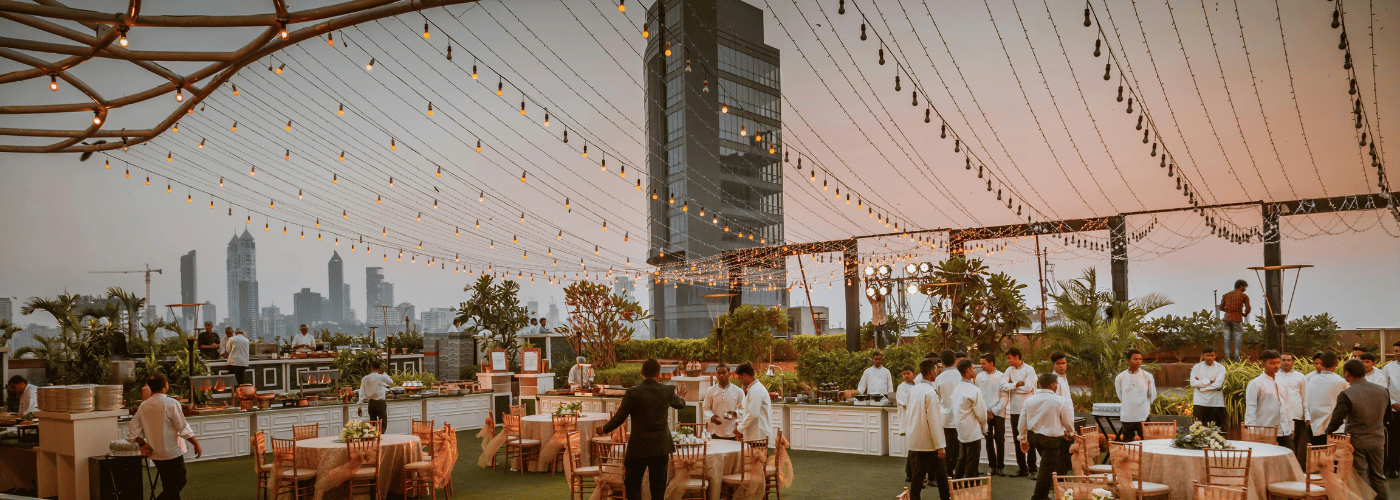
Weddings today are rarely a single-day affair. For many couples, especially those from South Asian backgrounds or with large extended families, the celebrations stretch across several days with each event carrying its own meaning, its own atmosphere, and its own traditions. A mehndi, a nikah, a walima, a reception, sometimes two, three, or even five separate gatherings, each one requiring its own venue, vendors, guest list, and budget.
It is beautiful, but it is also a genuine logistical challenge. Without a clear structure, it is easy to feel overwhelmed before the first invitation is even sent. The good news is that organising multiple wedding events does not need to be chaotic. With the right approach, every event can be planned in a way that flows smoothly, respects the overall budget, and leaves you actually looking forward to each occasion rather than dreading the next planning conversation.
Step 1: Decide Which Events You Are Hosting
The first decision is the simplest in concept but sometimes the hardest in practice: which events are actually happening. Not every couple chooses to host every traditional gathering. Some keep it focused with just a nikah and a reception. Others want the full experience: mehndi, nikah, walima, and possibly separate events for different sides of the family.
Once the events are confirmed, set the dates. Each event deserves its own space in the calendar. Wherever possible, allow at least a day or two between major celebrations so that you, your family, and your out-of-town guests have time to recover and prepare properly. Cramming events back to back without breathing space is one of the most common sources of stress in multi-event planning, and it is almost always avoidable with a little early planning.
For now, simply lock in the timeline. Knowing exactly which events you are hosting and on which dates is the foundation that every other decision is built on.
Step 2: Define Guest Lists and Budgets Per Event
Every event has its own atmosphere and its own purpose. A mehndi is typically intimate, close friends and cousins, with a relaxed and personal feel. A walima often hosts the wider extended family and community at a much larger scale. These two occasions have completely different logistical requirements, and treating them as a single planning exercise leads to budgets that do not reflect reality.
Set guest numbers and budget allocations per event rather than just for the wedding as a whole. For each occasion, work through three questions: who is this event primarily for, how many people will realistically attend, and what proportion of the total budget should go towards it. This process forces clarity early and prevents the common pattern of overspending on the first event and then scrambling for the rest.
It is very easy to overspend on the first event because it feels furthest from the others. Map all events and their estimated costs together before any deposits are paid. This gives you a true picture of total spend and prevents the budget from compressing painfully at the end.
Step 3: Book Your Core Vendors First
Once the events, dates, and guest sizes are confirmed, the next step is securing the essential vendors for each occasion. These are the elements that cannot be replicated at the last minute and whose availability determines whether your preferred date is even viable. Book these before anything else.
- Venue: Hall, hotel, marquee, or home setup, confirmed with a signed agreement and deposit.
- Catering: Professional caterers or a hybrid of professional and homemade, depending on the event scale.
- Stage and decor: Backdrops, floral setups, and structural styling for each occasion.
- Photography and videography: Coverage across all events, ideally with one team for consistency.
- Transport: For the couple, close family, or guests travelling between venues.
- Beauty and styling: Makeup, hair, and outfit fittings booked well in advance of each event.
These are your non-negotiables. Lose availability on any of these and the event itself is compromised. Secure them early and build everything else around the confirmed foundation they provide.
Step 4: Prioritise and Budget Within Each Event
With core vendors identified, create a priority list for each event individually. For a nikah, for example, the priority order might run: venue, catering, photography, stage setup, transport, beauty, signage, and wedding cake. For a mehndi, the list looks quite different, with the atmosphere and guest experience carrying more weight than structural requirements.
Working through each event separately allows you to see clearly where your money goes and which elements can be scaled back or handled through DIY without affecting the overall quality. This is also the point at which you decide where to spend generously and where to keep things simple. A full catering team for the walima, a DIY dessert and snack setup for the mehndi, professional photography across both. These are the kinds of decisions that are easy to make clearly when each event has its own plan.
Step 5: Introduce DIY Where It Makes Sense
DIY is one of the most effective tools available to couples planning multiple events on a combined budget. Used well, it reduces costs on the elements where a personal touch genuinely adds value rather than cutting corners on things that matter. It also involves family in the planning process in a way that feels meaningful rather than delegated.
- Decor accents: Balloon arrangements, fabric backdrops, table centrepieces, and floral arrangements that family members can assemble.
- Gift packaging and favours: Mehndi favours, sweet boxes, or personalised keepsakes made at home.
- Signage: Welcome boards, table names, and directional signs produced through design tools at a fraction of the vendor cost.
- Food additions: Homemade desserts, cultural dishes, or snack stations that sit alongside professional catering.
The most important rule with DIY across multiple events is timing. Every DIY project needs to be planned and started weeks before it is needed. A mehndi decoration project begun three months out is an enjoyable family activity. The same project started three days before the event is a serious source of stress.
When multiple family members are contributing DIY elements across several events, keep a shared list of who is responsible for what and when each piece needs to be finished. Without this, things fall through the gaps in the final week when everyone is already under pressure.
Step 6: Add the Finishing Extras
Once the essentials and DIY elements are in place, the extras become straightforward to evaluate. These are the details that elevate each event without being structurally critical: photo booths, guest books, additional lighting and draping, dessert stations, or special decorative props. None of them are required for a beautifully run event, but all of them add something when the budget allows and the logistics have been handled.
Evaluating extras at this stage rather than at the beginning of planning keeps your budget decisions grounded. You are adding from a position of strength, knowing what is already covered, rather than committing to non-essentials before the core is secured.
Step 7: Final Essentials Check
At this point in the planning process, the events are structurally complete. Even if you stopped here, everything would run. But a final essentials check catches the small items that fall through the gaps: serving trays, candles, napkins, extra seating for late arrivals, emergency kits for makeup and clothing repairs, extension leads for outdoor setups, or packing boxes for leftover food at the end of the evening.
These are the items that seem trivial until they are missing. A ten-minute walkthrough of each event in your mind, asking what a guest would need from arrival to departure, almost always surfaces two or three things worth adding to the list before the day arrives.
Putting It All Together
Organising multiple wedding events follows the same logic as any well-structured project. You work from the foundation upward, securing the most critical elements first and building each layer on a confirmed base. When the structure is clear, decisions become easier and faster at every stage.
- Lay the foundation: Confirm events and set dates before any vendor conversations begin.
- Build the structure: Secure core vendors for each event with signed agreements.
- Fill in the detail: Work through per-event budgets, priorities, and DIY contributions.
- Add the finishing touches: Extras and essentials once everything critical is confirmed.
Follow this order and every event, regardless of how many you are hosting, becomes manageable. The celebrations that follow are what multi-day weddings are designed to be: a series of distinct, meaningful occasions that bring different people together in different ways, planned well enough that everyone can simply be present for each one.