Every couple planning a wedding in the UK faces the same version of the same question repeatedly: is the more expensive option actually worth it? The photographer who charges three times as much as the one below them. The caterer whose per-head price is £10 higher than the competition. The henna artist at the top of the market versus the one who charges half the price. In most cases, couples make these decisions without a clear understanding of what the price difference actually buys, which means they either overspend on upgrades that do not change the outcome meaningfully, or they undercut categories where the quality difference is genuinely significant. This guide goes through the key vendor categories honestly and tells you what you actually get at each price point.
How to Read This Guide
This guide uses three price tiers for each category: entry-level, mid-range, and premium. These are not judgements about value. An entry-level vendor in any category can be an excellent choice if the price reflects their position in their career rather than the quality of their work. What this guide is trying to clarify is what changes as the price increases, because that is the information most couples are missing when they make these decisions.
One important note before the categories: price and quality are correlated in wedding vendors but not perfectly. A premium price sometimes reflects genuine superiority. Sometimes it reflects a strong brand, a large following, or a central location with high overheads. And an entry-level price sometimes reflects a photographer or artist who is early in their career but producing genuinely strong work. The price tier descriptions below reflect the general pattern rather than every individual vendor within it.
The most reliable way to evaluate whether a vendor's price is justified is to look at their full portfolio before you know what they charge. Forming an impression of the work independently of the price removes the bias that makes expensive seem better and cheap seem worse.
Photography
Entry-level: £700 to £1,200
At this price point you are typically working with a photographer who is earlier in their career, has completed fewer weddings, and may be building their South Asian wedding portfolio specifically. The technical foundations are usually sound: the images will be properly exposed, composed reasonably, and edited to a consistent standard. What you may not get is the low-light performance that comes with more expensive camera systems, the anticipation of moments before they happen that develops with experience, or the confidence to work invisibly in a room full of people. Coverage is typically a single photographer for a set number of hours. Post-production may take longer than at higher price points.
Mid-range: £1,500 to £2,500
This is the range where the quality jump becomes most consistently visible. A photographer at this level has typically documented enough weddings to know how a South Asian celebration moves, what the key moments are at a Nikah, and how to position themselves for the stage session without being asked. Their low-light work is strong, their editing is refined, and their full galleries are consistently good rather than peaking at a handful of excellent images. Coverage may include a second shooter as standard or available as an add-on. Turnaround times are usually clearly specified and reliably met.
Premium: £3,000 and above
At the premium level you are paying for a combination of technical excellence, editorial quality, and consistent delivery across every shooting condition. The images from a premium wedding photographer look like fashion photography at its best: the couple is beautifully lit in every frame, the candid moments are genuine and emotionally resonant, and the full gallery has no weak images. For multi-event South Asian weddings, premium photographers often include multi-day coverage as standard and have dedicated second shooters. The brand and portfolio will be strong enough that you will have seen their work before you contact them.
Where the price difference is most justified: Photography is the category where moving from entry-level to mid-range produces the most visible improvement. The jump from mid-range to premium is meaningful but the gap narrows. For most South Asian wedding budgets, a mid-range photographer who has proven South Asian wedding experience is the optimal choice.
Catering
Entry-level: £18 to £25 per head
At the lower end of the catering market you are typically working with a caterer operating at lower margins through simpler logistics. The food quality can be good, particularly from community caterers with strong family recipes and a loyal local following. What you are more likely to sacrifice at this price point is staffing quality, hot-holding equipment, and the logistical experience to manage service for 200 or more guests smoothly. You may also find that the per-head price does not include staffing, equipment hire, or serving utensils, which when added can bring the effective total closer to the mid-range anyway.
Mid-range: £28 to £40 per head
At this price point the caterer typically includes competent staffing, proper hot-holding equipment, and the experience to manage a large South Asian wedding buffet without the service quality degrading as the evening progresses. The food quality is consistent, halal certification is clearly documented, and the caterer will have managed events of your scale before. They will know how to handle dietary requirements, how to manage the timing of buffet opening around the stage session, and how to replenish dishes before they run low rather than after.
Premium: £45 and above per head
Premium catering at a South Asian wedding typically buys a higher ratio of staff to guests, better presentation of the buffet, higher quality ingredients in the key dishes particularly the biryani and the karahi, and a more polished overall service experience. There is often a dedicated maître d managing the floor, a formal starter course as part of the package, and crockery that elevates the table setting beyond what a mid-range caterer provides. For a 300-guest Walima, the difference between mid-range and premium catering in total cost can be £4,500 or more. That is a significant sum that most families will direct more usefully toward increasing guest count or other vendor categories.
Where the price difference is most justified: Moving from entry-level to mid-range catering is almost always worth it. The improvement in service quality, staffing, and consistency is directly experienced by every guest. The move from mid-range to premium catering produces diminishing returns for most South Asian weddings where the quality of the food itself, rather than the presentation finesse, is what guests remember.
Bridal Henna
Entry-level: £80 to £150
At the lower end of the bridal henna market you are typically working with an artist who is building their bridal portfolio, has completed fewer full-arm designs, and may not yet have developed the speed and consistency that a full bridal session requires. The design will be applied and will set, but the line quality, the precision of the negative space, and the overall complexity of the finished design may not match what you saw in their portfolio if that portfolio contains their best pieces rather than their representative work. This price point can be appropriate for a simple guest henna design but is a risk for a full bridal design that will appear in the wedding photographs indefinitely.
Mid-range: £200 to £350
A henna artist at this price point has typically completed a significant number of full bridal designs and has developed the technical consistency that a multi-hour session requires. The line quality is reliable, the design is proportionate to the arm and foot, and the pace is controlled enough that a full design is completed within the expected session length without the final sections looking rushed. Their portfolio will show multiple full bridal designs rather than a mix of guest work and close-up detail shots.
Premium: £400 to £600 and above
At this level you are working with an artist whose work is at the top of the market. The designs are intricate and detailed, the application is technically precise, and the session is managed with a professionalism that matches the significance of the occasion. Premium henna artists often have waitlists, particularly for summer dates, and their booking process reflects the demand for their work. The difference between mid-range and premium bridal henna is visible to guests and permanent in the photographs, which makes this one of the categories where a premium price can be genuinely justified.
Where the price difference is most justified: Unlike most other vendor categories, the quality difference in bridal henna between price points is directly visible in every close-up photograph from the Mehndi and Nikah. This is a category where spending at the mid-range minimum rather than entry-level is strongly recommended, and where the premium tier is worth considering if the budget allows.
Stage and Decor
Entry-level: £500 to £1,000
An entry-level stage and decor package will typically include a fabric backdrop, simple floral elements that may be artificial, basic uplighting, and a seating arrangement for the couple. The backdrop quality varies significantly at this price point: some entry-level decorators produce clean, well-executed setups while others deliver results that look undersourced in the photographs. The risk at this level is higher than in other categories because the visual result is highly dependent on the individual decorator's eye and execution rather than on standardised outputs like a menu or an edited photograph.
Mid-range: £1,200 to £2,500
At this price point the stage is typically well-executed with a cohesive visual identity, good quality florals whether fresh or artificial, proper stage lighting, and a finished result that photographs cleanly. The decorator will have completed enough South Asian wedding stages to understand the standard expectations around backdrop scale, floral placement, and the lighting requirements for the stage photography session. Setup is reliable and the decorator is experienced enough to solve problems on the day without involving the couple.
Premium: £3,000 and above
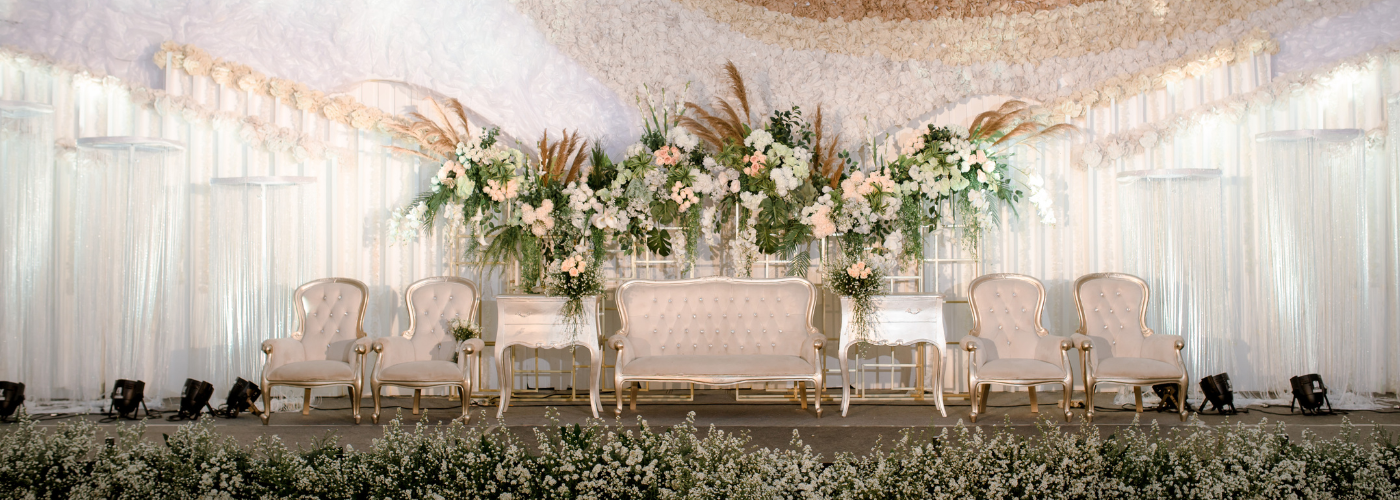
Premium decor companies produce stages that are genuinely architectural in their ambition: custom-built structures, fresh floral installations, specialist lighting design, and a visual identity that is bespoke to the couple rather than adapted from a standard package. The difference between mid-range and premium decor is visually striking in the right setting. For most South Asian wedding budgets in the UK, however, a well-executed mid-range stage produces excellent results that are difficult to distinguish from a premium one in the photographs that guests actually see.
Where the price difference is most justified: This is the category where the mid-range sweet spot is most clearly defined. Entry-level is risky because execution quality is variable. Premium is impressive but produces diminishing visual returns in the photographs. A mid-range stage from a decorator with a strong South Asian wedding portfolio is where most families get the best return on their decor investment.
Hair and Makeup
Entry-level: £80 to £150
An entry-level makeup artist is typically building their bridal portfolio and may be more comfortable with certain looks than others. The application will be competent but the longevity across a full day in formal attire under lighting may not match what a more experienced artist achieves. At this price point the trial session is especially important because the day-of result is less predictable without seeing the artist's work on your specific face and skin tone in advance.
Mid-range: £200 to £350
A mid-range bridal makeup artist has completed enough bridal sessions to understand what holds and what does not across a long event day, how to adapt a look for different lighting conditions from the Mehndi to the Walima stage, and how to make a client feel comfortable in the chair rather than anxious about the outcome. Their portfolio will show consistent quality across different clients and skin tones.
Premium: £400 to £600 and above
Premium bridal makeup artists in the South Asian wedding market often have significant social media followings and waiting lists for peak season dates. The work is technically excellent, the session experience is polished, and the result photographs beautifully under every lighting condition. The premium price also often includes a more comprehensive trial process and a more personalised approach to the look across multiple events.
Where the price difference is most justified: Mid-range is the level where reliability and quality converge most clearly. The premium tier buys brand and polish that matters to some couples and less to others. The entry-level risk, particularly for a bride attending three events across three days, is that inconsistency or poor longevity becomes visible in a way that is difficult to address once the day is underway.
The Overall Pattern
Looking across all five categories, a consistent pattern emerges. The quality jump from entry-level to mid-range is almost always significant and almost always worth the additional spend. The jump from mid-range to premium is meaningful in some categories and marginal in others, and whether it is worth paying for depends on the couple's priorities and how visible the difference is in the final experience.
Photography and bridal henna are the two categories where premium spending produces the most durable return, because the output is permanent. Catering is the category where mid-range is the most clearly optimal choice for most South Asian wedding budgets. Decor and makeup sit in the middle: mid-range is excellent, premium is impressive, and the decision depends on how central these elements are to what the couple most values about the day.
What Price Does Not Tell You
The final point worth making is that price is a proxy for quality, not a guarantee of it. The most reliable indicator of what you will actually receive from any vendor is their recent, complete portfolio work rather than their price tier. A photographer charging £1,800 whose full galleries are consistently strong is a better choice than one charging £2,400 whose highlights are impressive but whose complete work is uneven. A caterer charging £32 per head whose clients consistently praise both the food and the service is more valuable than one charging £45 whose reviews are mixed.
Use price as a starting filter to narrow the field. Use the work, the references, and the communication quality to make the final decision. That sequence produces better outcomes than either price alone or portfolio alone, and it is the approach that most consistently results in couples being genuinely satisfied with the vendors they chose.
Final Thoughts
Spending more on a wedding vendor is not inherently better. Spending at the right level in the right categories is. The framework this guide provides is not a rule that applies uniformly to every couple or every budget. It is a starting point for making these decisions with more information than you had before, so that the money you spend goes toward differences that genuinely matter and the money you save comes from categories where the upgrade would not have been noticed.
Know what each price point buys. Look at the work. Ask the right questions. And trust your own judgement when the portfolio tells you something that the price tag does not.