Food is the element of a wedding that guests remember most clearly. Not just the flavour, but how it arrived, how long they waited, whether the elderly relative at table six was served before they got tired, and whether every dietary need was handled calmly and without fuss. The right caterer brings all of that together. The wrong one leaves gaps that no amount of beautiful decor can cover.
This guide walks through every decision involved in choosing a wedding caterer, from the first tasting to the final run sheet. It is written specifically for UK couples, with particular attention to halal requirements and the logistics of larger South Asian weddings where feeding 200 to 400 guests cleanly and on time is a genuine operational challenge.
Start With Fit, Not Only Flavour
A tasting is a useful data point, but it is a small snapshot of what a caterer can do under ideal conditions. Your actual decision should rest on a broader set of criteria: their capacity to serve your guest count without quality dropping, their hygiene standards and food safety procedures, and how well the team communicates and coordinates with the venue.
Ask for documented examples of events at a similar scale to yours. A caterer who regularly serves 80-person dinner parties may struggle structurally with a 300-guest buffet, not because of the food quality but because of the operational differences. References from events of a comparable size tell you far more than a tasting at a showroom kitchen.
How to Run a Useful Tasting
Arrive with a clear list of what you want to assess. Take notes on seasoning, texture, temperature, and how each dish holds up after sitting for ten minutes. That last point matters more than most couples realise: wedding food is almost never served the moment it comes off the heat. Ask the caterer directly how each dish behaves in bulk production and under a commercial hot-hold system.
Request your preferred spice level during the tasting rather than accepting the default. Some caterers reduce seasoning for tasting events, assuming a conservative approach is safer. Ask for the version you actually want served to 200 people.
Always ask how halal ingredients are sourced, stored, and separated from non-halal items in shared kitchens. Request written confirmation of halal certification before signing any contract. Do not assume this is covered because a caterer says they offer halal options. Get the specifics in writing, including meat sourcing, cooking oil, and any marinades or sauces.
Managing Dietary Needs Without Stress
Create a clear list of all dietary requirements as early as possible and maintain it as your RSVP responses come in. The list should cover allergies (including nuts, dairy, and gluten), vegetarian and vegan requirements, and any specific religious dietary rules beyond halal that apply to your guests.
Share this list with your caterer at least two weeks before the event, and again at the final guest count stage. Agree a specific plan for how alternative portions will be identified, stored, and served so that guests with dietary needs receive their food without having to explain themselves to every server. For larger events, consider labelling specific service stations and briefing floor staff individually so no guest is left standing at the buffet unsure of what they can eat.
Service Style That Matches Your Event
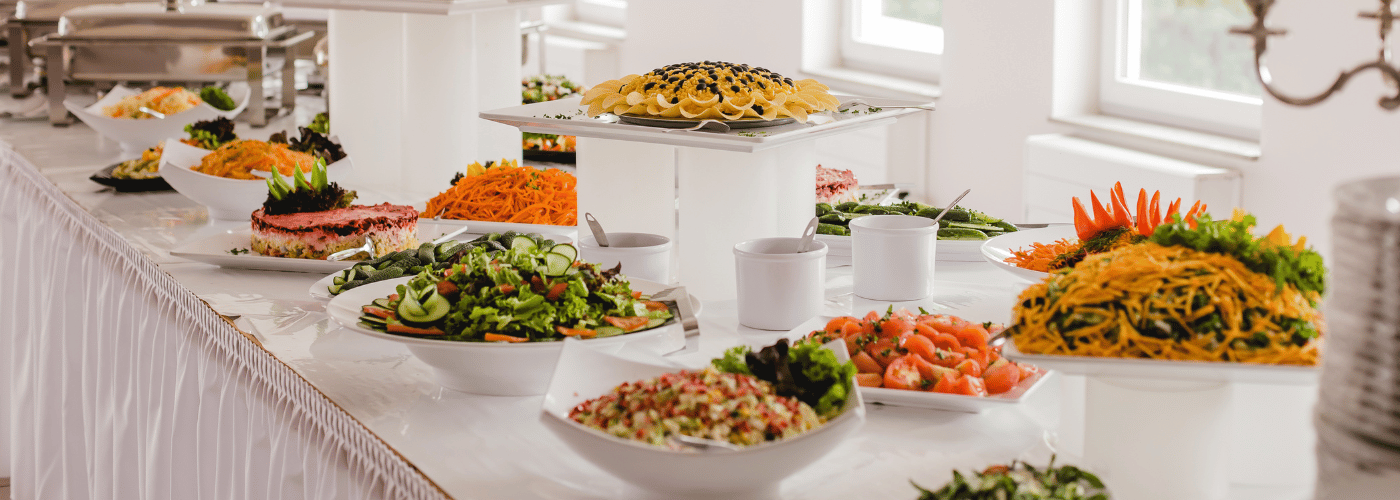
The three main service formats each suit different event types. Plated service is structured and formal, works well for seated dinners, and ensures every guest receives a consistent portion at the same time. Family-style service, where dishes are placed in the centre of the table for sharing, encourages conversation and suits events where the communal element is important. Buffet service can move large numbers efficiently when the queue layout and line management are properly planned.
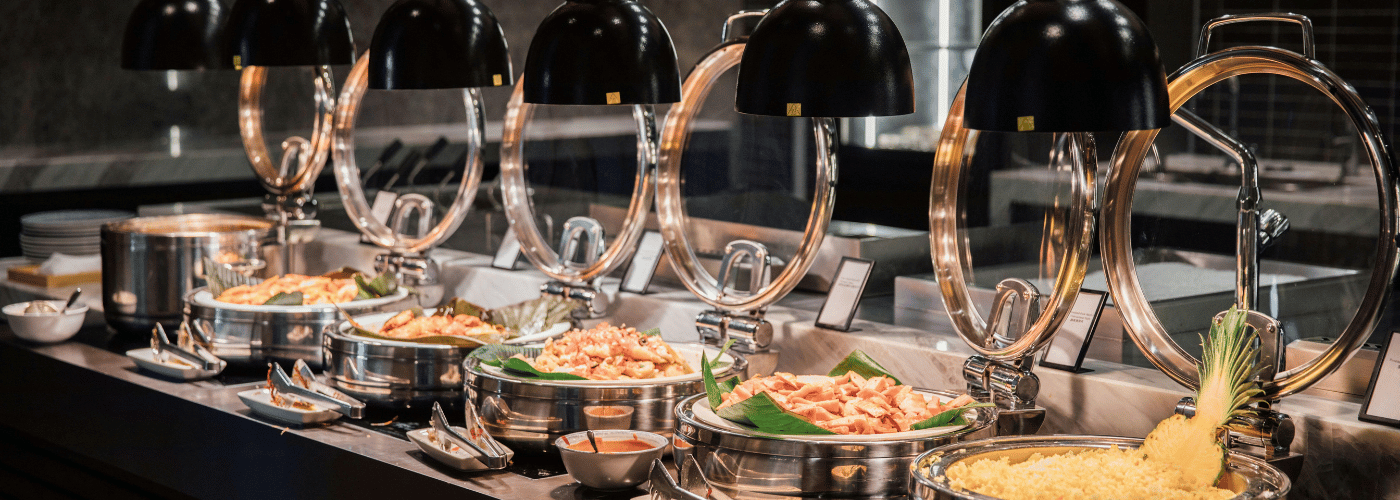
For South Asian weddings with 200 or more guests, buffet service is frequently the most practical choice. The key is in the planning: how many service stations, how the lines are arranged to avoid bottlenecks, how the caterer manages replenishment during service, and whether elders and guests with mobility needs have priority access. Ask specifically how the caterer handles all of these before committing.
Staff-to-Guest Ratio and Service Timings
Meals run on people power. Ask for the proposed number of servers, kitchen staff, and supervisors for your specific headcount. A general guide for buffet service is one staff member per fifteen guests at the service stations, with additional floor staff for water, tea, and clearing. For plated service the ratio is typically one server per eight to ten guests.
Confirm how long service is expected to take per course and how the caterer avoids long gaps between them. A written run sheet with built-in buffers keeps the room calm and gives both you and the venue a clear reference point if timings shift on the day. Always establish that elders and guests with children are prioritised during service. Water and soft drinks should be topped up continuously without guests needing to ask.
Ask your caterer to walk you through exactly how the buffet line will be arranged at your specific venue. The distance from the kitchen pass to the serving station, the number of available entry points into the buffet line, and the width of the serving area all affect how quickly 200 guests can be served. This conversation reveals how experienced a caterer actually is with events at your scale.
Hot Hold, Transport, and Food Safety
Food quality drops when temperature control fails. Ask specifically how food is kept at safe temperatures from the point of preparation to the moment it reaches a guest's plate. If cooking is done off-site, confirm the transport time, the equipment used in transit, and the setup process on arrival. Food that cools during a forty-minute drive and then sits in a warm hall can drop below safe temperatures faster than most couples realise.
At the tasting or venue visit, observe the small things: clean uniforms, covered dishes, hair nets where required, and tidy workstations. These details are not incidental. They reflect the standard of care the team brings to every event and are a reliable predictor of how your guests will experience the service on the day.
Menu Design That Works at Volume
Choose dishes that hold their texture and flavour from kitchen to table. Slow-cooked curries, roasted meats, and rice dishes designed for bulk preparation generally travel and hold better than anything that relies on last-minute finishing or fresh garnishes at scale. Balance rich, heavy main dishes with lighter sides and fresh accompaniments that do not require complex preparation.
Keep children's portions simple and clearly separate. If you are planning multiple events across consecutive days, vary the menus enough that guests attending more than one occasion experience something distinct at each. Small variations in accompaniments and desserts can make a repeated main dish feel different without doubling the caterer's preparation work.
Pricing, Inclusions, and References
Request a line-by-line proposal that covers food costs, staffing, equipment, travel, setup, and pack-down fees as separate line items. Ask specifically what is included in terms of crockery, cutlery, serving ware, and disposables. Ambiguity here frequently leads to unexpected costs on the final invoice.
Ask for references from two or three events of a similar size to yours. A short conversation with a past client, not just a written review, tells you how the team handled the inevitable unexpected moments on the day: a late delivery, a dietary need raised at the last minute, a venue access problem. Steady, professional handling of those moments is what separates good caterers from great ones.
On-the-Day Coordination
Confirm who is in charge on the day and how to reach them directly. You need one named lead who owns the catering timeline and has the authority to make decisions quickly without escalating every small issue. Share the venue's rules in writing well in advance: access routes, loading bay availability, kitchen restrictions, parking, and any rules about waste disposal or equipment left overnight.
If you are providing prayer spaces or quiet rooms for guests, share the layout with the catering lead so service routes do not disrupt those areas. If the venue is part of a hotel or estate, confirm how late checkouts and next-morning equipment collections are coordinated between the catering team and venue management.
Leftovers and Waste
Decide in advance how leftover food will be managed. Many couples arrange for labelled containers so family members can take portions home at the end of the evening, which reduces waste and is a natural extension of South Asian hospitality. Others prefer the caterer to handle disposal according to food safety guidelines. Confirm which approach your caterer supports and what the rules are at your venue, as some venues restrict food removal due to their own waste management policies.
A Simple Decision Framework
When you are choosing between two strong options, return to four questions. Can this team deliver consistently on time at your guest count? Do their dishes hold quality well under volume conditions? Is the staffing plan realistic and specific? Do past clients at similar events describe calm, clean, and organised service? The right answer to all four will feel steady and grounded, not merely impressive at the tasting.
Food is remembered for how it tasted and how it arrived. Choose a caterer who understands both sides of that equation. Run a purposeful tasting, confirm your halal and dietary requirements in writing, check staffing levels against your specific guest count, and agree a service timeline that protects the flow of the day. Your guests will feel the quality of that decision in every course.