The average UK wedding in 2026 costs just over £20,000. Which means that a couple who pulls off a genuinely beautiful wedding for £10,000 is doing something that roughly half the country assumes is impossible. It is not impossible. Around one in four UK couples spend £10,000 or less on their wedding, and the ones who do it well are not the ones who skimped on everything. They are the ones who made a small number of deliberate, strategic decisions early and held to them. This is the story of how one couple in the Midlands did exactly that, and the line-by-line breakdown of every penny they spent.
The Starting Point: One Rule, Agreed on Day One
Before they spoke to a single vendor, before they visited a single venue, and before they so much as looked at a bridal outfit, this couple agreed on one rule: the total budget is £10,000, it does not move, and every decision gets made inside it. Not "around" it. Not "roughly" it. Inside it.
That sounds obvious, but most couples who end up over budget do so because they set a number and then treat it as a guideline rather than a boundary. Each individual compromise, a slightly more expensive venue, a caterer whose per-head cost is just a little higher, an outfit that costs more than planned, feels reasonable in isolation. Together, they add up to a budget that has quietly doubled by the time anyone notices.
The second decision they made before any bookings: they capped the guest list at 80 people for the main reception. Guest count is the single biggest lever in any wedding budget. Every additional guest adds cost across catering, venue size, invitations, favours, and seating. Fixing 80 as a hard number gave them a framework within which everything else could be costed accurately before any commitments were made.
Your guest count determines your venue size, your catering cost, your invitation spend, and your per-head budget. Lock it down before you approach a single vendor and resist all pressure to increase it once it is agreed.
The Full Budget Breakdown
Here is exactly how the £10,000 was allocated and spent. Every figure is based on real UK vendor pricing for the Midlands in 2026. None of it is aspirational. All of it is achievable.
Venue: £2,800
Rather than a commercial wedding venue, they hired a dry-hire community hall in their city with a capacity of 120, giving them comfortable room for their 80 guests with space for the catering setup, a decor area, and a small stage backdrop. Dry-hire halls in the Midlands typically run between £400 and £900 for a Saturday, but this couple booked a Sunday, which brought the hire fee down to £650. The remaining £2,150 of their venue budget went on tables, chairs, linen hire, and the deposit for a local AV company who provided a PA system and some warm ambient lighting.
Choosing a dry-hire space rather than a commercial wedding venue is the single most impactful budget decision a couple can make. It removes the venue's margin from the equation and gives you full control over catering, decor, and timing without paying a premium for the privilege.
Catering: £2,600
They used a local independent caterer who specialised in South Asian and Pakistani food, with full halal certification. The menu was a buffet format: two rice dishes, two curries, a karahi, raita, salad, naan, and a soft drink station. For 80 guests, the all-in price including staffing, equipment, and a dessert station came to £32.50 per head. The caterer was found through a personal recommendation within the community, which is exactly how most of the best value catering relationships in this market operate.
The key to keeping catering within budget was not compromising on food quality but choosing a buffet format and a community-rooted caterer over a commercial catering company with higher overheads. The food was the thing guests talked about most after the wedding. It did not have to be expensive to be excellent.
Photography: £1,200
This was the budget category the couple protected most deliberately. They knew from talking to married friends that photography is the thing you either regret spending too little on or are grateful you prioritised. They found their photographer through a portfolio review of local photographers who were earlier in their careers but had clearly strong work. Full day coverage, edited digital gallery, and a short highlight film came to £1,200. They asked explicitly for photographers in the £900 to £1,500 range who had strong South Asian wedding experience and received four strong responses.
Some of the strongest wedding photography work comes from photographers two to four years into their career, after their skills have developed but before their prices have reached the ceiling of their market. Ask to see full galleries, not just highlight reels.
Bridal outfit and groom's suit: £900
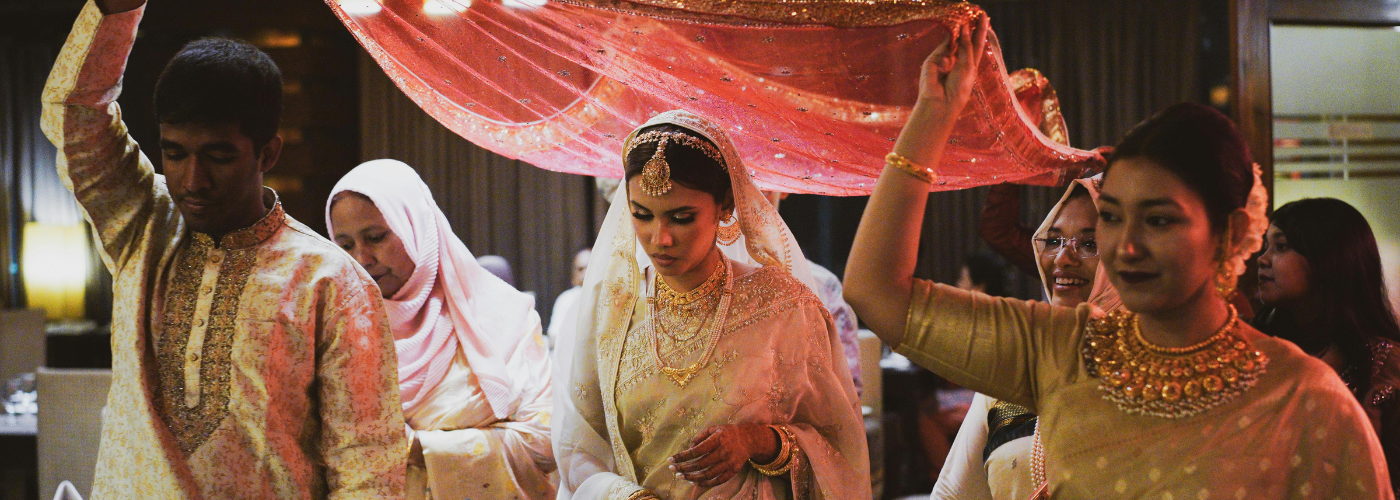
The bride chose a Pakistani bridal outfit sourced directly from a boutique in Birmingham's Ladypool Road, rather than through a designer label, coming in at £580 including dupatta and minor alterations. The groom's sherwani was rented for £180, a widely available and perfectly practical option that most grooms who have done it report no regrets about whatsoever. Jewellery was a combination of family pieces and a small number of purchased additions totalling £140. Total for both outfits: £900.
Hair and makeup: £380
A senior makeup artist from within the community was booked for the bride at £280, including a trial session. A hairstylist was booked separately at £100. Both were found through Instagram, contacted via direct message, but confirmed in writing with a clear agreement covering the date, the services, the price, and the cancellation terms before any payment changed hands.
Decor and flowers: £600
The couple chose a simple but warm decor scheme: white and gold table centrepieces, a fabric and floral backdrop for the stage area, and fairy lights across the ceiling of the hall. The backdrop was hired from a local decor company at £250. Table centrepieces, candles, and miscellaneous decor items were sourced from a combination of wholesale suppliers and DIY preparation done over two weekends in the month before the wedding. Total spend: £600.
Invitations and stationery: £180
Digital invitations were sent for the initial save-the-date. Printed invitations were ordered for 90 guests (allowing for a small overage) through an online print service using a purchased Canva template. Design, print, and postage came to £180 in total. For guests who expected a more formal invitation, a small number of premium printed cards were produced and hand-delivered, keeping postage costs down.
Wedding cake and desserts: £200
A two-tier cake was ordered from a home baker within the community at £140. An additional dessert table of shop-bought sweets, barfi, and packaged items arranged decoratively cost a further £60. Total: £200. The cake was beautiful, the dessert table was a hit with guests, and neither required a specialist dessert vendor at a commercial price.
Transport: £200
A single luxury car was hired for the couple's arrival and departure at £200. Guest transport was not arranged centrally, as the venue had adequate parking and the majority of guests were local. Out-of-town guests arranged their own travel, which was communicated clearly in the invitation.
Miscellaneous and contingency: £940
This included favours (small personalised boxes at £1.50 each for 80 guests, totalling £120), a guest book at £35, a small thank-you gift for the wedding party (£80), printed menus for the tables (£45), and a collection of small costs that accumulated in the final weeks: additional candles, a backdrop stand repair, and the cost of a family member's petrol for venue setup runs. The couple set aside £500 as a hard contingency fund and ended the day having spent £600 of the miscellaneous budget, leaving £340 unspent.
The Decisions That Made It Work
Looking back across the breakdown, the decisions that kept this wedding within budget were not about finding cheap alternatives to good things. They were about making clear choices early and then not revisiting them.
- The guest list was fixed before any venue was viewed. This meant every venue quote was assessed against a known number, which made comparisons meaningful rather than approximate.
- The dry-hire venue was chosen deliberately, not as a fallback. The couple visited three community halls, two of which they considered genuinely good spaces. Choosing a non-commercial venue was a values decision, not a compromise.
- Photography was protected while other categories absorbed cuts. They consciously allocated more to photography than the percentage equivalent of their budget would suggest, and compensated by keeping decor and stationery lean.
- Community and personal networks were used without apology. The caterer, the makeup artist, and the cake baker were all found through personal connections within the community. Quality within these networks is often as high or higher than commercial alternatives, and the pricing reflects relationships rather than market positioning.
- Every vendor agreement was confirmed in writing. This was not a budget decision but it protected the budget. When you have paid deposits totalling several thousand pounds across multiple vendors, a verbal agreement is not a safety net.
What They Would Do Differently
No wedding budget plan survives contact with reality without at least a few adjustments. Asked what they would do differently, the couple gave two honest answers.
First, they would allocate more to decor. At £600, the space looked warm and personal but not as styled as they had hoped. An additional £200 to £300 on the backdrop and table arrangements would have made a visible difference and would have been worth the trade-off against the transport budget, which came in with room to spare.
Second, they would sort the miscellaneous category earlier. The small costs in the final four weeks were individually minor but collectively stressful because they had not been anticipated in detail. A proper itemised list of every small purchase from favours to printed menus, built at the same time as the main budget, would have avoided the slight scramble in the final month.
Final Thoughts
A £10,000 wedding in the UK in 2026 is not a budget compromise. It is a deliberate choice. The average UK wedding costs roughly twice this amount, but the gap between a £10,000 wedding and a £20,000 wedding is not a gap in quality. It is a gap in guest count, venue type, and the number of commercial vendors in the supply chain.
Every couple who has pulled off a wedding at this level has done so by making the same core decisions: fix the number before you start, choose a non-commercial venue, protect photography, keep catering community-rooted where possible, and hold the contingency until you genuinely need it. None of those decisions require sacrificing what matters. They require being clear about what actually does matter before the planning begins.