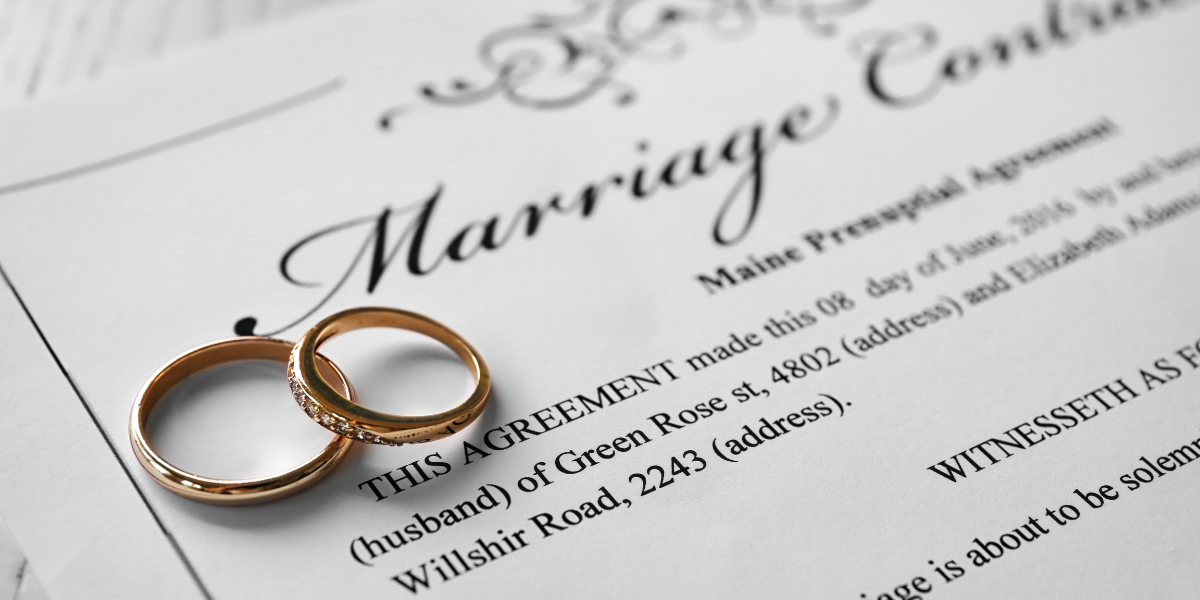
Somewhere in the UK right now, a couple is DMing a wedding photographer on Instagram, agreeing a price, sending a bank transfer, and receiving nothing in writing. No contract, no receipt, no confirmation of what was actually agreed. Just a message thread that could disappear tomorrow if the account gets hacked, deleted, or simply stops responding. This is how a significant proportion of UK wedding vendors are still being booked in 2026, and it is costing couples money, certainty, and in the worst cases, their entire deposit with no legal recourse whatsoever.
The Instagram Booking Problem Nobody Talks About
Instagram became the default discovery platform for wedding vendors because it works brilliantly for exactly that: discovery. A henna artist's reel gets shared into a community. A photographer's portfolio reaches 10,000 people who would never have found them through a Google search. A cake designer builds a following of engaged couples in exactly the right demographic. For getting noticed, Instagram is genuinely excellent.
The problem is what happens next. Because Instagram is a social platform rather than a transactional one, the entire booking process ends up happening in a channel that was never designed for it. Prices get discussed in DMs. Dates get confirmed in comment threads. Deposits get sent via bank transfer with nothing more than a screenshot of the conversation as a record. And because the whole process feels informal and friendly, neither the couple nor the vendor tends to think carefully about what they have actually committed to in writing, what happens if something goes wrong, or who is protected if it does.
Even a clear message thread agreeing a price and date offers limited legal protection if a vendor fails to perform. Without a formal written agreement, proving what was agreed and enforcing it becomes significantly harder.
What Can Go Wrong (And What Typically Does)
The range of problems that arise from informal booking processes is wider than most couples realise until they have experienced one firsthand.
The vendor double-books
Without a booking system that locks dates, a vendor working entirely through DMs has no automatic safeguard against taking two bookings for the same date. By the time the conflict is discovered, usually weeks or months later, one couple has lost their vendor and may have already turned down alternatives. The deposit may or may not be returned depending entirely on the individual vendor's goodwill rather than any contractual obligation.
The account disappears
Instagram accounts get hacked, suspended, or deleted with no warning. When the account that held your entire booking conversation is gone, so is the record of everything you agreed. If the vendor was operating only through that account and has no alternative contact details on record, the couple has no way to reach them. This scenario is not as rare as it sounds, particularly among smaller and newer vendors who run their entire business through a single social media profile.
The scope creeps silently
When pricing and deliverables are agreed informally over messages, ambiguity is almost inevitable. "Full day coverage" means different things to different photographers. "Catering for 200 guests" may or may not include staffing depending on which message you read. "Stage setup included" might refer to the backdrop only, or it might include flowers and lighting. Without a formal agreement that defines exactly what is included, disputes about what was promised are resolved by whoever argues more convincingly on the day, which is rarely the couple.
The deposit disappears
The most financially damaging outcome is also the most straightforward: a couple pays a deposit via bank transfer, the vendor takes on more work than they can handle, and by the time the wedding approaches the vendor is unable to fulfil the booking. With no written contract, no payment protection, and a bank transfer that offers no automatic recourse, the couple's options are limited. A dispute with the bank may succeed if the transfer was made recently and fraud can be proven, but for deposits paid months in advance, recovery is often partial at best.
Why Vendors Also Lose Out on Informal Bookings
The risk in an informal booking process is not one-sided. Vendors operating entirely through DMs and bank transfers face their own significant problems that a proper booking system resolves.
- Couples cancel without notice. With no cancellation policy in writing, a vendor who has turned down other work to hold a date has no formal basis for retaining the deposit when a couple simply stops responding.
- Payment chasing becomes personal. Chasing unpaid balances over Instagram messages blurs the line between professional and personal communication in a way that creates unnecessary stress for vendors who are not operating with a proper invoicing system.
- Scope disputes damage reputation. When a couple and a vendor disagree about what was included in a package, the vendor often ends up working beyond what they intended to protect their review score. There is no written agreement to point to.
- Income is unpredictable. Without a system that tracks confirmed bookings, outstanding invoices, and payment dates, vendors frequently underestimate their upcoming workload or overcommit their availability.
What a Proper Booking Process Actually Looks Like
The shift toward secure online bookings is not about making wedding vendor relationships more corporate or transactional. It is about giving both sides something that informal arrangements cannot provide: clarity, protection, and a record that holds up if anything goes wrong.
A proper booking process for a wedding vendor in the UK has several components that work together rather than independently.
A clear written agreement
Every booking should produce a document that specifies the date, the deliverables, the price, the deposit amount, the balance due date, and the cancellation terms. This does not need to be a lengthy legal contract. A clear, plain-English agreement that both parties have confirmed in writing is sufficient for most wedding vendor relationships. What matters is that it exists and that both sides have a copy.
A secure payment method
Bank transfers offer no automatic payment protection. Card payments, payment links through a recognised platform, and other traceable digital payment methods provide a significantly stronger foundation for a dispute if one arises. Couples should be cautious about any vendor who insists on cash or bank transfer only and declines to use any form of payment link or platform.
A confirmation record that is not tied to a social account
The confirmation of a booking should exist somewhere that does not depend on Instagram remaining online. An email confirmation, a booking platform record, or a PDF of the agreement gives both sides something they can access regardless of what happens to the social media account through which they first made contact.
A system for tracking outstanding payments
Deposits are rarely the only payment in a wedding vendor relationship. A balance is typically due weeks or months after the deposit. Without a system that tracks what has been paid, what is outstanding, and when the next payment falls due, both vendors and couples end up relying on memory or digging through message threads to reconstruct the payment history. This is how payment disputes start.
Before paying any deposit, ask: "Can you send me a written confirmation of what we have agreed, including the date, the deliverables, and the cancellation policy?" Any professional vendor should be able to answer yes immediately.
The South Asian Wedding Community and the Booking Gap
Within the South Asian and Muslim wedding community in the UK, the informal booking problem is particularly acute. The community is tight-knit, word-of-mouth drives a significant proportion of vendor discovery, and many vendors build their business almost entirely through Instagram and personal referrals. The trust that makes this network work so well for discovery is the same trust that makes formal agreements feel unnecessary, right up until something goes wrong.
South Asian weddings also involve higher average vendor spend than mainstream UK weddings, with multiple events, larger guest counts, and more specialist vendor categories to fill. A bride who has booked a henna artist, a stage setup specialist, a caterer, a photographer, and a makeup artist across three events may have paid deposits to five separate vendors, all informally, totalling several thousand pounds. The cumulative risk of that arrangement is significant even if each individual vendor is completely trustworthy, because the absence of a written agreement is a risk regardless of the person behind it.
The shift toward properly documented bookings is not a criticism of the trust and community that makes this space work. It is an upgrade to the infrastructure around it, one that protects everyone involved without changing the relationships that make these vendors worth booking in the first place.
What to Do If You Have Already Booked Informally
If you have already paid deposits to vendors through informal channels, the situation is not irretrievable. There are practical steps you can take now to improve your position before the wedding date arrives.
- Follow up in writing. Send each vendor a message summarising what you have agreed: the date, the services included, the total price, the deposit paid, and the balance due date. Ask them to confirm that the details are correct. Their confirmation in writing gives you something to refer to if a dispute arises later.
- Request a receipt for every deposit paid. Even a simple message confirming that the deposit has been received and the date is held is better than nothing. Save every confirmation you receive in a folder outside of Instagram.
- Get the cancellation terms in writing. Ask each vendor what their policy is if they need to cancel and what your options are if you need to. Their answer in writing establishes at least a baseline for any future dispute.
- Keep all booking information in one place. Consolidate every vendor contact, every confirmed date, every deposit amount, and every outstanding balance into a single document that you can access and update without digging through message threads.
- For future bookings, use a platform with a formal process. Every booking you make from this point forward should produce a written record that exists independently of the social media account through which you first made contact.
Final Thoughts
Instagram will continue to be the best place to discover wedding vendors in the UK for the foreseeable future. The content is visual, the community is engaged, and the platform surfaces talent in a way that no directory has managed to replicate. None of that is going to change.
What is changing is where the booking happens after the discovery. Couples who have been through the stress of an informal booking that went wrong, or who have spoken to someone who has, are increasingly choosing to move the actual agreement somewhere that offers more than a DM thread and a bank transfer confirmation. That shift is not about distrust. It is about making sure that the trust between a couple and their vendor is backed by something that holds up under pressure, because weddings are too important, and the amounts involved too significant, to leave to goodwill alone.