Ask any couple what they remember most about the weddings they have attended and food comes up within the first three answers, every time. Not the flowers. Not the lighting. The food. Which means your catering decision carries more weight than almost any other vendor you will book, and yet most couples approach it the same way: they taste a few dishes, they compare prices, and they sign a contract. That process misses about half of what actually determines whether your caterer delivers on the day. This guide covers all of it.
Start With the Non-Negotiables
Before you look at menus, portfolios, or pricing, you need to establish a shortlist based on the criteria that cannot be compromised. For many couples in the UK, particularly those planning South Asian or Muslim weddings, halal certification is the most important filter. It should be the first question you ask, and you should ask to see the certification in writing rather than taking a verbal confirmation.
Beyond dietary requirements, the other non-negotiables are capacity and experience. Your caterer needs to be able to feed your expected guest count comfortably, with the right staffing ratio and the right equipment. A caterer who does beautiful intimate dinners for 60 is not automatically the right choice for a Walima with 350 guests. Scale changes everything in catering: logistics, timing, holding temperatures, staff coordination, and the margin for error all shift significantly at larger numbers. Always ask specifically about the largest events they have catered and how the operation was structured.
A verbal assurance is not enough. Ask for the certification document, check the certifying body, and confirm the certification covers all the meat served at your event, not just some of it.
Understanding the Different Catering Formats
The format of your catering shapes the guest experience more than the individual dishes do. Getting this decision right before you approach caterers means every conversation you have will be more focused and more useful.
Buffet catering
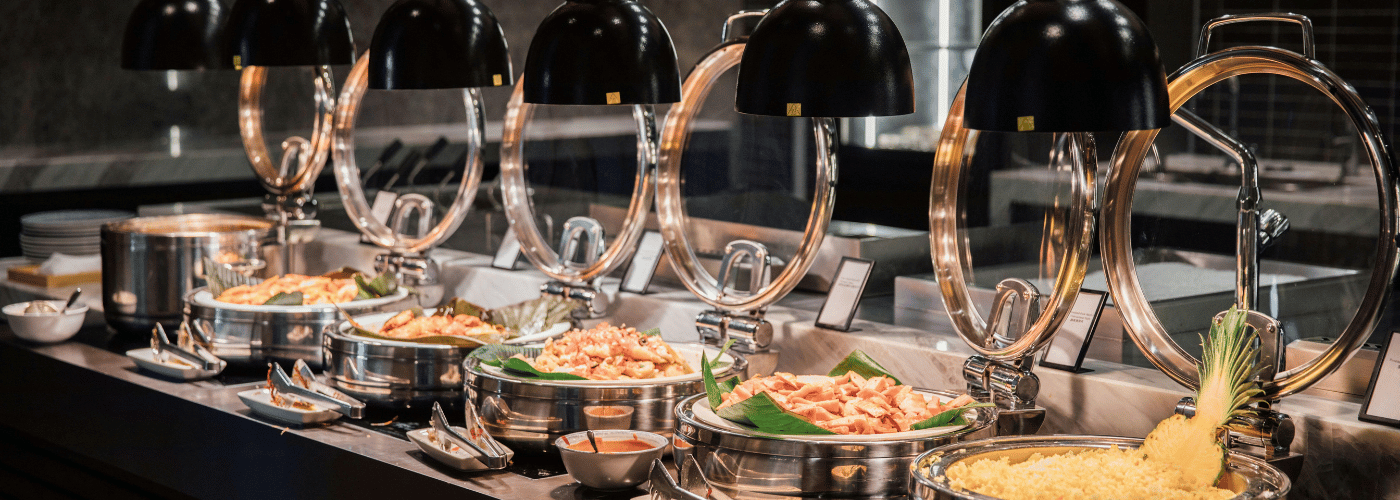
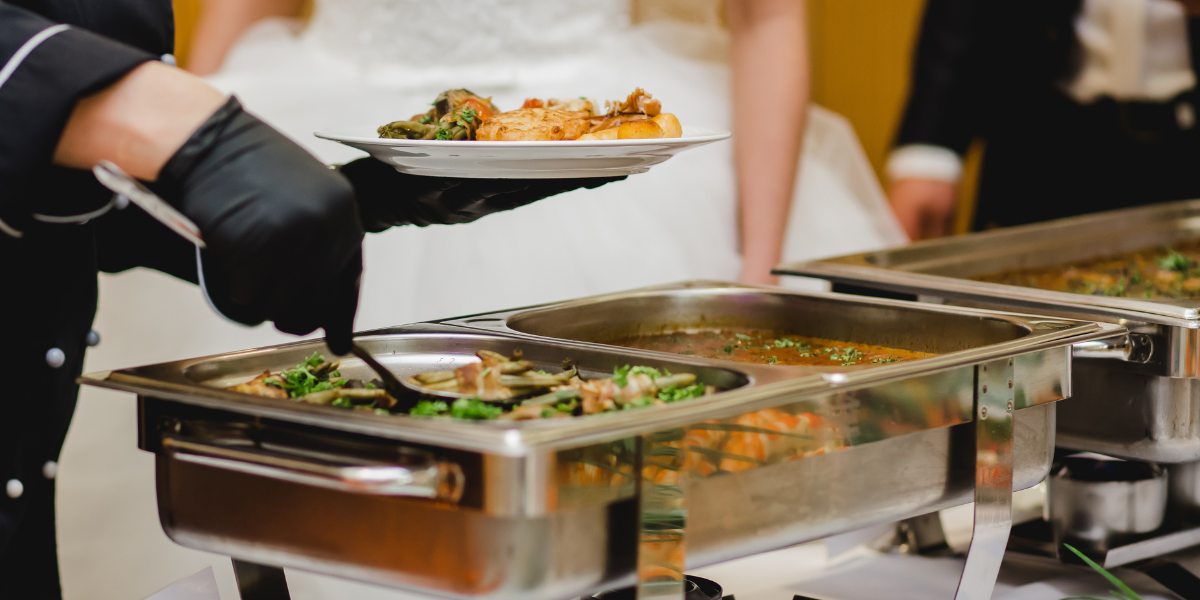
Buffet is the most common format at South Asian weddings in the UK, and for good reason. It suits large guest counts well, it gives guests flexibility over their portions and choices, and it is generally more cost-effective per head than a plated meal. The key quality markers for a buffet are the hot-holding equipment (food should arrive hot and stay hot throughout service), the replenishment process (a good caterer monitors trays and refills before they empty, not after), and the ratio of serving staff to guests. One server for every 30 to 40 guests is a reasonable minimum.
Sit-down meal service
A plated sit-down service creates a more formal atmosphere and gives you greater control over the pacing of the meal. It requires more staff, more coordination with the venue, and a higher per-head budget. For events under 150 guests where the atmosphere is formal and the schedule is structured, it can work beautifully. For larger, more informal South Asian celebrations, it tends to create logistical strain and frustrated guests who have been waiting an hour to be served.
Food stalls and stations
Food stalls have become increasingly popular at Mehndi events and outdoor celebrations. A live chaat station, a chai table, a live dosa or paratha setup, these add atmosphere as well as food, and they tend to generate genuine excitement among guests. They work best as a complement to a main catering setup rather than as the sole source of food for a large gathering. If you are considering stalls, confirm that your venue allows them and that power supply for any heated equipment is available.
Drop-off catering
Some caterers offer a drop-off service where food is prepared off-site and delivered to your venue without staff. This is the most affordable option and works for smaller, informal events where a family member can manage serving. For any event above 80 to 100 guests, it introduces too many variables around temperature, presentation, and replenishment to be reliable.
What to Ask at a Tasting
A tasting is not just an opportunity to decide whether you like the food. It is also the clearest window you will get into how a caterer operates before you hand them a large deposit. Come prepared with questions and pay attention to details beyond the plate.
- How was the food held before serving? Food that has been sitting in hot-hold equipment for four hours tastes different from food freshly prepared. Ask whether what you are tasting reflects what your guests would actually eat at the event.
- What happens if a dish runs short on the day? A good caterer has a contingency. A less experienced one has not thought about it.
- Can the menu be adjusted? If you have guests with specific dietary needs beyond halal, whether vegetarian, nut-free, or otherwise, confirm that the caterer can accommodate them without it being an afterthought.
- Who specifically will be running the catering on your wedding day? The person you meet at the tasting may not be the person managing the event. Ask who will be the lead contact on the day and whether you can meet them.
- What is the plan if something goes wrong? Equipment failure, staff no-shows, delayed delivery. Ask how they have handled problems in the past and what backup procedures exist.
Ask the caterer to show you food in the same conditions your guests will receive it. Food served four hours into an event is different from food straight off the hob.
Reading a Catering Quote Properly
The per-head price on a catering quote is a starting point, not the full picture. Before you compare quotes from different caterers, you need to understand exactly what each quote includes and excludes. The most common sources of confusion are the following.
Staffing
Some quotes include serving staff in the per-head price. Others quote food only and add staffing as a separate line item. A caterer who appears cheaper per head may become more expensive once you add the staff needed to serve your guest count properly. Ask for a fully staffed quote from every caterer so you are comparing like for like.
Equipment
Chafing dishes, serving utensils, crockery, cutlery, and glassware may or may not be included. If your venue provides these, you may not need the caterer to bring them. If it does not, you need to know whether the caterer supplies them or whether you need to hire separately. Getting this wrong can add hundreds of pounds to your costs at the last minute.
Setup and breakdown
Most professional caterers include setup and breakdown in their quote, but some charge separately for early access setup or extended breakdown time. Confirm both with your venue and your caterer so that the timelines align.
Minimum numbers and overage
Many caterers have a minimum guest number below which the per-head price increases. They may also have a policy on what happens if your final numbers come in significantly higher than initially quoted. Get this in writing before you sign anything.
Deposit and payment schedule
A typical catering deposit runs between 20 and 30% of the total quote, with the balance due 4 to 6 weeks before the event once final numbers are confirmed. Know when each payment falls due and build it into your cash flow planning from the start.
Questions About Service Quality That Most Couples Do Not Ask
Food quality is visible at a tasting. Service quality only becomes visible on the day. These are the questions that give you a more accurate picture of what to expect when 250 guests are waiting to eat.
- What is your staff-to-guest ratio? For a buffet, one server per 35 guests is workable. Below that, service slows noticeably and guests wait longer than they should.
- How do you handle dietary requirements on the day? Dietary-specific dishes need to be labelled clearly and served in a way that prevents cross-contamination. Ask how this is managed in practice, not just in principle.
- Do you carry public liability insurance? Any professional caterer operating at events in the UK should carry this. If they cannot confirm it quickly, that is a concern.
- Can you provide references from weddings of a similar size? Speaking to a previous couple about their experience with a caterer is more useful than any amount of portfolio browsing. Ask for two or three references and actually contact them.
- How do you coordinate with the venue on the day? Your caterer and your venue need to have a working relationship on the day. Ask whether they have worked at your venue before, and if not, whether they are willing to do a site visit beforehand.
Red Flags to Watch For
Most catering disappointments at weddings are not the result of genuinely bad caterers. They are the result of couples choosing caterers without enough information, or ignoring signals that were present during the booking process. These are the warning signs worth taking seriously.
- Vague answers to specific questions. If a caterer cannot tell you clearly how many staff will be present, what equipment they will bring, or what happens if numbers change, that vagueness will still be there on the day.
- No written contract. Every caterer should provide a written contract that specifies the menu, the guest numbers, the staffing, the equipment included, the payment schedule, and the cancellation terms. If one is not offered, ask for it. If they resist, walk away.
- Unusually low per-head pricing. Catering at a quality level that suits a wedding costs what it costs. A quote that is significantly below the market rate for your guest count and format usually means something has been cut: staffing, equipment, ingredient quality, or all three.
- No tasting available. Declining to offer a tasting is unusual for a caterer serious about weddings. It may indicate they are not confident in their product, or that they are too stretched to invest the time.
- Difficulty getting clear communication before the event. A caterer who takes days to reply to emails during the booking process will not become easier to reach in the final weeks when you need to confirm details urgently.
Final Thoughts
Choosing the right wedding caterer in the UK comes down to two things: asking the right questions before you sign anything, and making sure everything you have agreed is documented in writing. The food matters. The service quality matters just as much. And the logistics behind the service, the staffing, the equipment, the contingency planning, determine whether the quality you tasted at the tasting is the quality your guests actually experience on the day.
Give this decision the time it deserves, approach at least three caterers before committing, and do not let a low price or a good-looking portfolio substitute for a proper conversation about how they actually run events. The caterers who are worth booking welcome those questions. The ones who are not worth booking tend to avoid them.