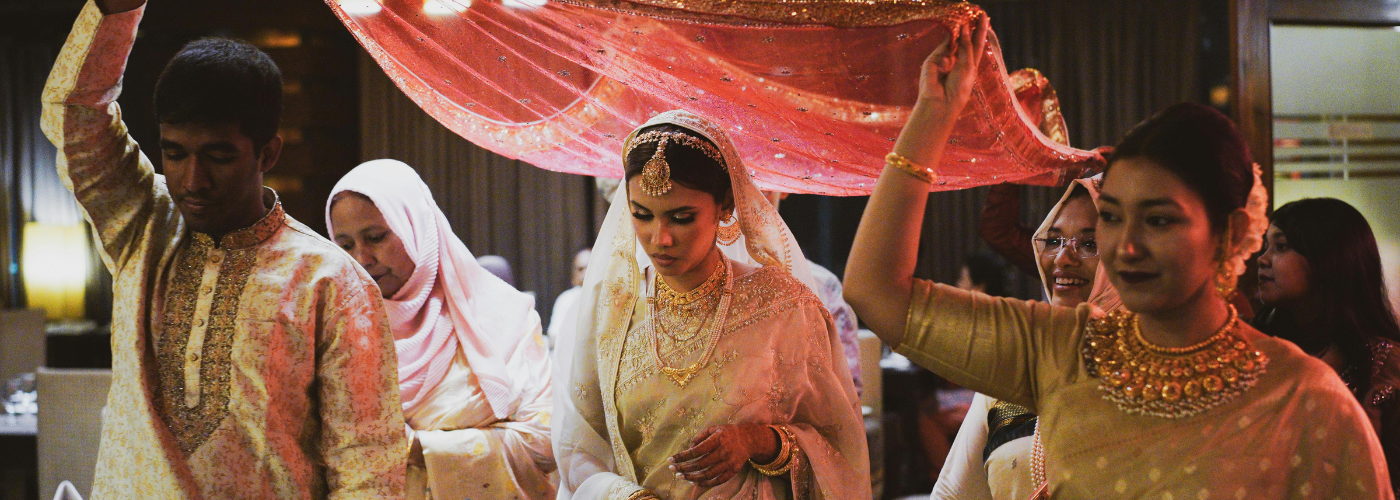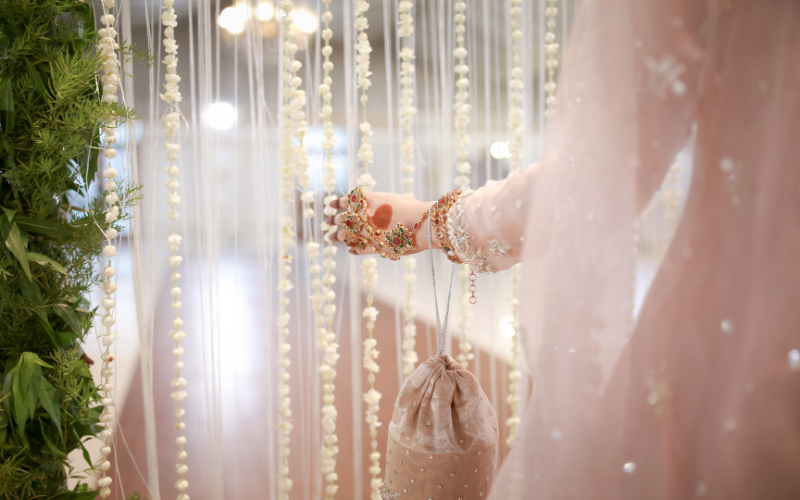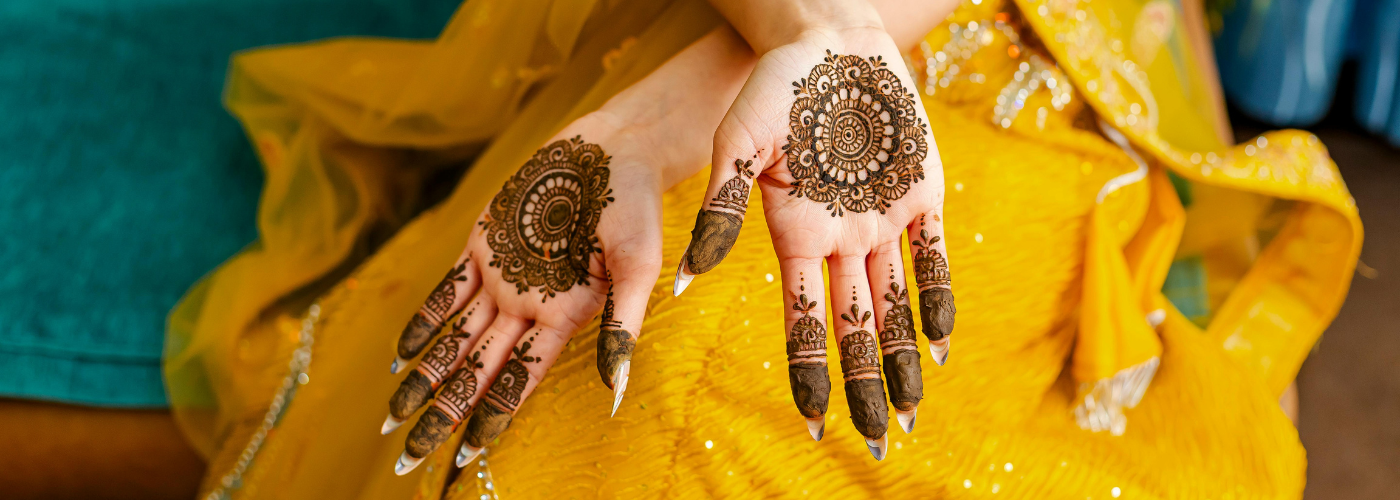
Of all the events in a South Asian wedding, the Mehndi is the one couples tend to enjoy planning the most. It is colourful, it is personal, and it carries a warmth that comes from generations of women gathering together before a wedding to mark the occasion with henna, food, and celebration. For couples planning their own Mehndi in the UK, this guide covers the tradition behind the event, the practical logistics of organising it, and the decor and format choices that make a modern Mehndi feel both rooted and personal.
The Tradition Behind the Mehndi
The Mehndi takes its name from the henna paste applied to the hands and feet of the bride, and often the female guests, in the days leading up to the wedding. The tradition is rooted in South Asian culture and spans Pakistani, Indian, and Bangladeshi communities, with regional variations in style, naming, and customs. The application of henna is widely understood as a symbol of beauty, joy, and the blessings being extended to the bride as she enters this new chapter of her life. The deeper the colour the henna leaves on the skin, many families say, the stronger the bond and the deeper the love within the marriage, a piece of folklore that continues to bring a smile to every Mehndi gathering regardless of how seriously anyone actually takes it.
Historically, the Mehndi was an intimate, women-only gathering held within the family home, centred on close relatives and friends sitting together as the bride's henna was applied. In the UK today, Mehndi celebrations have grown in scale considerably, often becoming a full event in their own right with a guest list, a hired venue, professional decor, and catering. Despite that growth, the heart of the occasion, gathering loved ones around the bride in a relaxed, joyful setting, remains unchanged.
Because it is usually the first event of the wedding, the Mehndi often shapes how the rest of the celebrations feel. A warm, well-organised Mehndi puts both families at ease for everything that follows.
Planning the Henna: What You Need to Know
The henna itself is the centrepiece of the event, and getting this part right requires more planning than most couples expect. There are two distinct elements to consider: the bride's own henna and henna for guests who wish to take part.
The bridal henna
A full bridal henna design, typically covering both hands up to the forearms and both feet up to the ankles, takes between three and five hours to complete depending on the intricacy of the design. This is a significant time commitment, and it is worth scheduling it early in the event so the bride is not rushing through the rest of the celebration with wet henna. Many brides choose to have their henna applied before guests arrive, allowing the design to set while she greets everyone once it has dried.
When booking a bridal henna artist, ask to see a portfolio specifically of full bridal work rather than smaller guest designs, as the two require quite different levels of skill. Book well in advance, particularly for summer dates, as the most experienced bridal henna artists in the UK often take a limited number of bookings each month to protect the quality of their work.
Henna for guests
If you want guests to be able to get henna at the Mehndi, plan for more than one artist unless your guest list is very small. A single henna artist can typically complete designs for eight to twelve guests per hour depending on the complexity offered. For a Mehndi of 100 guests over a four-hour window, two to three artists working simultaneously keeps waiting times reasonable. Many henna artists who do bridal work also offer a team for guest henna, so it is worth asking your bridal artist first.
Skilled henna artists, particularly those who do bridal work, book up quickly for summer Saturdays. Do not leave this booking until a few months before the date.
Choosing a Venue for the Mehndi
One of the appealing things about the Mehndi is its flexibility when it comes to venue. Unlike the Nikah or Walima, which often require larger formal spaces, a Mehndi works well in a wide range of settings.
- The family home. Gardens, living rooms, and marquees set up in the back garden remain a popular and meaningful choice, particularly for more intimate Mehndi celebrations. It keeps the day personal and significantly reduces venue costs.
- A hired hall or community space. For larger guest lists, a community hall, banqueting suite, or dry-hire venue gives you the space to bring in decor, seating, and catering exactly as you envision.
- A garden marquee. A marquee set up at home or at a private venue combines the personal feel of a home celebration with the capacity and weather protection of a larger structure. This works particularly well for UK summer Mehndis, where outdoor seating areas can be a real highlight.
- A dedicated wedding venue. Some couples choose to treat the Mehndi as a fully catered, professionally decorated event in its own right, hosted at a venue normally used for receptions. This suits couples who want all three wedding events to feel equally significant.
Decor: Bringing the Mehndi to Life
Mehndi decor has a distinct visual identity within South Asian weddings, and it is one of the most creatively rewarding parts of the planning process. The traditional palette leans bright and warm: yellows, oranges, pinks, and greens dominate, often anchored by marigold flowers, which have long been associated with Mehndi celebrations for their vibrant colour and fragrance.
Classic decor elements
- Marigold garlands and floral backdrops. Strung marigolds remain the signature decor element of a traditional Mehndi, used as garlands, backdrops, and table runners.
- Floor seating with cushions. Many Mehndi celebrations embrace low floor seating with vibrant cushions and rugs, creating an intimate, traditional atmosphere that contrasts with the formality of later events.
- Colourful fabric draping. Vibrant dupatta-style fabric draped across ceilings, doorways, and seating areas adds texture and softness to the space.
- Henna-themed signage and props. Decorative elements referencing henna cones, hand motifs, and traditional patterns tie the visual theme of the event back to its central activity.
Modern twists couples are adding
While the traditional elements remain at the heart of most Mehndi celebrations, many couples in the UK are adding their own personal touches to the format.
- A dedicated henna lounge. Rather than henna application happening informally around the room, some couples set up a styled lounge area specifically for the activity, complete with comfortable seating and good lighting for the artists.
- Live food stations. Chaat counters, live paratha or dosa stations, and chai tables have become a defining feature of modern Mehndi catering, adding atmosphere alongside the food itself.
- Photo booths and audio guestbooks. Interactive elements like a photo booth with props, or an audio guestbook where guests record a message for the couple, have become popular additions that give guests something engaging to do throughout the event.
- Calligraphy and live art stations. Live calligraphers creating personalised name art, or live painters capturing the event as it happens, add a creative and memorable touch that guests often comment on long after the day.
- A colour-coordinated dress code. Many couples now request guests wear a particular colour palette, creating a cohesive and visually striking effect across photographs.
Catering for the Mehndi
Mehndi catering tends to be more relaxed and varied than the formal sit-down meals associated with the Nikah or Walima. Buffet-style catering, food stalls, and grazing tables all suit the informal, social nature of the event well. Popular choices include chaat stations, samosas and pakoras served as guests arrive, biryani or curry buffets for the main meal, and a sweet table featuring traditional desserts like gulab jamun, jalebi, and barfi alongside a more modern dessert table.
Chai, fresh juices, and mocktails are the standard drink offerings at a Mehndi, and a dedicated chai station has become something of a signature feature at modern celebrations, giving guests a cosy spot to gather between henna sessions.
Outfits for the Mehndi
The Mehndi has its own distinct dress code within South Asian wedding culture, typically bright, vibrant colours rather than the more formal or pastel tones reserved for the Nikah and Walima. The bride often wears yellow, green, or a similarly bold colour, sometimes paired with floral jewellery instead of traditional gold, a popular modern touch that photographs beautifully and gives the bride something light and comfortable to wear during a long henna session.
Guests typically follow suit with bright, festive outfits, and many families now communicate a loose colour theme on the invitation to help everyone coordinate without being overly restrictive. Comfort matters here too, particularly for the bride, who will be seated for several hours during her henna application.
Planning Timeline for a Mehndi
- 6 to 9 months before: Book your henna artist or artists, confirm your venue, and begin sourcing decor specialists if you are using one.
- 3 to 4 months before: Finalise your catering plan and confirm numbers with your caterer. Decide on your dress code or colour theme and communicate it to guests if relevant.
- 6 to 8 weeks before: Confirm final guest numbers with your henna artists so they can plan staffing accordingly. Finalise decor details including marigold and floral orders.
- 1 to 2 weeks before: Confirm arrival times with all vendors and share a running order so everyone, from the henna team to the caterer, knows the schedule for the day.
Final Thoughts
The Mehndi is one of the most personal and joyful events in a South Asian wedding, and it rewards thoughtful planning without losing the relaxed, intimate spirit that makes it so special. Whether you keep it small and rooted firmly in tradition, or build it into a fully styled celebration with modern touches woven throughout, the heart of the event remains the same: gathering the people who love you most, around henna, food, and colour, in the days before your wedding truly begins.
Start with the henna booking, since that is the part most likely to be constrained by availability, and build the rest of the day around it. Everything else, the decor, the food, the dress code, is where you get to make the celebration genuinely your own.