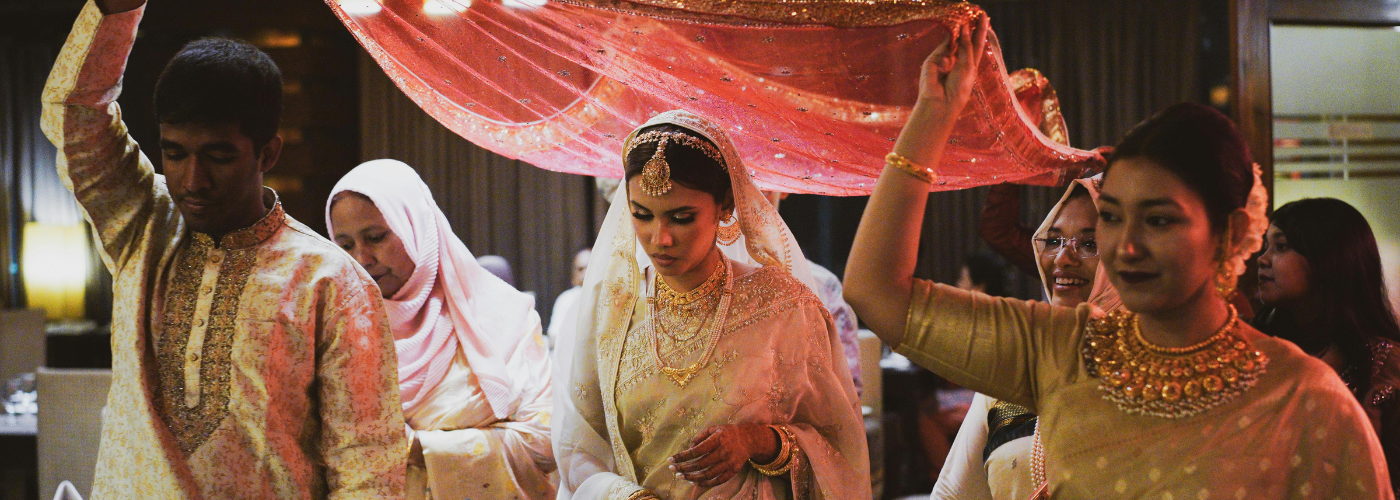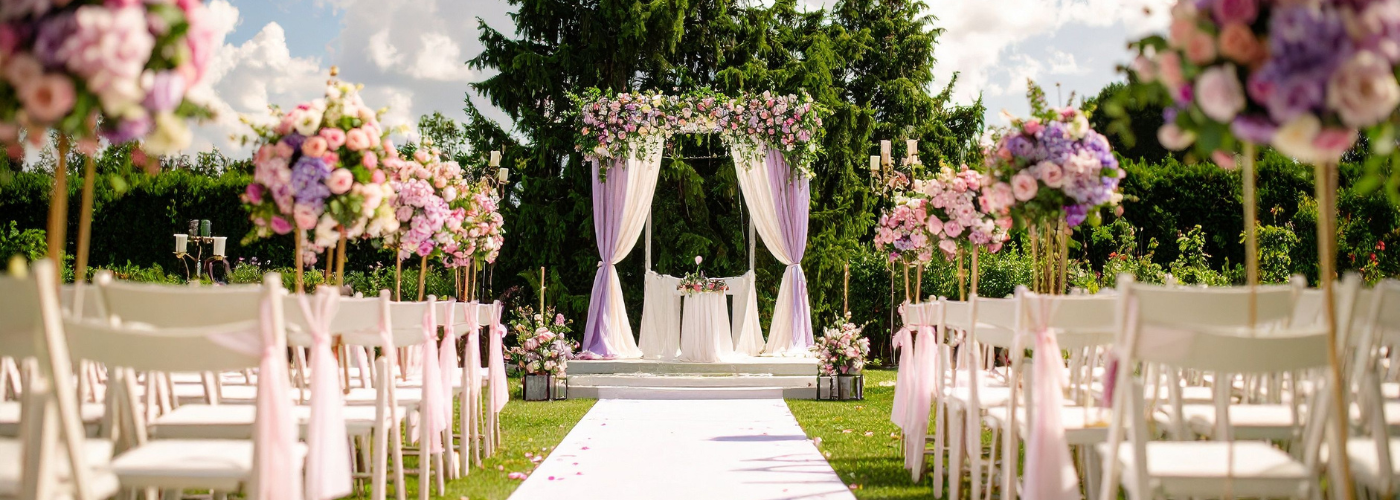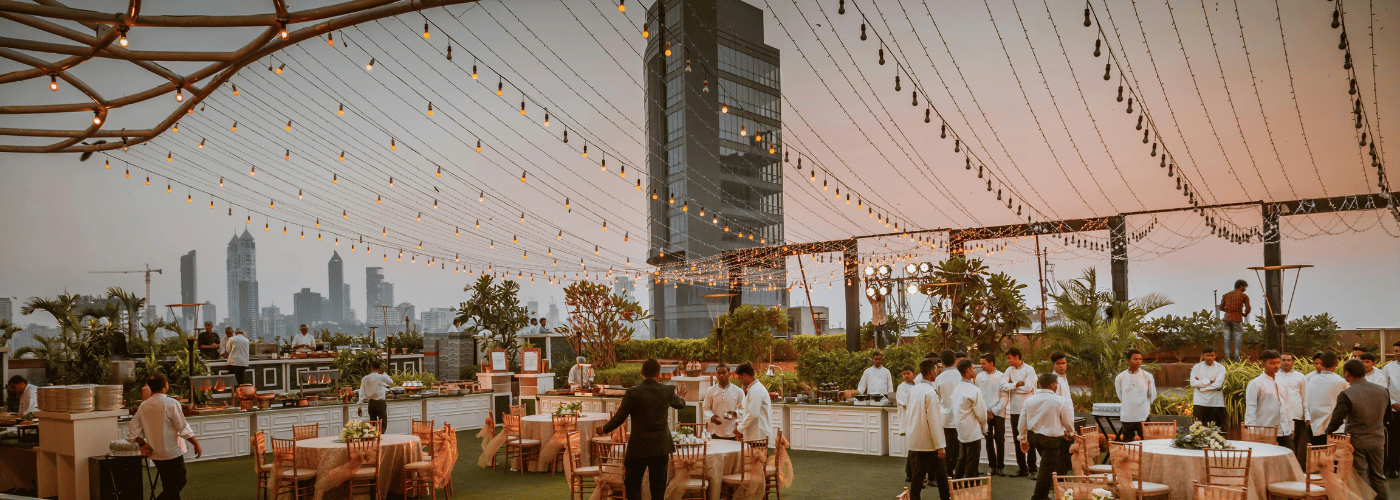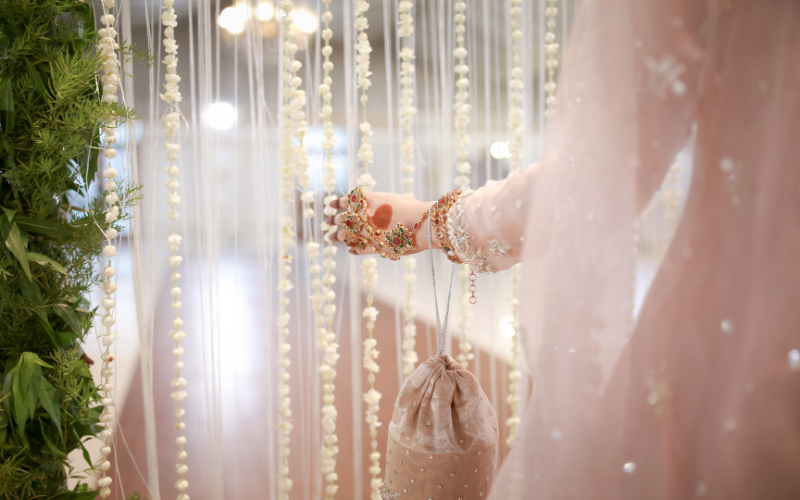
The Nikah is the heart of a Muslim wedding. Everything before it, the engagement, the Mehndi, the family gatherings, builds toward it. Everything after it, the Walima, the celebrations, the beginning of married life, flows from it. And yet for many couples planning their first Nikah in the UK, the specifics of how to actually organise it, what is required Islamically, what is required legally, and what makes the day feel like it deserves to, are surprisingly hard to find in one place. This guide brings it all together.
What the Nikah Actually Requires
Before venues, catering, or photography, it helps to be completely clear on what the Nikah ceremony requires at its core. There are four essential components, and none of them can be substituted.
- The Wali. The bride's guardian, typically her father or another close male relative, who gives her in marriage. The presence and consent of the Wali is a condition of the Nikah's validity in Islamic jurisprudence.
- Two Muslim witnesses. Both must be present during the ceremony and must hear the offer and acceptance clearly. They are not signatories in the way civil marriage requires, but their presence is an Islamic requirement.
- The Mahr. The gift from the groom to the bride. The Mahr can be agreed in any amount and can be anything of value, a sum of money, gold, or another meaningful item. It belongs entirely to the bride and is her right regardless of what happens in the marriage.
- The Ijab and Qabul. The offer and acceptance. The groom (or his representative) makes the proposal, the bride accepts. Both must be present in the same gathering, and the exchange must be clear and unambiguous.
Beyond these four, the specific words used, the recitation of the Khutbah Nikah (the marriage sermon), and the presence of the Imam are all encouraged and considered part of a full and proper ceremony, but the four conditions above are the non-negotiables.
The Mahr conversation belongs at the beginning of the planning process, not the week before the Nikah. Agreeing it early removes one source of last-minute pressure and allows it to be included correctly in any written documentation.
The Legal Side: How the UK Recognises Your Marriage
This is the area that causes the most confusion for Muslim couples in the UK, and it deserves a straight answer. A Nikah conducted at a mosque or private venue in England and Wales is not automatically recognised as a legal marriage under UK law. For your marriage to be legally valid in the eyes of the state, one of two things needs to happen.
The first option is to conduct the Nikah at a mosque or venue that is registered under the Marriage Act 1949 as a place of worship and also has an authorised person appointed to register marriages. In this case, the Nikah itself can serve as the legal marriage ceremony, provided the correct procedures are followed. Not all mosques in the UK hold this registration, so it is worth confirming explicitly before you assume your preferred venue qualifies.
The second option, and the more common one among Muslim couples in the UK, is to complete a civil marriage at a register office separately from the Nikah. This is often done quietly beforehand with just the immediate family present, and the Nikah is then celebrated as the main religious and family occasion. There is nothing religiously problematic about this approach, and it has the practical advantage of being straightforward to arrange regardless of where your Nikah takes place.
Register office appointments book up, particularly in peak months. If you are relying on a civil ceremony to make your marriage legally recognised, book it at least 3 to 4 months in advance.
Choosing Where to Hold the Nikah
The Nikah can take place almost anywhere: a mosque, a licensed venue, a banqueting hall, a family home, or a garden. The choice of location shapes everything else about the day, from the formality of the setup to the catering options available to you. Here is how the main options compare.
A mosque
Holding the Nikah at a mosque carries obvious spiritual significance and provides a ready-made setting that requires very little additional setup. Many mosques have experience facilitating Nikah ceremonies and can provide or recommend an Imam. The practical limitations are around capacity (mosque prayer halls vary considerably in size), the separation of men and women which is standard at most mosques, and the fact that most mosques do not permit outside catering on the premises. If you plan to have a meal after the ceremony, you will likely need a separate venue for that.
A licensed wedding venue
Hotels and banqueting venues that hold a civil marriage licence allow the Nikah and the legal registration to happen in the same place. These venues also typically offer catering, decoration packages, and the flexibility to keep the ceremony and the celebration in one space, which simplifies the day significantly for guests. The trade-off is cost: licensed venues charge a premium for this convenience, and you will need to confirm that the venue's Registrar is comfortable facilitating a religious ceremony alongside the legal one.
A private or dry-hire space
Many South Asian families choose to hire a hall or a private venue and bring in their own Imam, their own catering, and their own decor. This gives the greatest flexibility over the setup, the food, and the running of the day, and it is often the most cost-effective option for larger guest counts. The legal registration, if required, would need to be handled separately at a register office.
A family home
Intimate Nikah ceremonies at home are entirely valid and deeply meaningful for many families. They work best when the guest list is small: close family and a handful of witnesses. Catering is typically self-organised or brought in from a local caterer, and the atmosphere tends to be warm and personal rather than formal. If you want a small, spiritual ceremony before a larger Walima, this can be a beautiful way to structure it.
The Order of the Day: What to Expect
Every Nikah follows its own rhythm depending on the family, the Imam, and the venue. That said, a typical Nikah ceremony in the UK follows a recognisable sequence.
- Guests arrive and are seated. Men and women are typically seated separately, though the specific arrangement varies by family and venue. The bride and groom are usually in separate spaces at this point.
- The Imam delivers the Khutbah Nikah. The marriage sermon is recited, covering the rights and responsibilities of marriage in Islam. It is typically delivered in Arabic with a translation or summary in English for the benefit of guests.
- The Wali gives the bride in marriage. The bride's guardian formally agrees to the marriage on her behalf, in the presence of the witnesses.
- The Ijab and Qabul takes place. The offer is made and accepted. This is the moment the Nikah is complete. Many families mark this with a collective dua (supplication) led by the Imam.
- The Mahr is confirmed. The agreed Mahr is formally stated as part of the ceremony. If it is to be paid immediately, it is handed to the bride at this point.
- Signing of documents. If the ceremony is also legally registered, the certificates are signed at this stage. If it is a religious ceremony only, many families still choose to sign a written Nikah contract as a record of the agreement.
- Dua and congratulations. The Imam leads a closing dua for the couple. Guests then offer their congratulations, and the celebration moves into the meal and the rest of the day.
The ceremony itself rarely takes more than 45 minutes to an hour. The time either side of it, guests arriving, photographs, the meal, the stage session, is where the day expands. Planning your running order with the Imam in advance means you can give guests a realistic sense of timings rather than leaving everyone uncertain about when things are happening.
Vendors to Book for Your Nikah
Depending on the scale of your Nikah, you may need some or all of the following. The ones that book up fastest are listed first.
The Imam
If you have a specific Imam in mind, approach them as early as possible. Popular Imams who conduct Nikah ceremonies in the UK are in significant demand, particularly between May and September. When you speak to them, confirm the date and time, their fee, the format of the ceremony they conduct, and whether they are willing to include an English explanation of the Khutbah for non-Arabic-speaking guests. This last point makes a real difference to how included everyone in the room feels.
Venue
If you are not using a mosque, book your venue 9 to 12 months in advance for peak season dates. Confirm the following before signing anything: capacity for your expected guest numbers, whether external catering is permitted if you are not using their in-house caterer, setup access the day before, parking availability, and any curfew or noise restrictions that might affect the day.
Catering
Halal catering is a requirement, not a preference. Ask caterers to confirm their halal certification in writing. Beyond that, the key questions are: what is included in the per-head price, who provides the crockery and serving equipment, how many staff are included, and what is the process if guest numbers change closer to the date. For a Nikah meal serving 150 to 300 guests, a professional halal caterer with experience at South Asian events is worth the investment over a cheaper generalist.
Photography
A Nikah is a fast-moving ceremony with a lot of emotional moments and very specific cultural beats that a generalist photographer may not anticipate. Wherever possible, book a photographer who has documented Nikah ceremonies before and can show you full galleries from previous events. The ceremony itself moves quickly; experienced photographers know to stay present rather than directing, and to capture the Ijab and Qabul without disrupting the spiritual weight of the moment.
Stage and decor
The stage is where the couple will receive guests and where the formal photography takes place. A well-designed stage backdrop, florals, and seating area creates the visual centrepiece of the day. Get a full written quote from your decorator covering everything: backdrop, fresh or artificial flowers, table centrepieces, entrance decor, and lighting. Understand what setup time they need, and confirm this with your venue before the decorator visits.
Practical Details That Are Easy to Overlook
The ceremony and the vendors are the obvious parts of Nikah planning. It is the smaller logistical details that tend to create stress in the final weeks.
- Seating arrangements. Decide early whether men and women will be seated separately, partially separated, or together, and communicate this clearly to your venue and your guests. Changing the arrangement last minute creates confusion for both the setup team and the attendees.
- Running order document. Write a single document that lists every part of the day with timings, and share it with the Imam, the photographer, the caterer, and any family members managing the day. This one document prevents most of the "what's happening next?" conversations on the day itself.
- Guests travelling from out of town. If a significant portion of your guest list is travelling from other cities, consider whether to recommend nearby accommodation and include this in your invitation. For guests coming from outside the UK, flag the date as early as possible.
- Prayer arrangements. If the Nikah spans prayer times, make sure there is a designated space for Salah and that your guests know where it is. This is particularly important if the venue is not a mosque and guests may be unfamiliar with the space.
- Children at the ceremony. Nikah ceremonies are quiet, relatively formal occasions. If you are expecting a large number of children, it is worth designating a separate space or activity area so that the ceremony itself can proceed without disruption.
- Nikah contract documentation. Whether or not your Nikah is legally registered, keeping a written record of the terms including the Mahr, the witnesses, and the date is good practice. Some families have this signed formally as part of the ceremony.
Final Thoughts
The Nikah is the moment the marriage actually begins. Everything else around it, the decor, the food, the photography, the guest list, is in service of that moment. The best Nikah ceremonies we hear about are the ones where the couple felt fully present because the planning was done well enough that nothing demanded their attention on the day itself.
Start with the four Islamic requirements. Resolve the legal question early. Book the Imam and the venue before anything else. Then build the rest of the day around what matters most to you and your family, because a Nikah can be a simple gathering in a family home or a formally catered celebration for three hundred guests, and it is equally valid either way. The ceremony is the constant. Everything else is the context you choose to surround it with.