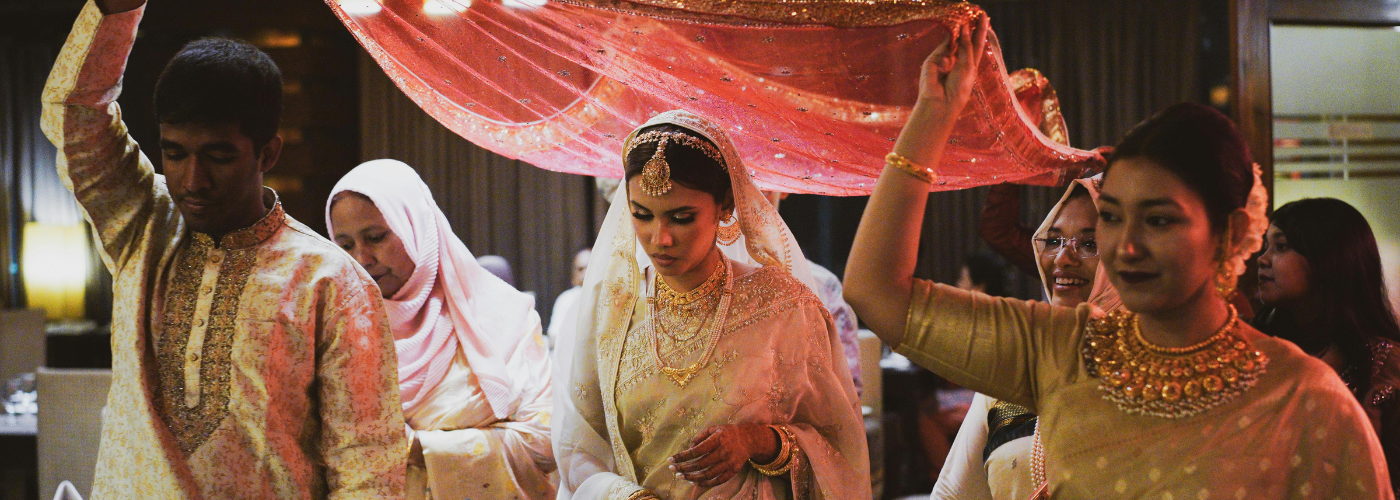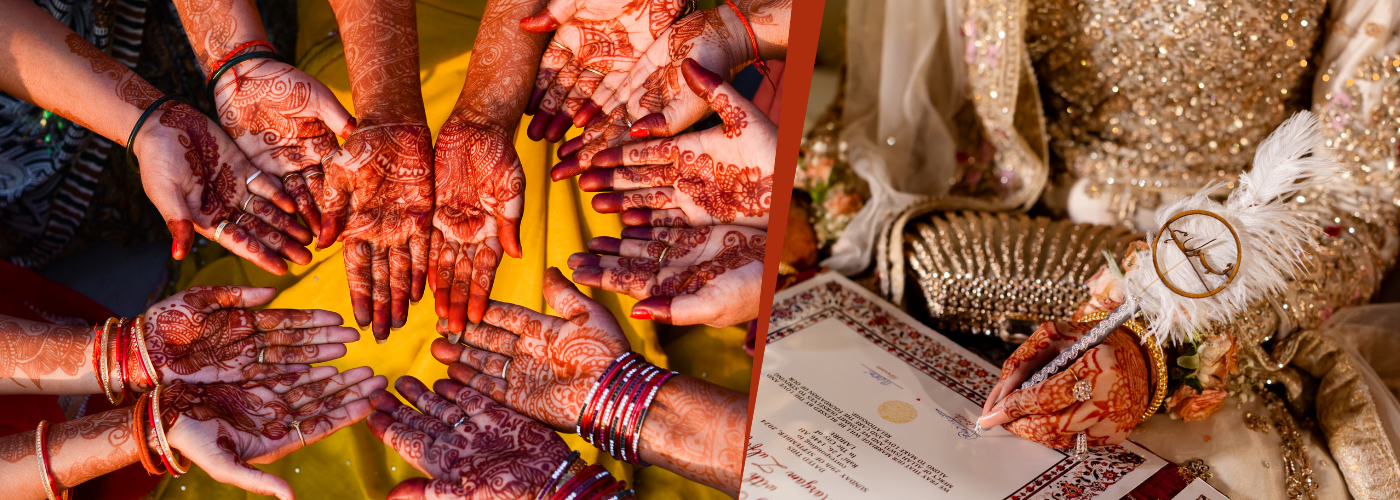
The bride who arrives at her Nikah exhausted because the Mehndi ran until 2am and the morning started at 6am. The groom who gets through the Walima on adrenaline and collapses the day after. The family members who planned and hosted three large events across four days and spent the following week recovering. These are not unusual outcomes from South Asian wedding celebrations in the UK. They are common ones, and they are almost entirely preventable with the right approach. This guide is not about doing less or scaling back the celebration. It is about doing it with enough structure and enough intentional recovery built in that the couple and their family actually experience the events they worked so hard to create.
Understanding Why Burnout Happens
Burnout at a multi-event South Asian wedding is not a sign of weakness or poor planning. It is the predictable result of a specific combination of factors that accumulate across the planning period and then converge in the days of the events themselves.
The planning phase builds a slow, sustained stress load. Months of vendor coordination, family conversations, budget management, and decision-making across three separate events create a cognitive and emotional burden that most couples underestimate until they are inside it. By the time the events arrive, the couple is often already running on a deficit before the Mehndi has even started.
The events themselves then compress that deficit into three or four consecutive days where sleep is shortened, social demands are at their peak, physical energy is depleted by long days in formal outfits under professional lighting, and emotional intensity is at its highest. The Nikah, in particular, is one of the most emotionally significant moments in a Muslim person's life. Arriving at it exhausted from the Mehndi the night before is one of the most preventable sources of regret couples describe afterwards.
Physically attending every event is not the same as experiencing it. The planning decisions that protect the couple's energy are not about reducing the celebration. They are about making sure the couple is actually there for it when it happens.
Space Events Strategically Rather Than Consecutively
The most significant structural decision in a multi-event wedding programme is the spacing between events. Three events on three consecutive days with no recovery time between them is the format most likely to produce burnout. It is also, for many South Asian families in the UK, the default format because it is logistically convenient for guests travelling from other cities.
Where there is any flexibility, building even a single day between events changes the experience significantly. A Mehndi on Thursday, a rest day on Friday, and a Nikah on Saturday gives the bride a day to recover from the henna session, to sleep, to eat properly, and to arrive at the ceremony feeling genuinely ready rather than already spent. Many couples who have done this say the gap day felt indulgent when they planned it and invaluable when they lived it.
For the Walima, which typically follows the Nikah by one to seven days, a gap of two to three days rather than the following morning gives the newly married couple their first moments of peace before the next large social event begins. This is not excessive. It is considerate of the reality that the Nikah is both the most significant and the most emotionally consuming event of the whole programme.
Finish Times Matter as Much as Start Times
One of the most consistent sources of burnout at multi-event South Asian weddings is the Mehndi that runs until midnight or beyond. Guests enjoy it. The atmosphere is warm. Nobody wants to be the one who ends it. And then the bride wakes up four hours later for a morning of hair, makeup, and final preparations before one of the most significant days of her life.
Setting a firm finish time for the Mehndi, and communicating it clearly to guests in advance, is one of the most practical decisions a couple can make for the whole wedding programme. A Mehndi that ends at 10pm gives the bride six to seven hours of sleep before a 6am preparation start. One that ends at midnight gives her four. That two-hour difference is felt across the entire following day and shows in the photographs, the emotional experience, and the physical energy available for the ceremony itself.
The finish time should be in the running order shared with all vendors and communicated to family members who are managing the event flow. A venue with a clear curfew enforces this naturally. For home events without a natural stopping point, a trusted family member should be briefed to begin the guest departure process at the agreed time rather than leaving it to drift.
Delegate Ruthlessly and Specifically
The most common planning mistake that leads to burnout is the couple trying to manage too much themselves across the event days. Every call from a vendor, every question from a guest, every logistical problem that arises, if it routes to the couple, takes them out of the experience and into a management role at exactly the moment they should be present in the celebration.
Delegation works only when it is specific rather than general. Telling a family member "you are in charge of the Mehndi setup" is not delegation. It is an unspecified request that will generate questions back to the couple when anything ambiguous arises. Effective delegation looks like this: a written list of responsibilities, a named person for each one, their specific tasks written out, and a single point of contact for vendors who need to reach someone on the day. That contact is never the couple.
- Designate one family member as the vendor coordinator for each event. This person receives all vendor calls, manages setup and arrival, and resolves problems without involving the couple unless something is genuinely unresolvable.
- Designate one family member as the guest management lead. This person manages arrivals, directs guests to the correct areas, handles seating queries, and manages the stage session flow.
- Designate one family member as the couple's personal support. Their only job is to make sure the couple has water, food, has had time to pray, and is not being pulled in multiple directions by well-meaning guests with requests.
- Share a written brief with every designated person before each event. A half-page document listing their responsibilities and the contact numbers for every vendor they may need to reach is the difference between delegation that works and delegation that creates more questions than it solves.
Protect the Morning of Each Event
The morning before each event is the couple's most valuable unstructured time of the whole wedding programme and the period most commonly invaded by avoidable demands. Family members wanting final decisions. Vendors calling to confirm arrival times that were already confirmed. Last-minute additions to the guest list. Questions that could have been answered the week before.
The practical protection is a preparation schedule shared with the immediate family that makes the couple's morning timeline visible and explicit. If the bride's makeup starts at 8am and the family knows this, the 7am conversation about the seating plan is less likely to happen. If the groom's morning includes time for Fajr, breakfast, and quiet preparation before 10am, and his family knows that, the requests that would otherwise fill that window will go elsewhere.
The rule is simple: the couple should arrive at each event having eaten a proper meal, having had time to pray, and having had at least thirty minutes of quiet before the event begins. These are basic conditions for being genuinely present, and they are achievable with planning even within the demanding schedule of a multi-event programme.
Eating properly on the morning of the Nikah. Hair and makeup takes hours. The events run long. The day is physically and emotionally demanding. A bride who has not eaten a proper meal before 9am and does not eat again until the Walima meal at 7pm has been running on near nothing for ten hours. Brief someone specifically to make sure food is available and that the bride actually eats it.
The Week Before the Events: How to Use It
The final week before a multi-event wedding programme is when most couples are at their most exhausted from planning and simultaneously facing their highest volume of tasks. Last-minute confirmations, outfit collections, final payments, and family gatherings all cluster in this window. Managing it well is the difference between arriving at the Mehndi with energy and arriving already depleted.
The principle for the final week is to front-load everything that can be done early and to protect the two days immediately before the first event. Every vendor confirmation that can happen on Monday should happen on Monday rather than Thursday. Every outfit collection that can happen on Tuesday should not be left to the morning of the Mehndi. Every family conversation that needs to happen before the events should be scheduled in the first half of the week rather than allowed to land unprompted in the second.
The Wednesday and Thursday before a Thursday Mehndi should ideally be the lightest days of the whole week. Not empty, but protected. The couple who has finished all their planning tasks by Wednesday evening and spends Thursday morning resting, praying, eating well, and preparing quietly arrives at their Mehndi in a fundamentally different state from the one who was making vendor calls until 2pm on Thursday afternoon.
During the Events: Protect Your Own Experience
Once the events begin, the protection of the couple's experience becomes a real-time task. There are specific moments in every South Asian wedding programme where the couple is most likely to be pulled away from the experience by the demands of hosting.
The stage session at the Walima
The stage session, where the couple receives guests over a period of one to two hours, is physically demanding in a way that is easy to underestimate. Standing or sitting in formal attire under professional lighting while greeting hundreds of guests requires stamina. The couple should eat before the stage session begins, have water available during it, and have a trusted family member managing the flow of guests so that the session does not stall into awkward waiting periods that extend it unnecessarily.
Prayer times
For Muslim couples, prayer times during the events are non-negotiable and should be built into the running order explicitly rather than managed reactively. When the couple knows that the running order includes a ten-minute pause for Dhuhr, they can move into it calmly. When it is not planned for, the pause is disruptive to both the couple and the guests and creates stress that is entirely avoidable.
Eating during the events
The couple is almost always the last to eat at their own wedding. By the time the Walima buffet opens, the stage session is running, and the couple cannot leave to serve themselves. The solution is to brief the caterer or a designated family member to prepare a plate for both the bride and groom and to deliver it to them wherever they are before the main service opens. This costs nothing and prevents the couple going through a four to five hour event on no food.
After the Events: Build in Recovery Time Deliberately
Most couples give no thought to the days after the Walima until they are inside them feeling the full weight of what they have just been through. A period of genuine rest, not catching up on tasks, not responding to everyone who attended, not reviewing photographs and reliving every moment, but actual rest, is something worth planning for rather than stumbling into.
If circumstances allow, blocking out the two days after the Walima as protected time for the couple is one of the kindest things the families can do. No visitors, no calls, no requests for decisions. Just rest, food, prayer, and the quiet of a life that has changed significantly but has not yet been fully absorbed.
This is not always possible. Work resumes. Family expects visits. Life does not pause for a recovery period. But even a single day where the couple has no obligation beyond existing and resting is worth negotiating for and protecting because the emotional processing of a multi-event wedding is a real need that does not go away simply because it is inconveniently timed.
A Note for the Family
Much of what causes burnout at multi-event South Asian weddings falls not on the couple but on the extended family members who carry the planning and hosting load alongside them. The aunties who cooked for three days. The brothers who managed setup and breakdown across multiple venues. The sisters who coordinated guests and handled the details nobody else saw. Their wellbeing matters as much as the couple's and it deserves the same explicit attention.
A family that distributes tasks across more people, that builds rest into the hosting schedule, and that gives each other permission to step back when capacity is reached, produces events that feel genuinely joyful rather than barely survived. That outcome benefits everyone in the room, not just the couple at the centre of it.
Final Thoughts
A South Asian wedding programme is one of the most beautiful, meaningful, and demanding things a family undertakes together. The goal of everything in this guide is not to make it smaller or simpler. It is to make it survivable in the best sense: a programme that the couple and their family get through not just intact but genuinely enriched by the experience, present for every moment they worked so hard to create.
Space the events where you can. Set and hold the finish times. Delegate with specificity. Protect the mornings. Feed the couple. Build in recovery. These are not luxuries. They are the conditions under which a multi-event South Asian wedding becomes something the family looks back on with warmth rather than something they describe as a thing they survived.