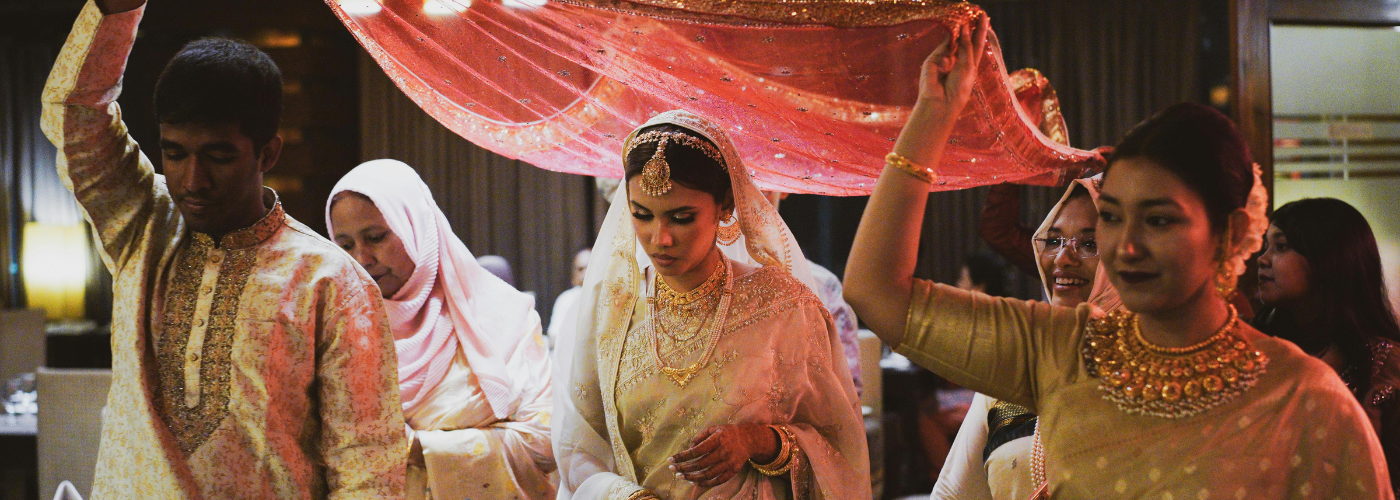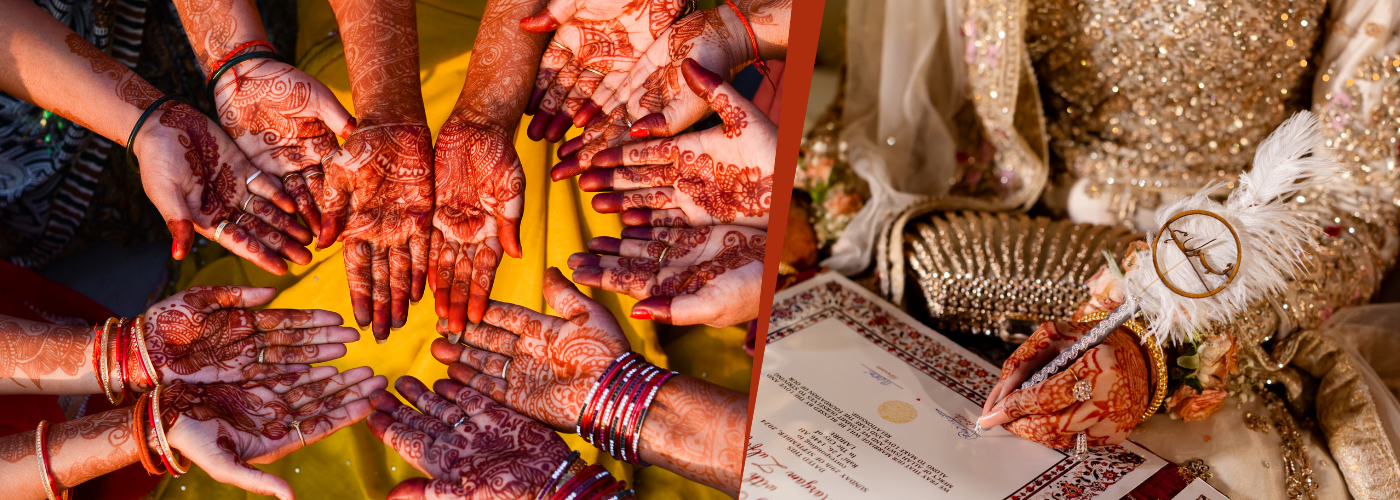
Planning one wedding event is a significant undertaking. Planning three across separate days, separate venues, separate vendor teams, and separate budgets is an entirely different challenge, and it is the reality for most South Asian and Muslim couples in the UK. The Mehndi, the Nikah, and the Walima each require their own logistics, their own guest management, their own catering arrangements, and their own running order. When all three are being planned simultaneously across the same twelve to eighteen month window, the information load is enormous. Without a clear system, things fall through the gaps. Not because couples are disorganised, but because the volume and complexity of what needs tracking is genuinely beyond what can be reliably managed in someone's head or across a collection of WhatsApp threads. This guide explains exactly how to build that system.
Why Multi-Event Weddings Create Specific Planning Problems
The challenges of planning multiple wedding events are not simply a scaled-up version of planning one. They are qualitatively different, and understanding why helps explain what the solution needs to address.
When you are planning a single event, the information is at least contained: one venue, one caterer, one photographer, one set of decisions. When you are planning three events, each with its own vendor team, the information multiplies. Three separate venue contacts. Potentially three separate caterers or one caterer managing three different menus across three different spaces. A photographer whose brief covers multiple days. A decorator whose setup and breakdown schedule needs to align with three different venue access windows. A henna team whose timing must work around the bridal preparation schedule for the following morning.
The problem that emerges is not usually that individual tasks are missed. It is that the relationship between tasks across events stops being visible. The caterer for the Walima needs to know how many guests carried over from the Nikah invitation list. The decorator for the Mehndi needs setup access the day before, which happens to be the same day as a final fitting appointment. The photographer covering all three events needs a clear brief for each one, not a single overview that blurs the distinctions between them.
Treat each event as a completely separate project with its own budget, its own vendor list, its own guest list, and its own running order. Then manage the dependencies between them as a fourth layer on top. This structure prevents the blurring that causes most multi-event planning problems.
Step One: Separate Your Events Structurally from Day One
The most important organisational decision you make when planning multiple wedding events is whether to keep them structurally separate or to manage them as a single combined project. Almost every multi-event planning failure traces back to mixing them. A budget that lumps all three events together makes it invisible when one event has overspent until the total is gone. A vendor list that is not tagged by event makes it impossible to see at a glance whether the Nikah decor has been confirmed or only the Walima decor. A guest list that is not split by event creates confusion about who has been invited to what, which then creates confusion for caterers about final numbers.
Separate your events from the very first document you create. Every spreadsheet tab, every folder, every budget line, and every vendor communication should be tagged to one specific event. The Mehndi is its own project. The Nikah is its own project. The Walima is its own project. The connections between them are managed deliberately and explicitly rather than allowed to merge by default.
Step Two: Build a Master Document for Each Event
Each event needs its own master document containing the same categories of information. Having a consistent structure across all three means you can check the status of any event at a glance without having to remember where different pieces of information live.
The master document for each event should contain the following sections.
Event details
Date, time, venue name, venue address, venue contact name and number, setup access time, and finish time. This is the reference point for every other decision related to the event. Any vendor you brief needs this information, so having it in one place that you can copy and paste saves time and prevents errors.
Guest list and numbers
The confirmed guest count for this specific event, the RSVP deadline, and the final number you will give to the caterer. For South Asian weddings where different events have different guest lists, this section prevents the most common catering confusion: a caterer being given the wrong number because the couple referred to the combined total rather than the event-specific figure.
Vendor list
Every vendor confirmed for this event, with their name, contact number, what they are providing, their arrival time, the deposit paid, the balance outstanding, and the balance due date. This single table tells you at a glance the status of every vendor relationship for the event without having to search through email threads or message conversations.
Budget tracker
Total budget allocated to this event, broken down by category (venue, catering, decor, photography, outfits, miscellaneous). Actual spend to date against each category. Outstanding commitments. Remaining budget. This should be updated every time a payment is made or a new vendor is confirmed.
Running order
A time-by-time breakdown of what happens across the day. Vendor arrival times, guest arrival time, ceremony or key moments, meal service, stage session, and finish time. This document gets shared with every vendor in the weeks before the event.
Step Three: Manage the Dependencies Between Events
Once each event has its own structure, the next challenge is managing the connections between them. These dependencies are where multi-event planning most often breaks down, because they are not visible within a single event's documentation but they affect all of them.
Vendor overlaps
If you are using the same photographer, the same caterer, or the same decorator across multiple events, their schedule across all three needs to be confirmed as a single agreement rather than three separate ones. A photographer confirmed for your Nikah who has a conflict on the Walima date is a problem you need to discover during the booking process, not the week before. When briefing any vendor who spans multiple events, share the full schedule of dates upfront and get confirmation of all of them before paying any deposit.
The decor logistics chain
If you are using the same decor company across multiple events, understand the setup and breakdown schedule across all three. A decorator finishing the Walima setup on the evening before the Nikah may have a practical conflict if both venues require access at the same time. Map out all decor setup and breakdown windows on a single timeline before confirming anything, and share that timeline with your decorator in the initial briefing conversation.
Outfit preparation and logistics
With three or more events across consecutive or near-consecutive days, the morning preparation schedule for each day needs to account for what happened the day before. A bridal outfit that needs steaming after being packed away from the Mehndi needs time the following morning before the Nikah begins. A henna design that needs to set overnight affects what the bride can wear and how quickly she can get dressed the next day. These are small details but they affect the running order of the following day, and they need to be planned for rather than discovered on the morning.
Family responsibility allocation
Multi-event weddings involve a large number of family members taking on coordination roles across different days. The mistake most families make is allocating responsibilities verbally and informally, with an assumption that everyone remembers what they agreed to. Written allocation of responsibilities, however informal the document, prevents the moment on the morning of the Nikah where three people thought someone else was meeting the caterer at the venue.
A one-page contact sheet with every vendor's name, phone number, arrival time, and allocated family coordinator, covering all three events on a single sheet. Print it. Give it to three people. Keep one in your bag on every event day. This is the document that prevents the most common day-of crises.
Step Four: Manage the Money Across All Three Events Together
Multi-event wedding budgets fail in a specific way that single-event budgets do not. Because each event feels manageable in isolation, couples commit to each one without maintaining a clear view of the total. The Mehndi catering feels affordable at £1,500. The Nikah decor feels reasonable at £2,000. The Walima venue feels justified at £4,000. When these are viewed individually they each pass the affordability check. When they are viewed together they reveal a total that may already be at or beyond the overall budget before photography, outfits, invitations, and a dozen other categories have been added.
The practical fix is a single master budget document that sits above the three event budgets. It shows the total allocated, the total committed across all three events, and the total remaining. Every time a deposit is paid or a vendor is confirmed across any of the three events, the master total is updated. This gives a real-time view of the overall financial position rather than a per-event view that can feel misleadingly manageable.
Payment scheduling is equally important across multiple events. Final balances for vendors at the Mehndi, the Nikah, and the Walima can all fall due within the same six to eight week window, because all three events are clustered together in time. Mapping every outstanding balance and its due date onto a single payment calendar in the months before the wedding prevents the situation where three large invoices arrive simultaneously without having been anticipated or prepared for.
Step Five: Use the Right Tools
The right tools for managing multiple wedding events are the ones you will actually use consistently rather than the most sophisticated ones available. The system matters more than the software. That said, certain approaches work significantly better than others for multi-event planning.
A shared spreadsheet with separate tabs per event
A shared Google Sheet or Excel workbook with one tab per event plus an overview tab is the most versatile and widely accessible approach. Both partners and key family members can access and update it from any device. The overview tab pulls totals from each event tab so the combined picture is always visible without manually aggregating. This approach requires no additional cost and works for any level of planning complexity.
A dedicated planning platform
For couples who want something more structured, a dedicated event planning platform that allows multiple events to be managed separately within a single account removes the spreadsheet maintenance burden and provides a cleaner interface for tracking vendors, tasks, and payments. Wedsi's Event Builder is built specifically for this: each event is planned and tracked separately within the same account, with all vendor communications, budgets, and task lists kept in their own space without merging into each other.
What to avoid
WhatsApp groups as planning tools. Notes apps without structure. Email threads as the primary record of vendor agreements. Verbal communication between family members as the coordination mechanism for responsibilities on the day. Each of these creates the same problem: the information exists but it is scattered, unstructured, and inaccessible at the moment it is most needed.
Step Six: Communicate Clearly with Both Families
Multi-event weddings almost always involve both families contributing to the planning in some capacity, whether financially, logistically, or both. The coordination challenge this creates is significant, because two families with different communication styles, different expectations, and different views on how decisions should be made need to work from the same information to avoid contradictions reaching vendors.
The practical approach is to designate a single point of contact for each vendor rather than allowing multiple family members to speak to the same caterer or decorator with potentially different versions of the brief. This does not mean other family members are excluded from the process. It means that all communication with the vendor flows through one person who has the full picture, and any updates from family discussions are consolidated before being passed on.
A monthly planning update shared with both families, even a brief one, keeps everyone working from the same information and reduces the number of individual queries that arrive at the couple from different directions. It also creates a natural checkpoint for decisions that require family input, rather than those decisions being made ad hoc in separate conversations that may produce contradictory outcomes.
Final Thoughts
Managing multiple wedding events is genuinely demanding. Not because any individual element of it is beyond reach, but because the volume of information, the number of relationships, and the complexity of the dependencies between events is greater than any informal system can reliably handle. The couples who navigate it well are not the ones who have more time or more help. They are the ones who built a structure at the beginning of the process and held to it consistently throughout.
Separate your events. Build a master document for each one. Manage the dependencies deliberately. Keep a combined view of the total budget. Designate clear responsibilities. And use a tool that supports the structure rather than fighting against it. Do those things and the final weeks before your wedding become a matter of confirming what is already agreed rather than scrambling to fill gaps that appeared without warning.