The Walima is the celebration that announces the marriage to the world. Where the Nikah is the ceremony that makes the marriage real, the Walima is the occasion that shares it, bringing together family, friends, and community to mark the beginning of a new chapter. In the UK, the Walima is typically the largest of the three main South Asian wedding events, and for many families it carries the most logistical weight: the biggest venue, the most guests, the most significant catering budget, and the highest expectations from the widest audience. This guide covers everything you need to plan it well.
Understanding the Walima
The Walima is a Sunnah act, meaning it follows the practice of the Prophet Muhammad, peace be upon him, and carries significant religious and cultural importance within Muslim communities. It is traditionally hosted by the groom's family as an act of hospitality and gratitude, formally announcing the marriage and inviting the community to share in the joy of the occasion. Scholars generally agree that the Walima should be held within seven days of the Nikah, with the first or second day being most recommended.
In terms of scale, the Walima can range from a modest gathering of close family to a large formal celebration with hundreds of guests. Both are valid. What matters from a religious perspective is that the intention is sincere, that guests are fed generously, and that the celebration remains within the bounds of what is appropriate. A Walima does not need to be expensive or elaborate to fulfil its purpose. The traditions of simplicity and genuine hospitality are at least as important as the scale of the event.
Keeping that in mind throughout the planning process helps with decisions around scale, spending, and priorities. The most important element is the genuine welcome and feeding of guests, not the grandeur of the setting.
Guest Numbers: The Decision That Drives Everything Else
The Walima guest list is the single most consequential planning decision you will make, because it determines the venue size you need, the catering budget required, the invitation spend, the number of tables, and the staffing ratio for the meal. Every other decision in the Walima planning process flows from this number, which is why it needs to be agreed firmly before any venue is visited or any caterer is approached.
In the UK, a typical South Asian Walima guest list runs between 200 and 400 people, though both smaller and larger events are common. The number reflects a combination of genuine closeness, community obligation, family expectation, and financial reality. The honest approach is to start with who you genuinely want there and then negotiate additions through the lens of the budget, rather than starting with an aspirational number and trying to make the finances work around it.
One practical consideration specific to the UK: if your guest list spans multiple cities, which is common for South Asian families with roots in Birmingham, London, Manchester, Leicester, and Bradford simultaneously, factor in travel time and accommodation needs for guests coming from a distance. Choosing a venue that is accessible by rail as well as road widens your practical options considerably for out-of-town guests.
Choosing the Right Venue
The Walima venue is the largest single cost in the budget for most UK families, and choosing it correctly means understanding what you are comparing when you receive quotes from different spaces.
Banqueting halls
The most common venue choice for UK Walima events is a dedicated banqueting hall, particularly in cities with established South Asian communities. These venues are experienced with South Asian wedding formats, typically allow external halal catering, have furniture and AV equipment included in the hire, and are set up to manage large guest numbers efficiently. Hire fees vary but Saturday hire for a hall accommodating 300 guests in the Midlands or North typically runs between £1,500 and £4,000 depending on the venue and the level of facilities included.
Hotels with function rooms
Hotels offer the advantage of on-site accommodation for out-of-town guests and often have dedicated events staff managing the day. The trade-off is that many hotels require you to use their in-house catering, which may not be halal-certified to the standard your family requires. Always confirm halal certification for every food item served, not just the main course, before committing to a hotel venue. If you find a hotel whose catering meets your requirements, they can be excellent Walima venues, but the confirmation in writing matters.
Dry-hire spaces
For couples who want full control over every element, a dry-hire space with no in-house catering gives the greatest flexibility. You bring in your own caterer, your own decor team, and your own furniture hire if needed. The headline hire fee is often lower than an all-inclusive venue, but the total cost once all suppliers are added can be comparable. The advantage is control. The disadvantage is that you are coordinating more moving parts on the day.
Community halls and mosque-linked venues
For families prioritising simplicity over scale, a large community hall or a venue linked to a mosque can provide a meaningful setting at a fraction of the cost of a commercial venue. These spaces often require more work on decor and catering logistics, but they suit Walima celebrations that are rooted in community and genuine hospitality rather than in formal event presentation.
External catering permitted. Halal-only policy on site. Setup access the day before. Parking capacity for your expected guest count. Overtime charges if the event runs long. Getting all five in writing before you sign removes the most common sources of last-minute friction.
Catering: The Heart of the Walima
Feeding guests generously is at the core of what a Walima is. The food is not a peripheral detail. It is the point. Which means the catering decision deserves more time and attention than any other single element of the planning process, and the budget should reflect that.
Format
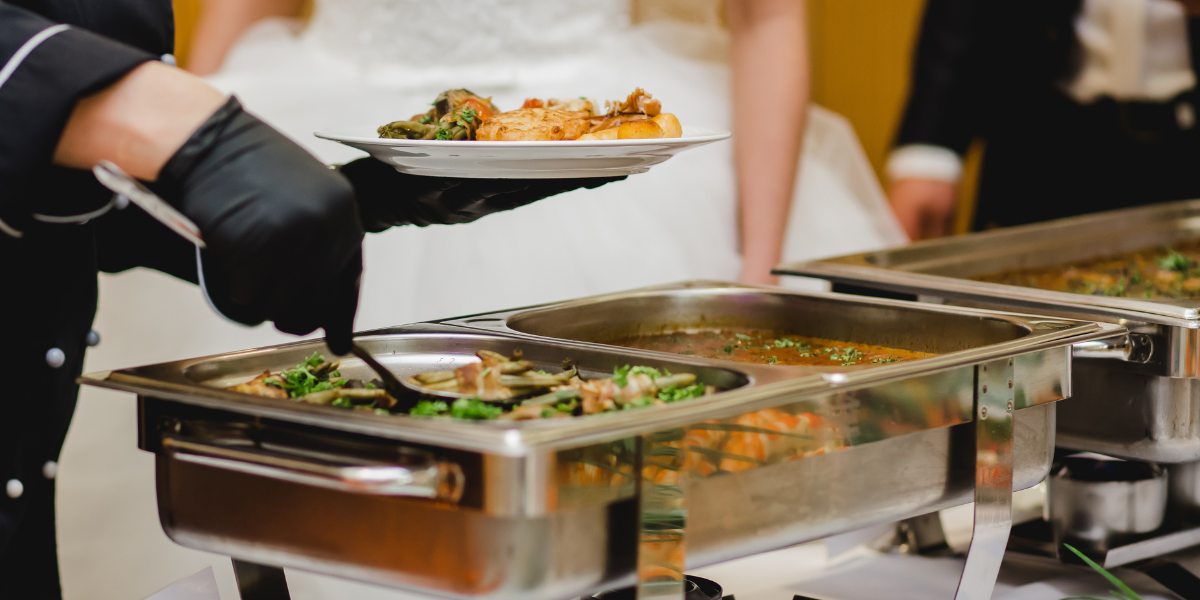
For large Walima events, a buffet format is by far the most practical and cost-effective choice. It suits South Asian food well, it allows guests to eat at their own pace across a long event, and it handles the natural variation in guest arrival times that comes with a large invitation list. A sit-down plated service for 300 guests is logistically demanding and significantly more expensive per head. Unless formality is a specific priority, buffet is almost always the right choice at scale.
Menu
A traditional Walima buffet menu centres on rice, curries, and bread, with a biryani as the anchor of the spread. Two to three curry options, a rice dish, naan or chapati, raita, salad, and a dessert table is a format that works well across all guest demographics and keeps the cooking and service logistics manageable for the catering team. Some families add a starter course of appetisers as guests arrive, which adds cost but also manages the period between guests entering and the buffet opening.
Halal certification
This is non-negotiable and should be confirmed in writing, not verbally, before any deposit is paid. Ask for the caterer's halal certification document, check that it covers all meat served at the event, and confirm that no non-halal items will be present on site. A caterer who takes this seriously will have the documentation ready. One who is vague or resistant should not be on your shortlist.
Staffing and equipment
For 300 guests, expect to need a minimum of eight to ten serving staff, two to three dedicated to replenishment, and a team managing the dessert station separately. Get the staffing plan in writing as part of your catering quote. Ask what happens to staffing levels if your final numbers increase in the weeks before the event. Also confirm whether the caterer supplies all chafing dishes, serving equipment, and crockery, or whether these need to be hired separately.
Decor and the Stage
The stage is the visual centrepiece of the Walima. It is where the couple sits to receive guests, where the formal family photographs are taken, and where the backdrop of the day is created. Getting this right matters both for the experience on the day and for the photographs that come from it.
A well-executed Walima stage typically includes a backdrop, floral arrangements or artificial flower installations, a sofa or throne-style seating for the couple, and lighting that flatters the setting for photography. Costs vary considerably depending on whether fresh or artificial flowers are used, the size and complexity of the backdrop, and whether the decor team also covers table centrepieces and room styling. A written quote covering every element, backdrop, flowers, lighting, seating, table decor, and setup time, prevents the ambiguity that leads to disputes on the day.
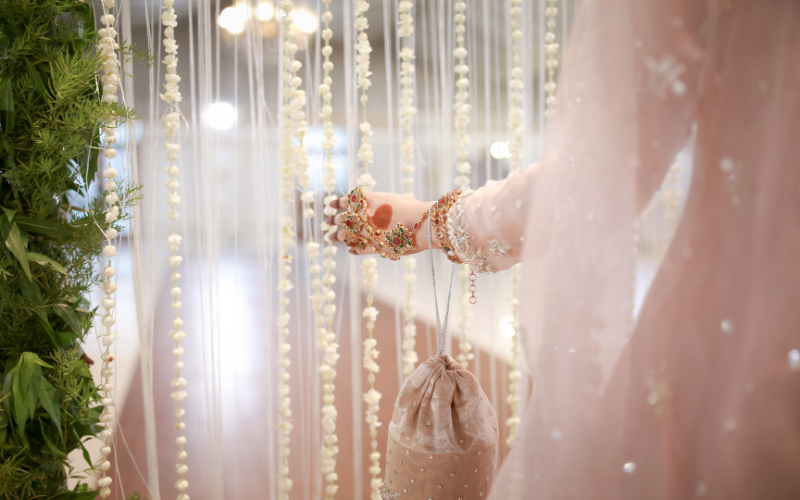
Beyond the stage, the wider room decor for a Walima is typically more formal and restrained than a Mehndi. Neutral or gold-toned table settings, floral centrepieces, and ambient lighting create an elegant atmosphere without overwhelming the space. The couple's choice of colour palette for the stage often sets the tone for the wider room, so deciding on that early makes the rest of the decor decisions easier to align.
The Order of the Day
A well-planned Walima running order reduces stress for everyone: the couple, the families, the vendors, and the guests. A typical UK Walima follows a recognisable sequence, though the timing and specific elements will vary by family.
- Guest arrival and seating. A reception period of 30 to 45 minutes as guests arrive allows for the natural variation in timing across a large invitation list. Appetisers or light refreshments served during this period manage the waiting time well.
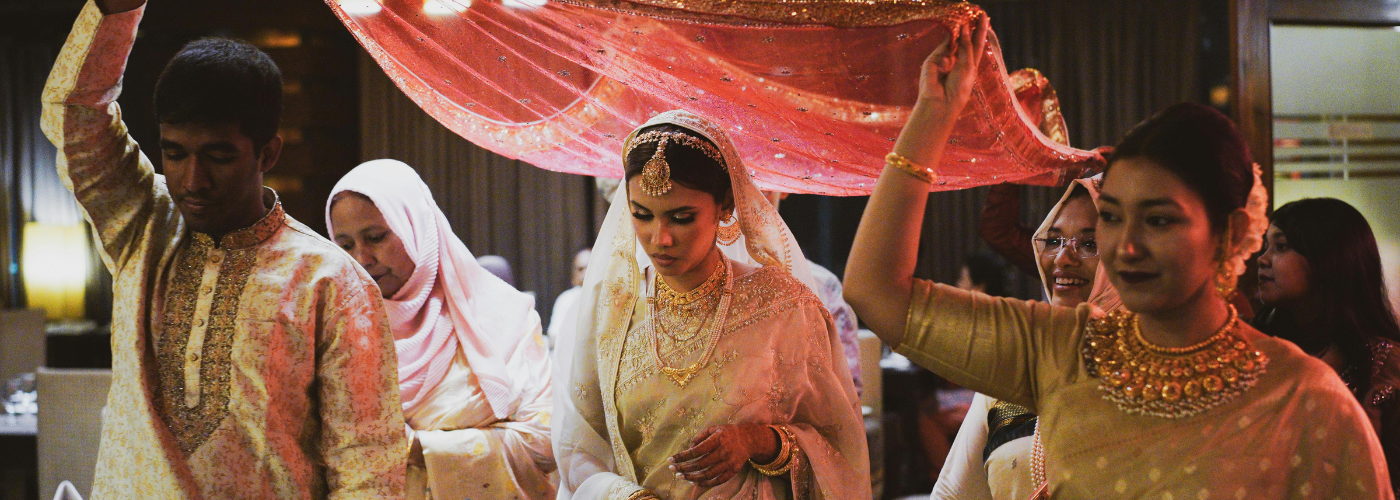
- Couple's entrance. The couple's arrival at the venue is usually marked and announced, leading them to the stage for the opening stage session.
- Stage session. The couple receives guests at the stage over a period of one to two hours. Family group photographs are taken during this time. The photographer should be briefed on the family groupings in advance to keep this session moving efficiently.
- Dua. A collective supplication for the couple, often led by an Imam or respected elder, is a meaningful and appreciated element of the Walima that takes only a few minutes but carries significant importance for many families.
- Buffet service. The meal is the longest phase of the event. For 300 guests across a buffet, plan for 60 to 90 minutes of active service, with the buffet remaining available for latecomers for a period afterwards.
- Desserts and departure. A dessert table opened after the main meal gives guests a natural gathering point before departure and extends the event without requiring additional programming.
Invitations and Guest Communication
For a Walima with a large and geographically spread guest list, clear communication matters more than the format of the invitation itself. Guests need to know the date, the time, the venue address, the parking situation, and, for those coming from out of town, nearby accommodation options. All of this can be communicated beautifully through printed invitations or practically through a digital format. The choice is yours. What matters is that the information is complete and reaches guests with enough notice to make travel arrangements.
For a large Walima, send invitations at least eight weeks before the event. For guests travelling from outside your city, ten to twelve weeks is more considerate and reduces the last-minute guest count fluctuation that makes final catering numbers difficult to confirm. A RSVP deadline of three to four weeks before the event gives you enough time to confirm final numbers with your caterer and venue.
Budgeting for the Walima
As the largest event in most South Asian wedding programmes, the Walima typically absorbs the largest share of the overall budget. A realistic framework for a 250-guest Walima in a UK city outside London would look broadly like this.
- Venue hire: £2,000 to £4,000 depending on the city and the space.
- Catering at £25 to £35 per head for 250 guests: £6,250 to £8,750, including staffing and equipment.
- Stage and decor: £1,500 to £4,000 depending on complexity.
- Photography covering the Walima specifically: £600 to £1,500 if booked as part of a multi-event package.
- Invitations for 300 households: £200 to £500.
- Miscellaneous costs including favours, signage, and contingency: £500 to £800.
Total for a well-organised 250-guest Walima: roughly £11,000 to £19,500 depending on the choices made across each category. The biggest levers are catering per head, venue type, and stage decor complexity. Adjusting any one of these three categories has the most significant impact on the overall total.
Final Thoughts
The Walima is an occasion rooted in gratitude and generosity. The planning behind it should serve those values rather than compete with them. A large, beautifully decorated event is a wonderful thing if it reflects the family's genuine priorities. A smaller, simpler gathering where every guest is warmly received and well fed is equally valid, and in some ways more faithful to the spirit of what a Walima is meant to be.
Start with the guest list, fix it firmly, and build everything else around it. Book the venue and caterer as early as possible since both fill up fast in peak season. Get every agreement in writing. And give the day the organisational structure it deserves, a clear running order shared with every vendor in advance, so that you and your family can be fully present rather than managing logistics from behind the scenes.