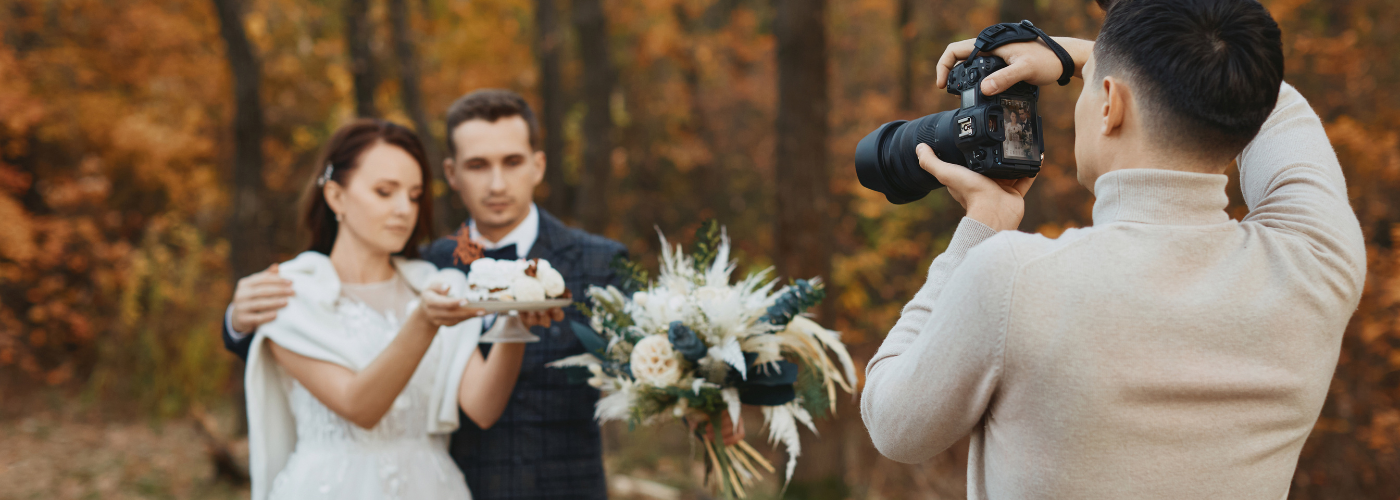
Ten years ago, the dominant UK wedding photography style was bright, heavily edited, and posed. Couples stood against scenic backdrops, looked toward the camera, and received a gallery of technically clean, emotionally neutral images that documented the day without particularly capturing it. That style has not disappeared entirely, but it has been comprehensively challenged by a generation of photographers and couples who want something different: images that feel real, that carry emotional weight, and that look less like a photoshoot and more like a record of something that actually happened. Understanding where wedding photography has moved and where it is heading in 2026 is useful for any couple currently booking, because the style landscape is more varied than it has ever been and the terminology used to describe it is not always consistent between photographers. This guide cuts through all of that.
Where Wedding Photography Has Come From
To understand where wedding photography sits in 2026, it helps to understand the two eras that preceded it. The first, running roughly from the 1980s through to the mid-2000s, was defined by traditional or classical photography: posed formal portraits, structured group shots, and a visual language borrowed from studio photography. The emphasis was on completeness and formality rather than emotion or atmosphere. Every important person was documented. Every key moment was captured. The results were reliable and their limitations were accepted as the price of reliability.
The second era, which grew through the 2010s alongside the rise of Instagram, was defined by the heavily edited, warm-toned, preset-heavy aesthetic that became ubiquitous at a particular point in the decade. Images were bright, slightly overexposed, with lifted shadows, warm skin tones, and a softness that came from both lighting choices and editing presets applied in post-production. This style looked beautiful in Instagram's square format and generated a visual consistency that made individual photographers' feeds immediately recognisable. It also, by the mid-2020s, started to feel dated in the same way that every aesthetic tied to a specific platform moment eventually does.
The reaction to both of these eras is what defines where wedding photography sits now. Couples who grew up seeing heavily edited, posed wedding photographs from the 2010s are now actively seeking photographers whose work looks nothing like them. That seeking has driven the styles that are most in demand in 2026.
The Styles Dominating in 2026
Documentary and photojournalistic
This is the style that has grown most consistently across the past five years and shows no sign of declining. Documentary wedding photography treats the wedding day as a news event to be observed and captured honestly rather than directed and styled. The photographer moves through the day as an invisible presence, looking for moments of genuine emotion: the bride's mother adjusting her daughter's outfit, two cousins laughing at something in the corner of the room, the groom taking a quiet breath before the ceremony begins. Nothing is staged. Nothing is asked for. The photographer's skill lies entirely in being in the right place at the right time and having the technical ability to capture what they see.
The results, when a photographer is genuinely skilled at this style, are images that feel like stolen moments rather than created ones. They age well precisely because they are not tied to a particular editing trend or photographic convention. They simply look like your wedding, captured by someone who was paying close attention. For South Asian weddings where the Nikah ceremony, the Mehndi gathering, and the Walima stage session all generate genuine, unscripted emotional moments, documentary photography can produce some of the most powerful images available from any wedding format.
Film and analogue photography
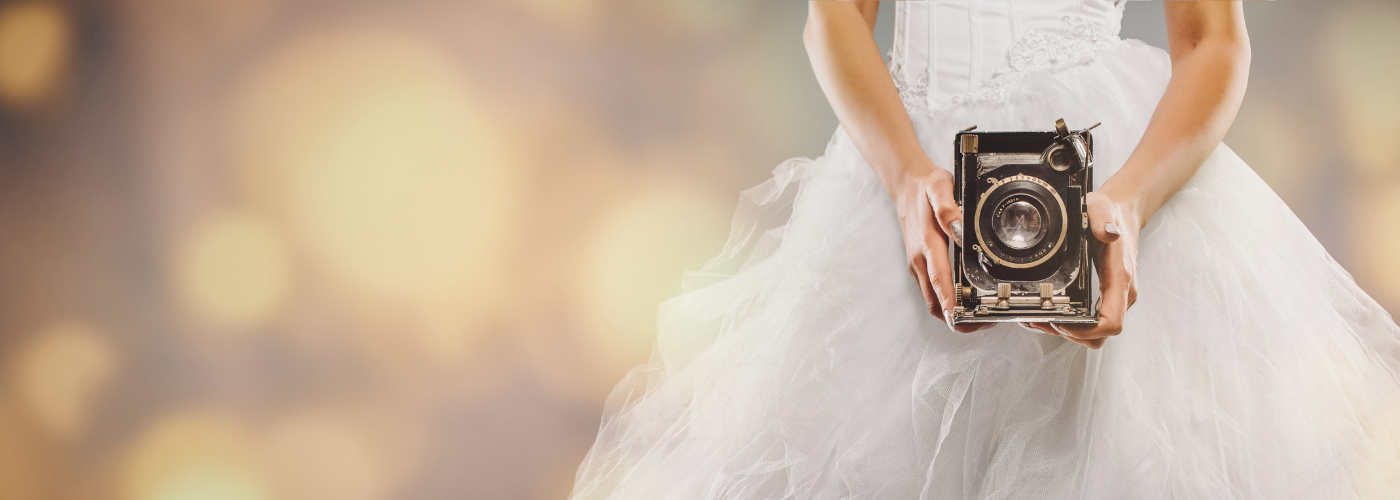
Film photography has returned to the wedding market with a momentum that has surprised many photographers who had written it off as a passing trend. In 2026 it is no longer a niche choice: film wedding photography has a dedicated and growing market of couples who specifically request it. The appeal is partly aesthetic, film produces colours, grain, and tonal qualities that digital processing cannot fully replicate, and partly philosophical: shooting on film introduces a physical constraint, a limited number of frames, that focuses the photographer's attention in a way that the limitless capacity of a digital camera does not.
Most photographers who offer film shoot it alongside digital rather than exclusively on film, giving couples a gallery of digital images with a selection of film frames woven through. The film images tend to be the ones that carry the strongest visual character: the ceremony, the portraits, the key moments that deserve the extra intention that shooting on a limited medium naturally produces. For couples attracted to a warmer, more textured aesthetic without the artificial warmth of heavy digital editing, film is worth exploring specifically.
Dark and moody editorial
At the opposite end of the tonal spectrum from the bright, warm aesthetic of the 2010s, the dark and moody editorial style has established a strong following in the UK market. Characterised by deep shadows, rich contrast, and a cinematic quality that draws from film photography and fashion editorial equally, this style produces images that feel dramatic and visually distinctive. It suits particular settings and particular aesthetics more than others: a candlelit Nikah ceremony in a richly decorated hall photographs beautifully in this style in a way that a brightly lit community hall buffet does not.
For South Asian weddings where the visual richness of the occasion, the embroidery, the jewellery, the stage decor, is a significant part of what needs to be captured, a dark and moody approach can produce images that feel genuinely cinematic. The consideration is that this style requires specific lighting conditions to work well. A photographer whose portfolio shows consistent results in this style across a range of lighting situations is demonstrating genuine technical ability. One whose dark and moody images only appear in beautifully lit settings may struggle with the variable conditions of a real multi-event South Asian wedding.
Clean and timeless
As a counter-movement to both the heavily preset look of the 2010s and the extreme darkness of the moody editorial style, a genuinely clean and timeless aesthetic has established itself as one of the most consistently requested styles in the current market. This approach prioritises accurate colour reproduction, well-controlled exposure, flattering but not artificially processed skin tones, and an editing style that will look as contemporary in twenty years as it does today.
Clean and timeless photography is often mistaken for a lack of style, which is a fundamental misunderstanding of what it requires. Producing images that are technically precise, emotionally warm, and free of the markers of a specific trend era is actually more demanding than applying a preset that makes every image look the same. The photographers who do this well are producing work that will outlast almost every other current style, which is why it is the choice that tends to age best.
What Has Changed in How Photographers Actually Work
Beyond the visual style shift, the way wedding photographers operate has changed in ways that matter practically for couples booking in 2026.
The rise of second shooters
The solo photographer covering an entire wedding was the standard model for most of the industry's history. In 2026, the expectation of a second shooter, a second photographer working alongside the lead on the day, has become standard at the mid-range and premium levels of the market. A second shooter adds coverage from a different angle and position, captures moments that a single photographer physically cannot, and provides redundancy for key moments that cannot be repeated. For South Asian multi-event weddings where the Nikah and stage session both produce unrepeatable moments, two photographers covering simultaneously is a meaningful practical advantage rather than a luxury add-on.
Videography as an expected complement
The separation between photography and videography, which was firm for most of the industry's history, has softened considerably. Many photographers now offer combined packages covering both stills and a highlight film, either because they or a partner shoot video as well, or because they work regularly with a specific videographer and offer bundled pricing. The expectation that a wedding will be documented in both formats is more widespread in 2026 than at any previous point, and the quality of short-form wedding films available at the mid-range price point has improved significantly.
Faster turnaround expectations
The turnaround time for edited wedding galleries has compressed across the market. Where six to twelve weeks was the standard expectation five years ago, many photographers now offer four to six week turnarounds as standard, with some offering a small selection of same-day or next-day preview images delivered via a private online gallery. For South Asian couples whose wedding photographs are often wanted for sharing within the community quickly after the event, this improvement matters. Confirm the specific turnaround commitment in writing at the point of booking.
The decline of the heavily preset look
The orange-toned, washed-out, heavily preset aesthetic that defined a significant portion of UK wedding photography from roughly 2014 to 2022 has fallen sharply out of favour. Photographers still using this look without awareness that it reads as dated are finding that enquiries from style-conscious couples are declining. The couples who were getting married during the height of that trend and received those heavily edited galleries are often the ones who now describe their wedding photographs as looking like they belong to a specific moment in time rather than looking timeless. That feedback has reached the market and the most responsive photographers have already moved on.
What to Look for When Booking in 2026
Given the breadth of styles and the variation in quality within each style, the question of what to actually look for when booking a wedding photographer in 2026 deserves a direct answer.
Full galleries, not highlights
This point has been made before in this blog and it bears repeating because it is the most important single piece of advice for any couple in the process of choosing a photographer. A curated portfolio shows a photographer's best twelve images from their best recent work. A full gallery from a complete wedding shows their four hundred average ones across an eight-hour day in variable conditions. The gap between a photographer's highlights and their full gallery is the most reliable measure of consistency available. Ask for full galleries from at least two complete weddings before making any decision.
South Asian wedding experience specifically
For South Asian couples, a photographer who has documented South Asian or Muslim weddings before brings practical advantages that go beyond general skill. They know the sequence of the Nikah. They know where to position themselves for the moment of the Ijab and Qabul. They understand the emotional cadence of the Mehndi and the stage session logistics at the Walima. They will not need to be guided through the day because they have already navigated its structure. Ask specifically to see South Asian wedding galleries rather than accepting a general portfolio as evidence of this capability.
Consistency across lighting conditions
The most revealing test of a photographer's technical ability is how their work holds up across different lighting conditions within a single gallery. Strong images in bright outdoor light are relatively straightforward to produce. Strong images inside a dimly lit mosque during a Nikah ceremony, or inside a banqueting hall with mixed artificial lighting during the Walima, require significantly more technical skill. Look specifically for these conditions when reviewing full galleries. If the indoor work is weak or inconsistent, the outdoor work being strong is not sufficient reassurance.
Communication quality as a predictor
How a photographer communicates during the enquiry process is the strongest available signal of how they will communicate across the months between booking and the wedding day. A photographer who responds within 24 hours, answers questions completely, follows up when they say they will, and offers a written agreement before requesting a deposit is demonstrating the professionalism that a high-stakes booking requires. These qualities are not separate from the photography skill. They are part of the same professional foundation.
A clear written agreement
Any photographer working professionally in 2026 should have a written booking agreement that covers the date, the deliverables, the number of edited images, the turnaround time, the payment schedule, and the cancellation terms. A photographer who does not offer this, or who is vague about what it covers, is leaving the booking unprotected for both parties. Do not pay a deposit without a written agreement in hand.
Spend 20 minutes saving wedding photographs you genuinely love before you look at a single photographer's profile. When you start enquiring, share those images. A photographer will tell you immediately whether that style reflects their work, which saves time for both parties and ensures you are assessing the right thing.
What to Avoid in 2026
As useful as knowing what to look for is knowing what to avoid. These are the signals that suggest a photographer may not be the right choice regardless of how their highlights appear.
- A portfolio that shows only highlights with no full galleries available. Every working wedding photographer has complete galleries they can share. Reluctance to share them suggests inconsistency in the full body of work.
- Heavy use of the same preset across every image in the portfolio. A highly recognisable editing style applied uniformly across an entire portfolio suggests that the style is covering for inconsistency in the underlying photography rather than complementing consistent technical skill.
- Vague turnaround commitments. "A few months" or "as soon as possible" are not delivery commitments. A specific timeframe, stated in writing, is the only meaningful commitment.
- No South Asian wedding work in the portfolio despite claiming experience. A photographer who says they have South Asian wedding experience but cannot show you South Asian wedding galleries has either very limited experience or has not retained the work, neither of which is reassuring.
- Pressure to book quickly due to availability. A genuinely good photographer does not need to pressure enquiries into decisions. Their work speaks for itself and their diary fills without urgency tactics.
An Instagram following of 50,000 and a following of 500 tell you equally little about whether a photographer can handle a low-light Nikah ceremony. Look at the work in the conditions that matter. That is the only reliable signal.
The South Asian Wedding Photography Brief in 2026
For South Asian couples specifically, the photography brief is more complex than for a standard single-event UK wedding. Communicating it clearly to a photographer before booking ensures they are genuinely equipped for what the day involves.
The brief should cover: the number of events and their dates, the expected duration of coverage across each event, the key moments at each event that are non-negotiable captures, any modesty requirements that affect how or when the photographer can be present, the family group shots required and the approximate number of groupings, and any specific cultural moments within the Nikah ceremony that the photographer should be aware of and positioned for.
A photographer who receives this brief and responds with specific questions about how they should handle each element is demonstrating genuine engagement. One who responds generically without addressing the specifics has probably not read it carefully, which is itself useful information about how they will approach the day.
Final Thoughts
Wedding photography in 2026 is more varied, more technically sophisticated, and more intentional than at almost any previous point in the industry's history. The heavy presets and posed aesthetics of the recent past have largely given way to approaches that prioritise authenticity, craft, and images that will genuinely age well. For couples booking now, the range of quality available at every price point is genuinely good news, provided they know how to evaluate it.
Look at full galleries. Assess indoor performance specifically. Ask for South Asian wedding experience and ask to see it. Communicate your brief in detail and watch how it is received. Get the agreement in writing before any deposit changes hands. These steps, applied consistently, will lead almost every couple to a photographer whose work they will still love looking at in twenty years, which is ultimately the only measure that matters.