Food is the part of a wedding guests remember longest, and it is usually the biggest single line in the budget. Couples planning for 2027 are rethinking what they serve and how, driven by rising costs, more varied guest lists and a wish for menus that feel personal rather than generic. This guide covers the catering trends we expect to see across UK weddings in 2027, what they tend to cost, and how to brief a caterer so you get the menu you imagined.
These are observations about where couples and caterers are heading, not predictions you must follow. Prices vary by region, season, guest count and menu, so always get written quotes from the caterers you are considering.
Why Catering Is Changing for 2027
Three pressures are shaping menus. First, ingredient and staffing costs have risen, so couples are looking for smarter ways to feed guests well without overspending. Second, guest lists are more mixed, with more dietary needs, more faith requirements and more guests who simply want lighter food. Third, couples are treating the menu as part of their story, choosing dishes that reflect their families, their regions and their own tastes.
None of this means menus are getting smaller. It means they are getting more deliberate, with fewer dishes done well rather than a huge spread that goes half eaten.
Trend 1: Sharing Platters and Family-Style Service
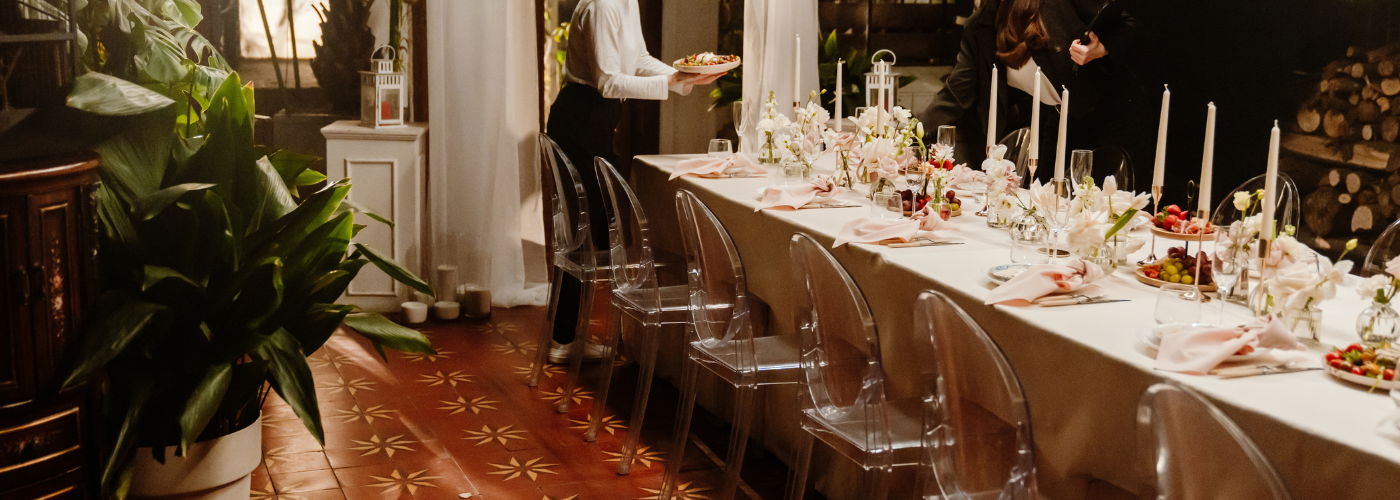
Large platters placed on each table, passed between guests, are replacing plated courses at many weddings. This style feels warm and generous, encourages conversation and suits families used to eating together. It also cuts the number of serving staff needed compared with a plated multi-course dinner.
- Good for: mixed-age tables, South Asian and Middle Eastern menus, and relaxed venues
- Watch for: table space, since platters need room, and enough portions that the last table is not left with scraps
- Ask your caterer: how many dishes per table, how they refill, and what happens if a table runs short
Trend 2: Smaller Menus, Better Dishes
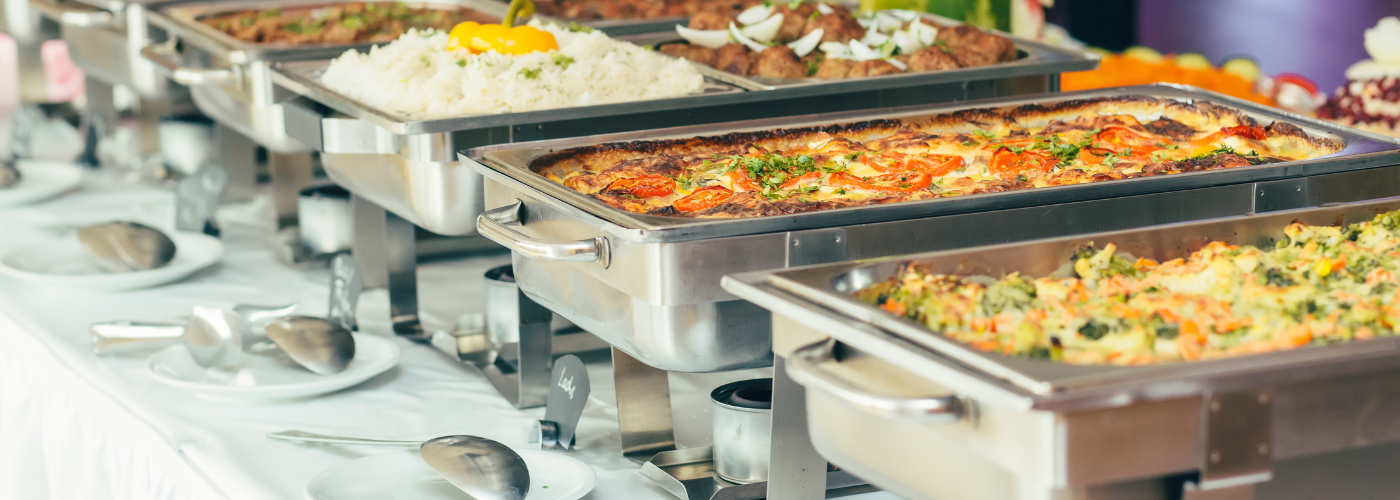
Many couples are moving away from the twelve-dish buffet toward a tighter selection of perhaps four to six mains, two or three sides and a couple of desserts. A shorter menu lets the kitchen cook in smaller batches, keeps food hotter and fresher, and often reduces waste. It can also lower the per head cost, though a great caterer will price on quality, not just quantity.
If you are comparing quotes, ask what is actually included in the per head price, such as rice, bread, salads, serving staff, crockery and clearing. Our guide to booking wedding vendors safely explains what to check in a quote and a contract.
Trend 3: Live Stations
Live cooking stations, where a chef prepares food in front of guests, continue to grow. Popular examples include fresh bread and flatbread stations, grill and kebab counters, chaat and street-style stands, pasta and noodle counters, and dessert stations. They add theatre and freshness, and they spread guests around the room instead of queuing at one buffet.
- Cost: stations usually add to the per head price, because of extra chefs, equipment and space
- Space: check power, ventilation and floor space with your venue first
- Tip: one or two well chosen stations often have more impact than five
Food vendors and specialist stands can be booked separately from your main caterer. Browse food vendors on Wedsi to compare options.
Trend 4: Regional and Heritage Menus
Instead of a generic "wedding menu", couples are asking for the dishes their families actually cook. For British South Asian weddings that might mean a specific regional curry, a family biryani recipe or a particular style of kebab. For others it might be a regional British dish, a heritage dessert or a grandparent's recipe adapted for a caterer.
This works best when you give the caterer detail. Share the recipe or a description, tell them what the dish should taste like, and ask for a tasting. A good caterer will welcome the brief, and it makes the menu feel like yours.
Trend 5: Halal and Faith-Aware Catering
For many couples, halal catering is a requirement, not a trend, and caterers who specialise in it are in strong demand. If halal matters to you, be clear and specific from the first enquiry.
- Ask the caterer to confirm in writing that all meat is halal, and how they source it
- Ask how food is prepared and stored, so that nothing conflicts with your requirements
- If your family follows specific standards or certification, ask whether the caterer can meet them
- Ask about vegetarian and vegan options prepared separately, for guests who need them
Requirements differ between families and communities, so speak to your family and, if needed, your own scholar about what applies to you. Then tell your caterer exactly what you need.
Trend 6: Planning for Dietary Needs Properly
A typical guest list now includes vegetarians, vegans, guests with allergies, and guests who avoid certain ingredients for health or faith reasons. Couples are collecting this information on the RSVP and passing it to the caterer early, instead of discovering problems on the day.
- Add a dietary question to your RSVP, with space for allergies
- Give your caterer the final numbers for each requirement, with names where needed
- Ask how they label dishes and prevent cross-contact for serious allergies
- Seat guests with allergies near the staff who know their needs
Allergens are a legal and safety matter for caterers, so a good one will ask you about them. If a caterer does not, treat that as a flag to raise.
Trend 7: Lighter Menus and Grazing
Not every wedding is a sit-down dinner. Daytime and afternoon weddings, shorter receptions and smaller guest lists are driving interest in lighter menus: grazing tables, canapes, afternoon tea style spreads, brunch and dessert focused receptions. These can suit couples who want a relaxed pace or a lower cost, though they work best when guests know what to expect so they are not hungry.
If you go light, be honest in the invitation about timings and whether a full meal is served, and make sure there is enough food to feel generous. Our post on 2027 wedding trends looks at the wider shift toward shorter, more intentional celebrations.
Trend 8: Non-Alcoholic Drinks Taking Centre Stage
More couples are putting real thought into drinks that suit everyone, including guests who do not drink. Expect to see mocktail menus, fresh juice and lassi stations, specialty teas and coffee, sparkling soft drinks and infused water. A well designed drinks offering feels celebratory and is often cheaper and simpler to run than a full bar.
- Offer at least two or three interesting non-alcoholic options, not just squash
- Consider a tea or coffee station for the later part of the evening
- Check what your venue allows you to bring in or serve
Trend 9: Sustainability and Less Waste
Couples are asking caterers how they handle waste, and many are choosing seasonal produce and sensible portions. Practical steps include confirming final numbers carefully, serving in smaller refills, and asking whether leftover food can be safely packaged for guests or donated. Ask your caterer and venue about their policies, because rules on food safety and what can be taken away differ.
Trend 10: Desserts That Replace the Traditional Cake
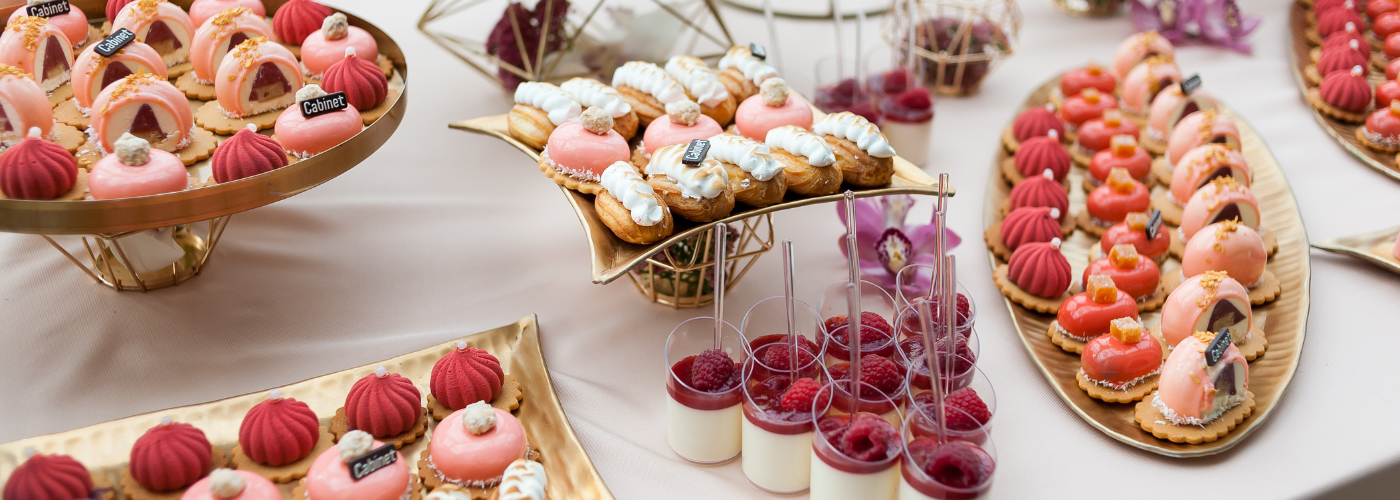
Dessert is getting more creative. Alongside or instead of a tiered cake, couples are choosing dessert tables, mithai selections, cupcakes, cheesecakes, pastries and individual dessert cups. These are easy to serve, suit mixed tastes and let guests choose what they like. If cake is still important to you, a smaller cake for the photographs paired with a wider dessert spread is a popular compromise. Browse wedding cake vendors to see what is available near you, and ask each one about serving sizes, flavours and delivery to your venue.
What It Costs
Catering is rarely cheap, and the headline per head figure hides a lot. As a guide, a buffet from a UK caterer commonly falls in the £20 to £35 per head range, depending on menu, location and what is included. Plated service, live stations, premium ingredients and extra staffing push the figure higher. For a guest list of 150, a difference of £5 per head is £750, so details matter.
- Ask what is included. Staff, crockery, cutlery, linen, setup and clearing can all be extras.
- Ask about minimum numbers. Some caterers have minimum spends or guest numbers.
- Ask about children's portions. Many caterers offer reduced pricing for children.
- Ask about deadlines. Final numbers and dietary details are usually due a few weeks before the day.
Good caterers price fairly for the time, skill and ingredients involved, so the aim is clarity, not the lowest number. If you need to adjust a budget, our guide to negotiating with wedding vendors without burning bridges shows how to have an honest, respectful conversation about scope and price.
How to Brief a Caterer
- Share the basics. Date, venue, guest numbers, budget range and style of service.
- Describe the food you love. Dishes, cuisines, family recipes and anything you want to avoid.
- State requirements clearly. Halal, vegetarian, vegan and allergies, in writing.
- Ask for a tasting. Try the dishes you plan to serve, and ask how they will scale for your numbers.
- Get a written quote and contract. It should cover menu, price, staffing, timings and the payment schedule.
- Confirm the venue's rules. Some venues have approved suppliers or kitchen restrictions.
Timing: When to Book
Popular caterers are booked well ahead, especially for peak summer dates and weekends. As a guide, start enquiring 9 to 12 months ahead for a peak date, and sooner if your caterer is in high demand or your date falls on a popular day. If you are working to a shorter timeline, our guide to planning a wedding in six months covers how to prioritise.
Common Catering Mistakes to Avoid
- Choosing on price alone. Compare what is included, and the caterer's experience with weddings of your size.
- Skipping the tasting. It is the best way to check quality and portion size.
- Not telling the caterer about dietary needs. Pass these on early and in writing.
- Underestimating portions. Ask how many portions per guest the caterer plans for.
- Ignoring the venue. Kitchen access, power and layout can change what is possible.
- Verbal agreements. Always get the menu, price and terms in writing.
Final Thoughts
The best 2027 wedding menus are not the most elaborate. They are the ones that reflect the couple, feed every guest well and fit the budget. Start with the food you love, be clear about requirements, ask for details in writing and give your caterer time to do their best work.
To compare caterers, food stands and other vendors, browse 17 categories on Wedsi, free for couples and with no commission on bookings.