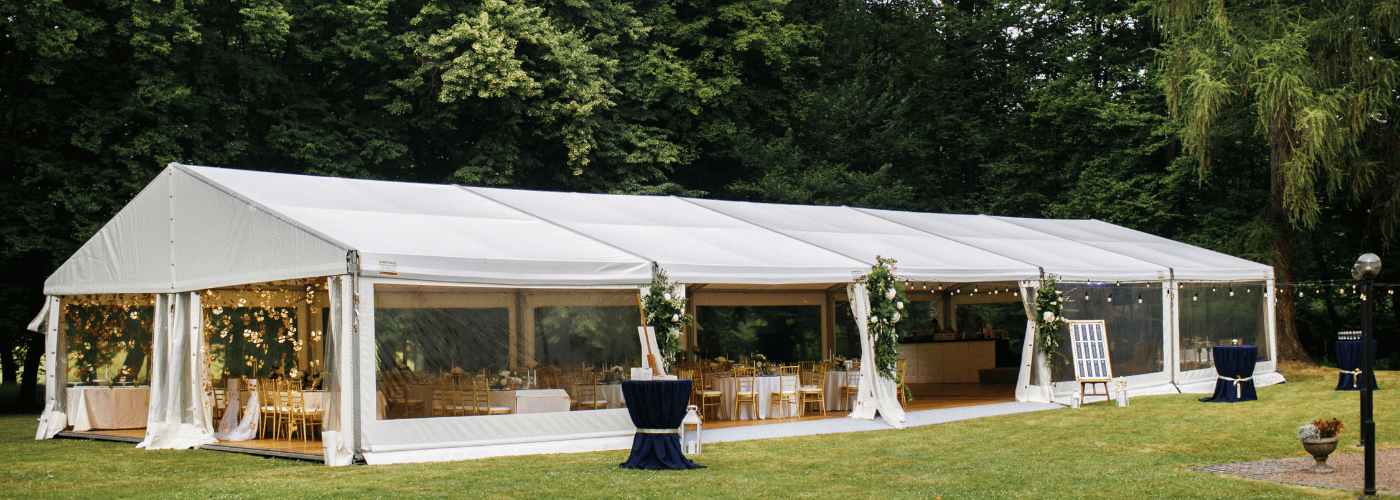
A marquee is one of the most flexible and personal ways to host a wedding event in the UK. For many families, it turns a familiar garden into a proper venue without the cost of hiring a commercial space. For South Asian and Muslim weddings in particular, where pre-wedding events like the Mehndi are often hosted at home, a well-planned marquee can handle everything from intimate family gatherings to celebrations of 100 or more guests. Getting the size right is the single most important decision in the entire setup. Too small and the day feels cramped. Too large and the space loses atmosphere and costs significantly more than it needs to.
Start With Your Guest Count and Seating Style
The most decisive factor in choosing your marquee size is how many people you are hosting and how you plan to seat them. These two things directly determine the floor area you need before anything else is considered.
As a starting framework for seated dining, these sizes work well in most UK garden setups:
- 30 to 50 guests: 6m x 9m or similar. Suitable for a Mehndi or smaller family celebration with round or trestle tables.
- 50 to 80 guests: 6m x 12m or 9m x 12m. Enough room for a buffet station and a seated area without feeling cramped.
- 80 to 120 guests: 9m x 15m or larger. At this size you can accommodate a separate stage backdrop, clear walkways, and a proper serving area.
These are starting estimates. Round tables take up more floor space than trestle tables. A buffet setup requires walking room between tables and the serving area. A stage, backdrop, or dedicated prayer space each add to the total floor area needed. Build these into your calculation before speaking to any supplier.
Take your guest count, calculate the floor area you think you need, then go up by at least 15 to 20 percent. Furniture, decor, catering equipment, and the space people naturally leave around themselves always consume more room than the theoretical numbers suggest.
Measure the Garden Properly Before Calling Suppliers
Many UK gardens are long and narrow, which means the usable area is often less than the total square footage suggests. Before contacting any marquee supplier, measure the space with a tape measure and note down everything that reduces the usable footprint.
- Trees, raised beds, and sheds all cut into the available area and may require the marquee to be positioned further from the house.
- Ground slopes affect both the stability of the structure and the flooring options available. Any significant slope needs to be flagged to the supplier before they quote.
- Access paths must remain clear for guests, caterers, and emergency access. These paths need to come out of your total available space, not be an afterthought.
Suppliers who visit the garden before quoting will always give a more accurate recommendation than those who quote based on guest count alone. It is worth arranging a site visit rather than relying on approximate measurements over the phone.
Plan the Layout Before You Fix the Size
The size of the marquee and the layout inside it are decisions that need to be made together. A marquee that is the right size for your guest count but the wrong shape for your layout plan will feel uncomfortable regardless of how large it is on paper.
Before committing to a size, map out the answers to these questions:
- Where will guests enter the marquee from, and is there enough space at the entrance to avoid a bottleneck?
- Where will food be served, and does the serving area have enough clearance from the seating for guests to queue without blocking walkways?
- Is there a stage or backdrop planned, and how deep does it need to be to look correct at the scale of the room?
- Do elders or guests with mobility needs require clear, level paths that do not require stepping around furniture or decor?
- Will a photographer be moving through the space, and is there room to do so without disrupting seated guests?
Connecting the Marquee to the House
For most UK home weddings, connecting the marquee directly to the back door or patio entrance is the most practical setup available. It creates a continuous flow between the house and the event space that makes the day significantly easier to manage.
- Guests stay dry moving between the house and marquee, which matters considerably given UK weather patterns across most of the year.
- Catering becomes more efficient when food can be carried straight from the kitchen into the marquee without anyone needing to go outside.
- Indoor rooms become functional extensions of the event, usable as prep areas, quiet spaces for elders, or overflow seating for children.
In larger gardens where the marquee sits away from the house, the setup still works well. The house becomes the preparation and storage zone, and the marquee operates as the standalone event space. In this configuration, covered access between the two becomes more important, particularly for catering.
Flooring: Do Not Overlook It
Flooring is one of the most important decisions in a marquee setup and one of the most commonly underestimated. UK gardens can be damp even on days that appear dry, and soft or uneven ground creates problems for furniture, guests in formal footwear, and anyone who needs to move around confidently during the event.
- Ground covering or carpet is the most affordable option but only suitable when the ground underneath is level, dry, and firm. On soft or uneven ground it leads to wobbly tables and unsteady chairs.
- Interlocking plastic or rubber tiles provide a stable surface and work well for walkways and areas around the buffet where a lot of movement happens.
- Raised wooden flooring is the strongest option and creates the most venue-like feel. It levels out minor slopes, keeps the event space dry regardless of ground conditions, and is the most comfortable surface for guests standing or seated for several hours.
Heavy rain in the days before your event can change the ground conditions significantly. If you are using carpet or basic covering, check the ground a few days beforehand and have a contingency plan with your supplier if conditions have changed since you booked.
Heating, Ventilation, and UK Weather
Temperature management inside a marquee is something many couples plan for too late. A marquee with no heating gets cold quickly once the sun goes down, even in late spring or early autumn. A sealed marquee with no ventilation on a warm day becomes uncomfortable within the first hour.
- Portable heaters are essential for any event running into the evening between October and April. Position them safely away from soft furnishings and confirm the power supply with your supplier in advance.
- Sidewall panels come in clear or white. Clear panels bring in more natural light and work well for daytime events. White panels offer better insulation for evening events.
- Ventilation panels along the upper sides of the marquee can be opened on warmer days to reduce condensation and prevent the space from feeling closed in during busy periods.
When speaking to suppliers, ask specifically about weatherproofing options. A marquee that has not been weighted or staked properly for UK wind conditions creates a safety risk. Any reputable supplier will address this as part of their setup, but it is worth confirming explicitly.
Creating Proper Catering Access
Catering teams move constantly throughout an event. They carry food from prep areas to serving stations, clear tables between courses, and manage serving equipment that takes up more space than most couples anticipate. Building proper access into the layout is not optional.
- If the marquee is not connected to the house, use a covered walkway, additional gazebo, or tunnel connection so food arrives at the serving area without being exposed to weather.
- Create a back-of-house zone within or immediately adjacent to the marquee where staff can plate up, store equipment, and organise serving trays without entering the main guest area.
- Keep serving paths clear of decor and furniture. A centrepiece or chair placed slightly too far into a walkway is insignificant until a caterer is carrying six plates and cannot pass.
Guest Flow and Movement Throughout the Event
Guests naturally cluster in certain areas: near the food, near warmth, near the entrance, and near the edges of the room. A marquee that is technically large enough for the guest count can still feel congested if these natural gathering points have not been accounted for in the layout.
- Leave at least one metre of clear walking space around all seating areas. This is the minimum needed for guests to stand, move, and be served without disrupting others.
- Build in space near the entrance for guests to arrive, greet people, and settle before moving to their seats. An entrance that leads directly into the seating area creates pressure at the front of the room.
- Consider where elders and parents with young children will be seated and ensure their route to the bathroom, quiet area, or exit is always clear.
Final Thoughts
Getting the marquee size right is the decision that everything else in a home wedding depends on. The layout, the catering plan, the comfort of your guests, and the overall feel of the day all follow from it. Measure carefully, plan the layout with the actual event in mind rather than an abstract guest count, and have the detailed conversations with your supplier early rather than assuming the standard size will work.
A marquee that has been properly sized and thoughtfully laid out does not feel like a temporary structure. It feels like the event was always meant to happen exactly there.