Clothing at a South Asian Muslim wedding is not simply a matter of what looks good in photographs. It carries cultural meaning, family expectation, modesty considerations, and the distinct visual identity of each event within the wedding programme. The outfit worn at the Mehndi is not the outfit worn at the Nikah. The Nikah outfit is not the Walima outfit. Each event has its own conventions, its own colour traditions, and its own relationship to the question of how the bride and groom present themselves within their community and before their families. This guide covers those traditions honestly, including how they vary between Pakistani, Bangladeshi, and other South Asian backgrounds, and how couples today are navigating the balance between cultural heritage and personal expression.
The Structure of Bridal Dressing Across Three Events
One of the things that makes South Asian Muslim wedding attire both beautiful and logistically demanding is that each event has its own distinct dress code. For a bride attending a Mehndi, a Nikah, and a Walima, this typically means three separate outfit systems, each with its own silhouette, colour palette, jewellery, and footwear. Planning all three simultaneously, with an awareness of how they relate to each other photographically and how they will be worn sequentially across what may be consecutive days, is a significant undertaking that rewards starting early.
The broad tradition across South Asian Muslim communities assigns a colour logic to each event. The Mehndi leans vibrant and celebratory. The Nikah is typically the most formal and often the most traditionally bridal in colour. The Walima allows for slightly more personal expression while still being a significant occasion. Within these broad conventions, regional backgrounds, family traditions, and personal preference all create considerable variation.
The Mehndi Outfit
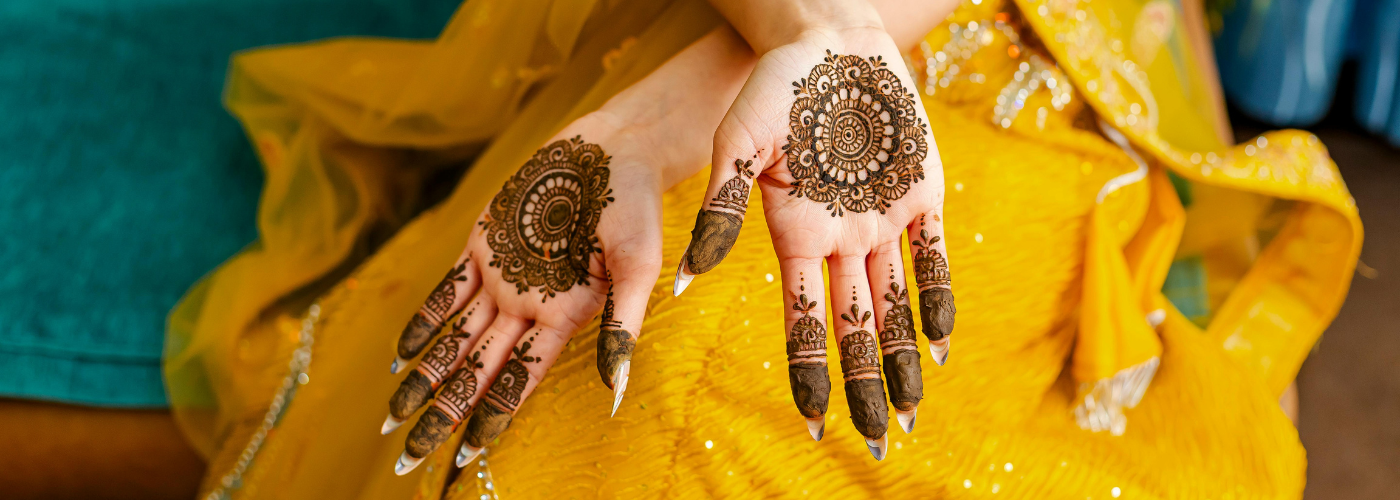
The Mehndi outfit is the most joyful and the most flexible of the three. The cultural convention across most South Asian Muslim communities is for the bride to wear something vibrant: yellow, green, orange, and pink are all traditional Mehndi colours, with yellow being the most strongly associated with the occasion across Pakistani and Bangladeshi wedding traditions. The shade of yellow ranges from a soft mustard to a bright sunflower depending on the family, the decade, and the bride's own colouring.
The silhouette at the Mehndi is typically lighter and more comfortable than the Nikah outfit, for practical reasons as much as cultural ones. The bride is seated for a significant portion of the event while her henna is applied, often for three to five hours. An outfit that allows for extended comfortable sitting, with dupatta management that does not require constant adjustment during the henna session, is genuinely practical rather than simply a style preference.
Common Mehndi silhouettes include the sharara, the gharara, and a lighter lehenga or anarkali. Floral jewellery rather than heavy gold is increasingly popular at the Mehndi, both because it suits the vibrant aesthetic and because it is lighter to wear across a long event. Many brides also choose to minimise the amount of jewellery that covers the hands and wrists specifically, to keep the henna visible and unobstructed during and after application.
The henna will be wet for the first hour after application and needs to set without being disturbed. Loose sleeves, a comfortable dupatta arrangement, and avoiding anything with embellishment on the forearms makes the henna session significantly easier to manage.
The Nikah Outfit
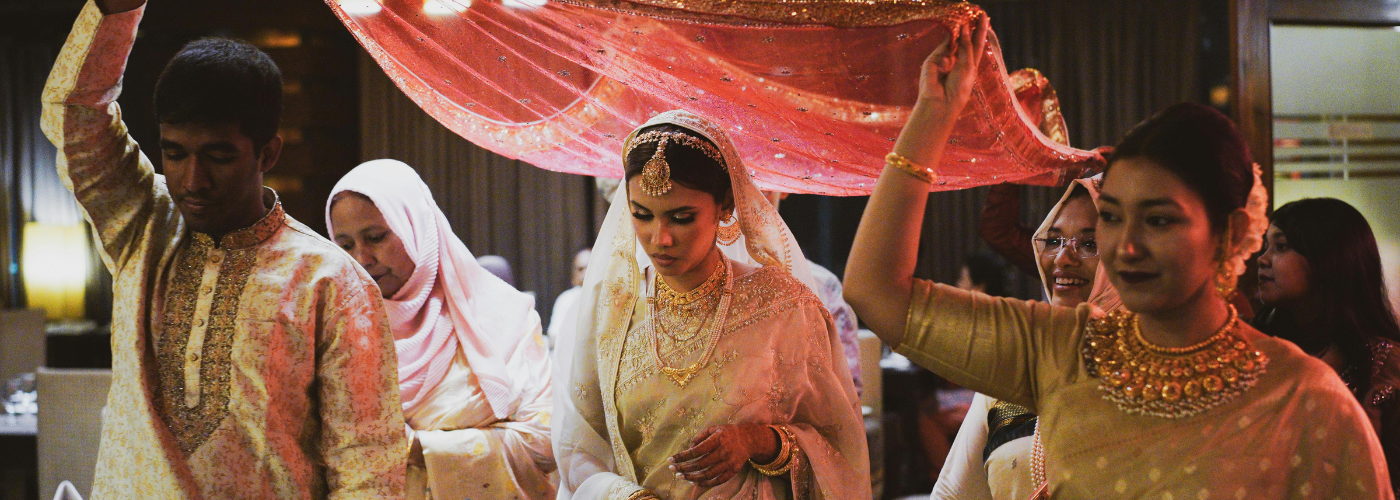
The Nikah outfit carries the most weight of all three, because it is worn at the moment the marriage itself is contracted. Within South Asian Muslim communities this significance is reflected in how the outfit is chosen: it is typically the most elaborate, the most formally bridal, and the one that families have the strongest views about.
Colour traditions
Red remains the most traditional colour for the Nikah outfit across Pakistani and many Indian Muslim communities, drawing on centuries of South Asian bridal convention. Deep red, crimson, and burgundy are all within this tradition. Many families outside these communities also follow red for the Nikah out of respect for the tradition even if their own regional background uses different colours.
In Bangladeshi communities, red is also common but green holds particular significance and is widely worn for the Nikah specifically. Dusky rose, deep maroon, and rich jewel tones including deep green and sapphire are all increasingly chosen by brides who want to stay within a traditional colour register while expressing something more personally their own than the most conventional red.
White, ivory, and pale blush are less traditional for a Nikah within South Asian Muslim communities, though they are not prohibited and brides who choose them are not departing from Islamic requirements, only from cultural convention. The distinction between what is required and what is traditional is worth being clear about when navigating family conversations on this topic.
Modesty considerations
For Muslim brides, the Nikah outfit is typically chosen with modesty requirements in mind alongside aesthetics. Long sleeves, a high neckline, and a dupatta worn over the head during the ceremony are standard within most practicing Muslim communities. The specific interpretation of modesty varies between families and communities: some brides wear the dupatta over the head throughout the entire Nikah event, while others cover during the ceremony specifically and adjust the dupatta more freely during the rest of the occasion.
The outfit choices available within these parameters are extensive. The Pakistani bridal market in the UK, centred around areas like Ladypool Road in Birmingham, Wilmslow Road in Manchester, and Green Street in London, offers a wide range of fully covered, intricately embroidered outfits that meet modesty requirements without any compromise in elaborateness or beauty.
Common Nikah silhouettes
The lehenga choli is the most widely worn silhouette for the Nikah across South Asian Muslim communities in the UK. The long skirt and fitted top combination works well with a heavy dupatta and allows for the embellishment that most families expect from the main bridal outfit. The anarkali, a long flared kurta worn over wide trousers, is increasingly popular for its elegance and its practical modesty. The sharara and gharara remain traditional choices particularly in Pakistani communities, and some brides opt for a structured shalwar kameez with heavy embroidery as a more practical alternative to the lehenga for a long event day.
The Walima Outfit
The Walima outfit is typically the most personally expressive of the three. It remains a significant and formal occasion but it carries slightly less prescriptive cultural expectation around colour than the Nikah, which gives the bride more freedom to choose something that reflects her own taste alongside the occasion.
Pale pink, champagne, gold, ivory, and soft greens are all popular Walima choices in the UK South Asian Muslim community. Some brides choose a colour that complements but contrasts with their Nikah outfit, creating a visual journey across the two events. Others choose a consistent palette across all three events for a more cohesive visual identity in the photographs taken across the full programme.
The Walima is also the event at which the outfit is most likely to be seen by the widest audience, since the Walima guest list is typically the largest. Many brides therefore invest in the Walima outfit at a level comparable to the Nikah outfit, while others choose to allocate the majority of the outfit budget to the Nikah and select a beautiful but less elaborate piece for the Walima.
Groomwear Traditions
Groomwear at a South Asian Muslim wedding is sometimes planned with less deliberateness than bridal wear, which is a missed opportunity given how significantly it contributes to the couple's overall visual presentation in the photographs. The groom's outfit at each event has its own conventions and its own relationship to the bride's choices.
The Mehndi
At the Mehndi, the groom typically wears something lighter and less formal than his Nikah attire. A shalwar kameez in a colour that complements the bride's Mehndi outfit is the most common choice. Many grooms opt for white, cream, or a subtle colour at the Mehndi to provide visual contrast against the bride's vibrant outfit. Some families coordinate the groom's dupatta or accessories with the bride's outfit colour for a deliberately matched look.
The Nikah
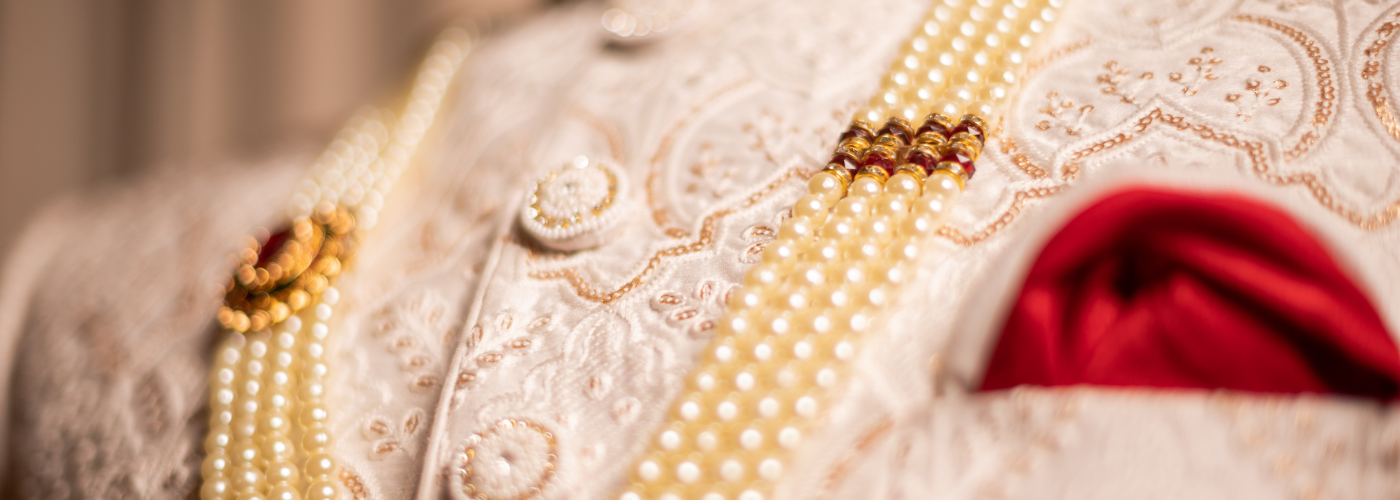
The Nikah is the most formally dressed occasion for the groom. The sherwani is the traditional choice: a long, structured coat-like garment typically worn in ivory, cream, gold, or a deep neutral that coordinates with the bride's outfit. Dark navy, charcoal, and forest green sherwanis have become increasingly popular as grooms move toward deeper colours while retaining the traditional silhouette.
For Muslim grooms, the topi or kufi is worn by many families during the Nikah ceremony, adding a dimension of religious significance to the outfit beyond its cultural one. A simple white kufi worn with a sherwani is a combination that photographs beautifully and reads as both traditional and dignified.
Renting versus buying the sherwani is a genuine decision worth considering. A quality sherwani purchased from a reputable South Asian menswear boutique can cost between £200 and £600. A sherwani hire for the same event typically costs £80 to £200 and produces a result that is visually equivalent in the photographs. Many grooms who have rented report no regrets given that a purchased sherwani is rarely worn again after the wedding.
The Walima
The Walima gives the groom somewhat more freedom. A well-tailored shalwar kameez in a richer fabric and colour is a common choice, with some grooms opting for a lighter or more contemporary approach than the full sherwani. Coordinating with the bride's Walima outfit in colour or in formality level creates a couple's visual presence that reads as considered rather than accidental.
Regional Variations Worth Knowing
South Asian Muslim communities in the UK encompass significant regional diversity, and the outfit traditions reflect this. Understanding the most common variations helps couples navigate the conversations with both families that inevitably arise when traditions differ.
- Pakistani communities. The lehenga for the bride and the sherwani for the groom are the most established expectations across most Pakistani backgrounds. Heavy embroidery in gold and silver thread, often combined with mirror work or zardozi, is associated with formal wedding occasions. Red for the Nikah is strongly traditional in many Pakistani families, though this is evolving.
- Bangladeshi communities. The saree remains significant in Bangladeshi wedding traditions alongside the lehenga. Red and green hold particular cultural resonance, with green being more specifically associated with Bangladeshi national identity. The weave and embroidery traditions differ from Pakistani conventions and the visual aesthetic is distinct.
- Indian Muslim communities. Regional variation within Indian Muslim backgrounds is significant: families with roots in Hyderabad, Gujarat, or Kerala bring different textile and silhouette traditions to their weddings. The sherwani is universal for grooms, but the cut and the embroidery style varies considerably by regional background.
Sourcing Bridal and Groomwear in the UK
The UK South Asian bridal market is well served in cities with established South Asian communities. Birmingham's Ladypool Road area, Manchester's Rusholme and Wilmslow Road corridor, London's Green Street and Southall, and similar concentrations in Leicester and Bradford all have boutiques offering a wide range of South Asian bridal and groomwear at varying price points.
Online sourcing from UK-based retailers and direct from South Asian designers has also grown significantly, with many couples now ordering from Pakistan, Bangladesh, or India directly and managing alterations through a local seamstress. The lead time for a made-to-order or imported outfit is typically twelve to twenty weeks, which makes starting the outfit sourcing process well in advance of the wedding dates not just advisable but necessary.
No South Asian bridal outfit arrives fitting perfectly off the peg or immediately upon delivery. Alterations to a structured lehenga or sherwani by a seamstress experienced in South Asian garments can cost between £150 and £500 depending on the complexity of the work. Book the seamstress at the same time you order the outfit, not after it arrives.
Modern Approaches and How Couples Are Evolving the Tradition
The most interesting development in South Asian Muslim bridal wear in the UK over the past decade is not the departure from tradition but the deepening of personal ownership within it. Couples are not rejecting the lehenga or the sherwani. They are choosing them more deliberately, with a clearer sense of what they personally find meaningful rather than simply replicating what previous generations wore.
This shows up in specific ways. Brides choosing colours that genuinely suit them rather than defaulting to red because it is expected. Grooms investing in a properly fitted sherwani in a colour they have chosen rather than hiring the first available ivory option. Couples coordinating their outfits across all three events as a deliberate visual narrative rather than treating each event's outfit as an isolated decision. These are small shifts but they produce weddings that feel more distinctly like the couple at the centre of them.
The question of modesty is also being navigated with more confidence by the current generation of Muslim brides in the UK. The market for fully covered, beautifully designed bridal wear has grown considerably, and brides who want both elaborate embellishment and complete coverage have more options now than at any previous point. The assumption that modesty and beauty are in tension has been comprehensively disproved by the quality of what is available.
Practical Planning Checklist for Outfits
- Decide on all three outfits before ordering any of them. The relationship between the three in terms of colour, formality, and silhouette is easier to manage when you can see them as a complete set rather than making each decision in isolation.
- Start twelve to twenty weeks before the first event. Made-to-order and imported outfits need this lead time as a minimum. Off-the-peg outfits still need alteration time that should not be underestimated.
- Book alterations at the point of ordering, not after delivery. A good seamstress experienced in South Asian bridal garments books up quickly, particularly in the weeks before peak wedding season.
- Photograph each complete look including jewellery, footwear, and dupatta styling. Having a reference photograph of each complete outfit prevents anything being forgotten or misremembered on the morning of each event.
- Confirm where each outfit will be on the morning of each event. For consecutive events, outfits need to be in the right location the evening before. The morning of a Nikah is not the time to discover that the outfit is at a different family member's house.
- Plan storage and transport carefully for delicate embroidered pieces. Heavy embroidery can snag and bead work can loosen during transit. Hanging rather than folding, using garment bags, and transporting outfits in a dedicated vehicle rather than the boot of a packed car all protect pieces that have taken months to source.
Final Thoughts
Bridal and groomwear at a South Asian Muslim wedding is one of the areas where tradition, family expectation, personal identity, and practical planning intersect most visibly. Getting it right requires starting early, understanding the conventions of your specific community while knowing which of those conventions reflect genuine religious requirements and which reflect cultural preference, and making choices that feel genuinely your own rather than simply inherited.
The outfits worn across a Mehndi, Nikah, and Walima are among the most permanently documented things about any wedding. They appear in every photograph, in every family album, and in the memories of every guest who attended. Choosing them with that permanence in mind, and with enough lead time to get every element right, is one of the most worthwhile investments of planning energy in the whole wedding process.