Ask ten couples what their mehndi involved and you will get ten different answers. One had a quiet afternoon at home with a henna artist and close family. Another hired a hall, invited two hundred guests and served a full dinner. Both called it "the mehndi". The confusion is real, and it causes planning problems: couples budget for one thing, relatives expect another, and vendors quote for a third. This guide separates the two ideas clearly so you can decide what you actually need.
What Is a Mehndi?
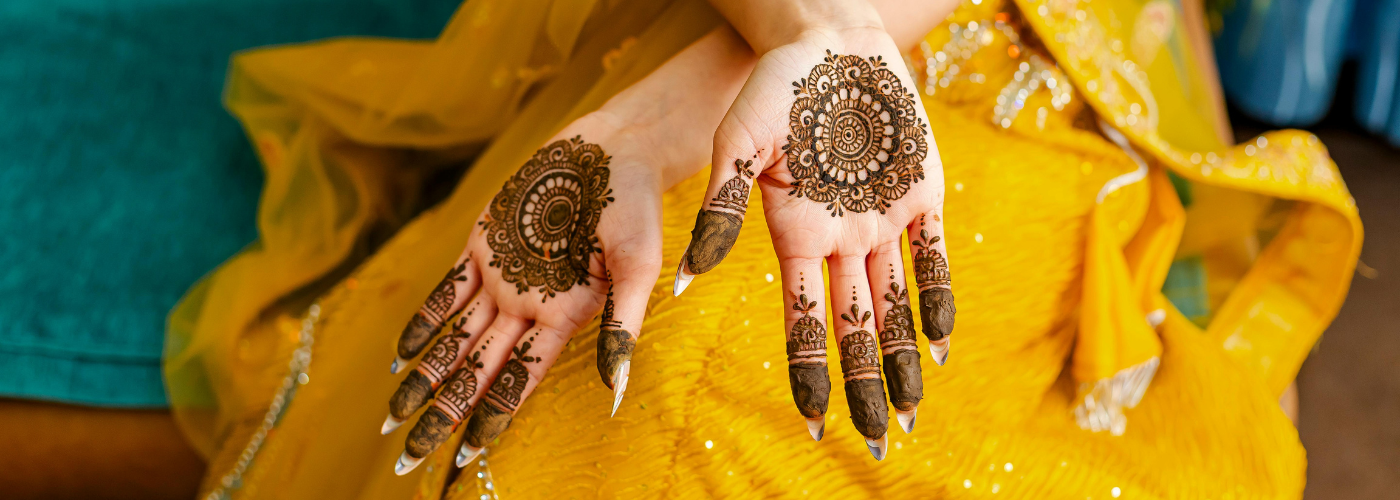
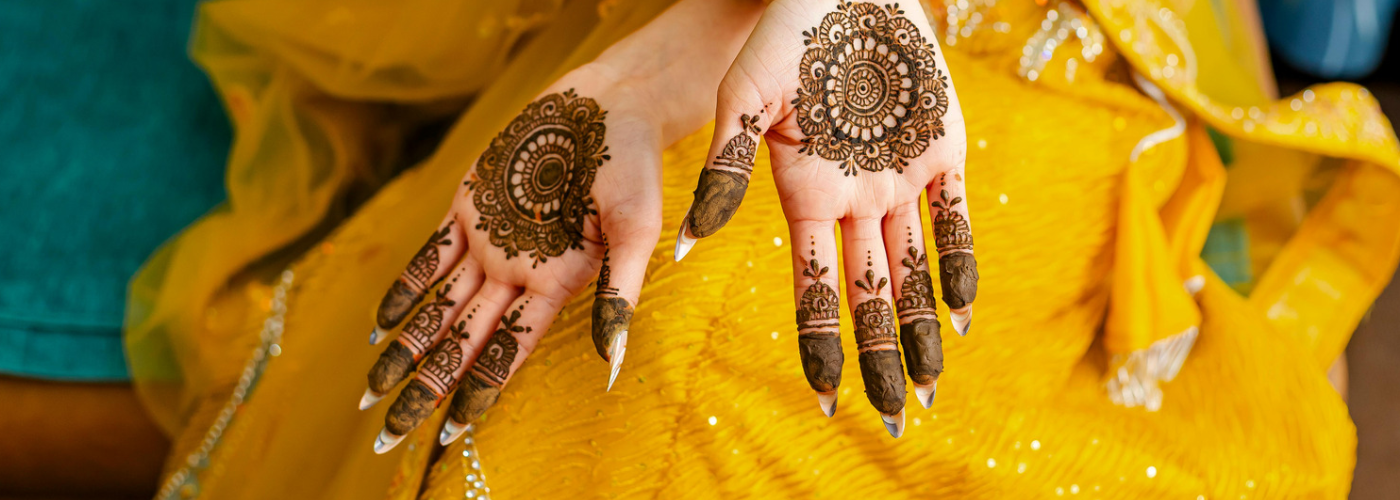
Mehndi is the Urdu and Hindi word for henna, and by extension the henna designs applied to the hands and feet of the bride. In the strictest sense, the mehndi is the application itself: a skilled artist applies henna paste in an intricate pattern, usually over a couple of hours, while the bride sits and relaxes.
The tradition is old and widely shared across South Asian communities. Henna is associated with joy, blessings and the transition into married life. It is often described as a moment of rest before the wedding, when the bride is cared for by the women closest to her. Many families also see it as a time for sisters, cousins and friends to gather around her, share stories and help with the practical tasks of the days ahead.
At its simplest, a mehndi can be exactly that: the bride, her henna artist and a handful of relatives in a living room with tea and snacks. Nothing more is required.
What Is a Mehndi Night?
A mehndi night is the event built around the henna. It is the larger gathering, usually held a day or two before the nikah or main ceremony, where family and friends come together to celebrate the bride, and often the groom's side too. The henna is still part of it, but it is no longer the whole thing. A mehndi night is a proper occasion with a guest list, a venue, food, decor and a schedule.
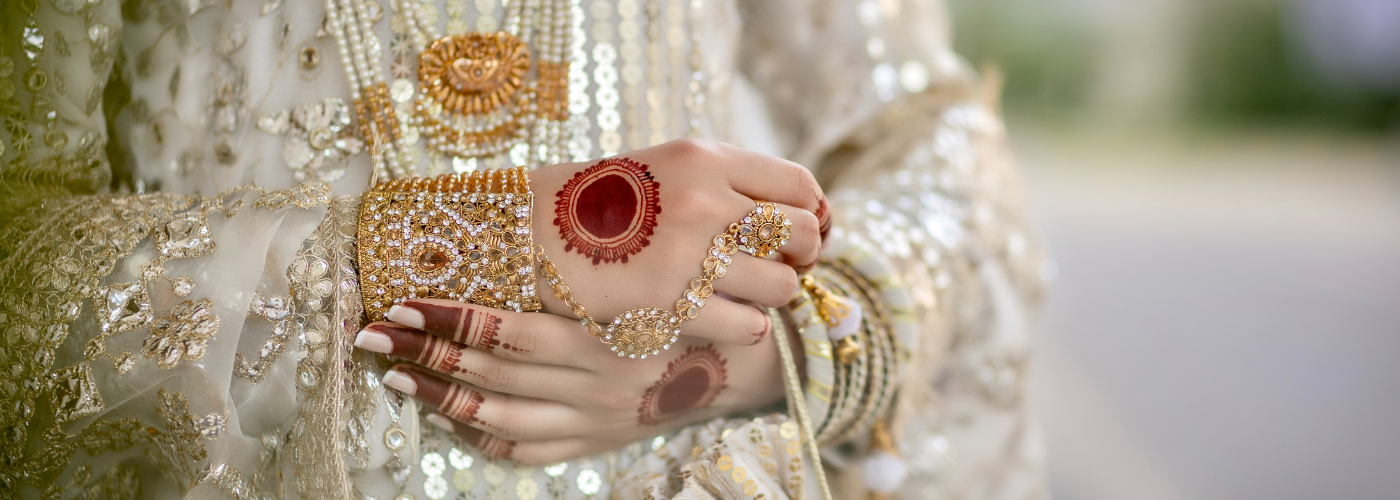
In the UK, a mehndi night is commonly held in a hall, a banqueting suite or a family home with a marquee. Guests dress in bright colours, there is a decorated stage or seating area for the couple, and dinner is served. The henna artist may apply designs to the bride while guests arrive, and other guests may have small henna designs applied too.
The mehndi is the henna. The mehndi night is the party around the henna. You can have the first without the second, but rarely the second without the first.
The Key Differences at a Glance
These are the differences that matter most when you are planning and budgeting.
- Purpose. A mehndi is about the bride and the henna. A mehndi night is about celebrating together as families and communities.
- Size. A mehndi can be as small as five or ten people. A mehndi night often runs from fifty to several hundred guests.
- Timing. A mehndi can happen in an afternoon, at home, in the days before the wedding. A mehndi night is usually an evening event on a fixed date.
- Venue. A mehndi needs a comfortable room. A mehndi night usually needs a hired venue or marquee.
- Vendors. A mehndi needs a henna artist. A mehndi night may also need a venue, caterer, decor, photographer, videographer and stage setup.
- Cost. A mehndi can cost little more than the artist and refreshments. A mehndi night can become one of the larger spends of the whole wedding.
Do You Actually Need Both?
The honest answer is that nobody needs both. The henna is the heart of the tradition. Everything around it is a choice, and the right choice depends on your family, your budget and what you want the days before your wedding to feel like.
Some families see a mehndi night as essential, a moment when both sides gather before the wedding and the celebrations properly begin. If that is true for you, or for the relatives who matter most to you, it is worth doing well. Others find that a full evening event adds cost and stress without adding anything they value. For them, a smaller gathering is a better fit, and it is just as legitimate.
Choose a full mehndi night if
- Both families expect a larger gathering before the wedding
- You are hosting guests who are travelling and would benefit from an extra occasion together
- You have the budget for a venue, catering and decor without squeezing the main wedding
- You have enough helping hands to run it smoothly, so you are not managing it yourself
Choose a smaller mehndi if
- You would rather put your budget into the nikah, walima or reception
- You want a calm, personal day with the people closest to you
- You are planning several events across consecutive days and want to protect your energy
- Your guest list is already large and you want to keep the number of occasions manageable
Middle Options Worth Considering
It is not a choice between a tiny gathering and a full hall. Several formats sit in between, and they suit many UK couples well.
- A home mehndi with extended family. Thirty to fifty people, a buffet or food stations, a henna artist for guests and a decorated corner for photographs.
- A daytime mehndi. An afternoon event is often cheaper to run, easier for older relatives and finished in time for everyone to rest.
- A combined event. Some families merge the mehndi with another occasion to reduce the total number of events, particularly when the wedding is on a tighter budget.
- A women-only gathering. Many families prefer a separate, relaxed event for female relatives and friends, with a smaller footprint and simpler setup.
What Each Option Typically Costs
Prices vary by region, artist and guest count, so treat these as rough planning ranges and always get written quotes.
- Bridal henna. Often in the range of a few hundred pounds for an experienced artist, depending on the design detail, coverage and travel.
- Guest henna. Many artists charge by the hour or offer a package for a set number of hours, which can cover a lot of guests with small designs.
- Catering. For a buffet, UK couples commonly plan around £20 to £35 per head, with higher spend for live stations or premium menus.
- Venue or marquee. This is usually the biggest variable. A home gathering costs far less than a hired hall.
- Decor and stage. From a simple floral corner to a full themed stage, the range is wide.
As an example, a home mehndi for thirty people might cost a fraction of a hall event for a hundred and fifty, even though the henna is identical. The difference is almost entirely in the venue, the food and the production around it.
How to Plan the Henna Itself
Whichever format you choose, the henna deserves proper planning because it is the one part that cannot be rushed or redone.
- Book your artist early. Experienced bridal henna artists fill their diaries months ahead, particularly around peak wedding dates.
- Look at healed, finished work. Ask to see photographs of the stain after it has developed, not just the fresh paste.
- Agree the design in advance. Share your outfit and any ideas you like so the pattern suits you. Ask how personal details will be included.
- Plan the timing. Allow enough time for application, and then for the paste to stay on. The stain typically deepens over the following day or two, so most brides schedule it a day or two before the main ceremony.
- Prepare for comfort. You will be seated for a long time, so plan comfortable seating, food that is easy to eat, and someone to help you with simple tasks.
- Ask about ingredients. Natural henna paste is made from henna powder and a few simple ingredients. Ask your artist what they use, especially if you have sensitive skin.
Natural henna gives an orange to deep brown stain. Pastes that promise an instant jet-black result can contain harmful chemicals and cause skin reactions. If an artist offers one, ask what is in it.
Keeping the Occasion Meaningful
Whatever size you choose, the occasions people remember tend to share the same qualities: good food served on time, comfortable seating, a warm welcome for elders and a relaxed pace. Beautiful decor helps, but it is the atmosphere that guests carry home.
If you are hosting a larger event, think about the experience as well as the look. A live chai station, a calligraphy corner, a photo area with simple floral styling or a dedicated place for guests to sit and have their own henna applied can all give the evening a distinct character without adding anything complicated. Our guide to mehndi traditions, decor and modern twists has plenty of ideas for the setup itself.
Avoiding Burnout Across Multiple Events
The mehndi is usually the first in a run of events, and the most common mistake is treating it as an afterthought or, the opposite, pouring so much energy into it that the nikah feels like an anticlimax. Decide early how important each event is to you, and share the work. Delegate decor setup, guest coordination and food service to trusted relatives or vendors so you can arrive relaxed and enjoy it.
If you are planning several events across consecutive days, our guide on hosting multiple South Asian events without burning out covers spacing, delegation and protecting your mornings. And for menu ideas that suit each occasion, see traditional South Asian wedding foods your guests will expect.
A Quick Decision Framework
Answer these four questions together as a couple and with the key family members involved:
- Who needs to be there for the days before the wedding to feel right to us?
- What is the total we are comfortable spending on this occasion, without reducing the main wedding?
- Who will help run it, so that neither of us is working through our own celebration?
- If we could only do one thing well, would it be the henna, the gathering or the food?
If your answers point to a small, personal day, a simple mehndi is exactly right. If they point to a larger gathering, you have a clear brief for your venue, caterer and decor vendors, and a realistic budget to give them.
Final Thoughts
The mehndi is the henna, and the mehndi night is the gathering built around it. You can have either, or both, and neither is more correct than the other. What matters is that the choice reflects your family, your budget and the energy you want to bring to the rest of your wedding.
Once you know which format suits you, you can start finding the right people to make it happen. You can browse henna artists, venues, caterers and decor vendors across 17 categories on Wedsi, all in one place and free for couples.