Food at a South Asian wedding is not background detail. It is the centrepiece of the hospitality, the thing guests talk about on the way home, and in many communities the measure by which the whole event is remembered and discussed for months afterwards. A wedding where the biryani was exceptional will be praised long after the decor has faded from memory. A wedding where the food fell short will be noted quietly by every guest who attended. This guide covers the dishes guests expect across the Mehndi, Nikah, and Walima, how menus differ between events, and how to plan catering that meets expectations while working within the budget.
Why the Menu Matters More Than the Setting
South Asian wedding culture places food at the heart of hospitality in a way that is genuine and deeply rooted. The Walima, for example, is not simply a reception dinner. It is an act of gratitude and generosity, and the feeding of guests is its central purpose. That context shapes how guests experience the food: not as one element of many but as the primary offering of the occasion. A beautiful venue with disappointing food creates a specific kind of let-down that guests in this community are unlikely to leave unmentioned.
This is not pressure to spend extravagantly. It is an argument for spending honestly on catering rather than cutting it to redirect budget toward decor or staging. A well-catered South Asian wedding with modest decor is experienced very differently from a beautifully decorated one where the food was average. The former is remembered warmly. The latter leaves guests slightly dissatisfied despite acknowledging the visual effort.
The Mehndi, Nikah, and Walima each have their own catering culture and their own guest expectations. A single menu approach applied across all three events tends to feel either too heavy for the Mehndi or too casual for the Walima. Plan each one individually.
The Mehndi: Light, Casual, and Celebratory
The Mehndi is the most relaxed of the three events, and the food should reflect that. Guests arrive across a window of time, mingle informally, and eat when they are ready rather than sitting down for a structured meal. The catering format is typically a mix of snacks and lighter dishes that can be grazed across the duration of the event rather than a full buffet spread.
What guests expect at the Mehndi
- Chaat. This is the defining snack of a Mehndi. Samosa chaat, dahi puri, and aloo chaat served from a live station are among the most popular formats. The informal, hand-held nature of chaat suits the standing and socialising atmosphere of a Mehndi perfectly.
- Samosas and pakoras. These remain the most universally expected snack at any South Asian gathering and their absence at a Mehndi would be genuinely noted. Serve them hot and continuously replenished rather than as a single batch that runs out within the first hour.
- Fruit chaat. A fresh fruit chaat with chaat masala is a lighter option that works well alongside the fried snacks and is particularly welcome at summer Mehndis.
- Biryani or a main rice dish. For Mehndis that extend into a full meal, a biryani or a simpler rice dish served with a curry or two is the expected main course. The scale is lighter than a Walima but the presence of a proper main dish is usually expected if the event runs past early evening.
- Traditional sweets and desserts. Gulab jamun, jalebi, kheer, and barfi are all common Mehndi desserts. A sweet table or dessert station adds visual interest as well as satisfying the expectation that something sweet will be available.
- Chai. A live chai station at a Mehndi is one of the most commented-on catering features at any South Asian event. Masala chai made fresh and served continuously throughout the event keeps guests warm, gives them a reason to gather, and is almost always the most discussed refreshment of the day.
The Nikah: Dignified and Meaningful
The Nikah is the most significant event spiritually and the most formal in its atmosphere. The catering reflects this: it is typically more structured than the Mehndi but less elaborate than the Walima, with an emphasis on quality and appropriateness rather than scale.
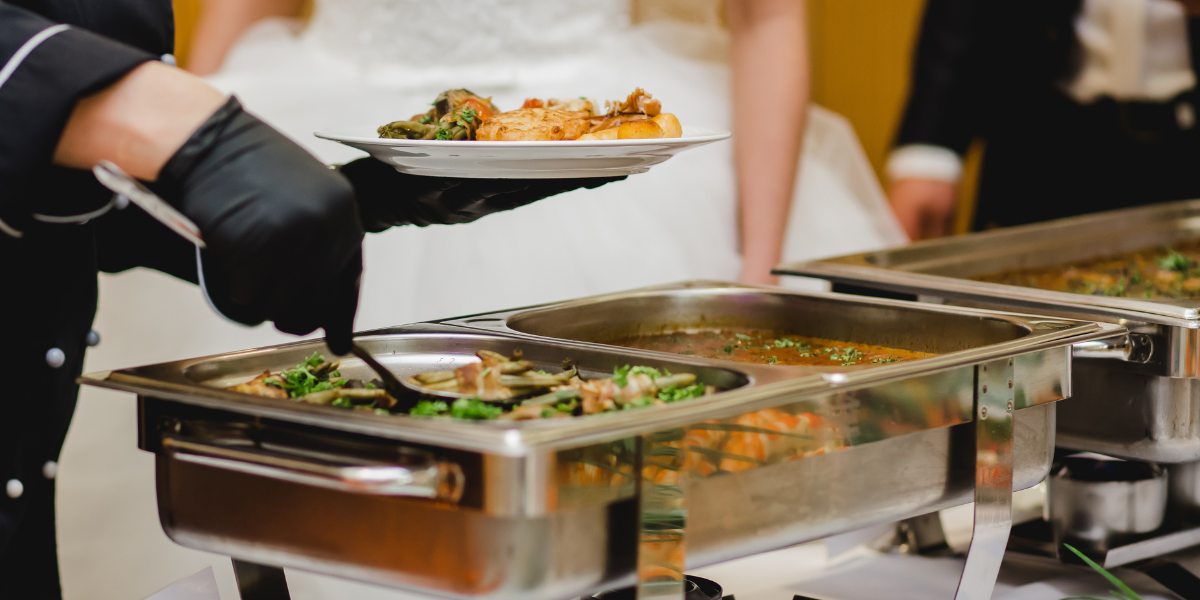
For Nikah ceremonies that include a meal, the most common format is a seated or semi-formal buffet served after the ceremony itself. The timing matters: the ceremony should complete before food service begins, allowing the religious and ceremonial significance of the occasion to be fully present without the distraction of catering activity in the background.
What guests expect at the Nikah
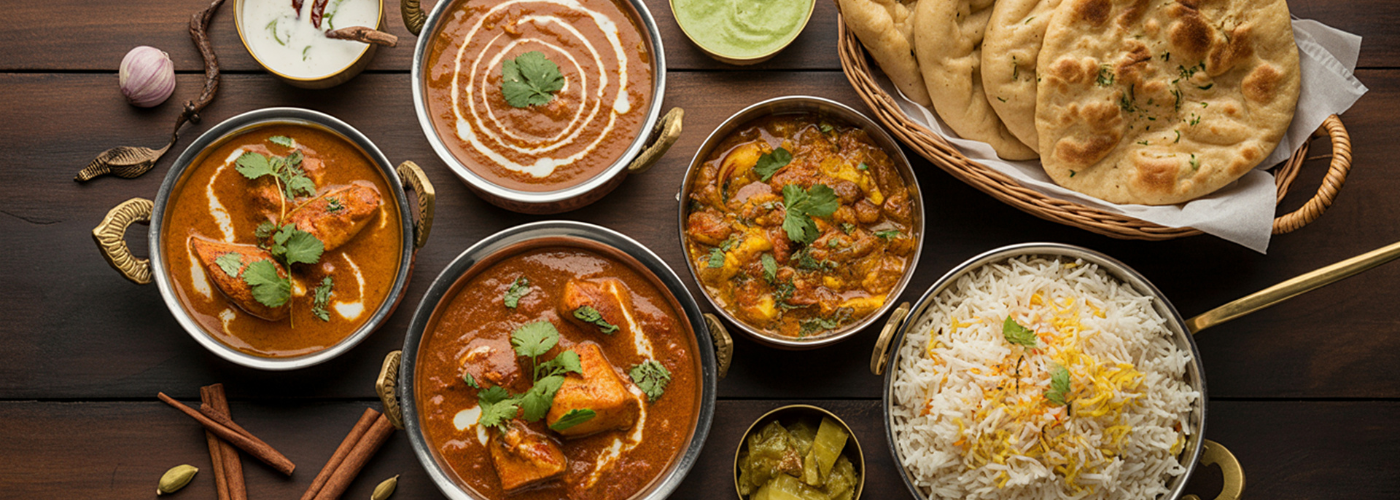
- A biryani as the centrepiece. The biryani is the non-negotiable dish at almost every South Asian wedding event in the UK, but it carries particular weight at the Nikah where simplicity and quality are valued over variety. A well-made chicken or lamb biryani served properly is more memorable than an overly ambitious menu that spreads effort too thinly.
- One or two curries. A karahi or a curry served alongside the biryani provides variety without overcomplicating the menu. For the Nikah specifically, fewer dishes executed well is almost always preferable to many dishes executed averagely.
- Raita and salad. These accompaniments are expected at every South Asian wedding meal and their absence is noticeable. Simple yoghurt raita and a fresh salad take very little resource to include and complete the meal properly.
- Naan or chapati. Bread alongside rice is standard at South Asian wedding meals and should be included as a matter of course rather than treated as optional.
- A simple dessert. A sweet dish following the meal is standard. Kheer, shahi tukra, or a dessert table of traditional sweets serves this purpose without requiring the scale of a full Walima dessert spread.
- Soft drinks and water. For a Muslim wedding, non-alcoholic beverages are the only option, and the provision of cold drinks and water should be sufficient for the duration of the event. Running out of cold drinks at a summer Nikah is a very noticeable hospitality gap.
The Walima: Generous, Abundant, and Memorable
The Walima carries the highest catering expectations of all three events. As the largest gathering and the occasion most directly associated with the Islamic tradition of feeding guests generously, the food at a Walima is scrutinised more carefully than at any other event. The menu should be substantial, the quality should be high, and the service should be attentive enough that no guest leaves the buffet feeling that the food ran short before they reached it.
The anchor dishes every Walima needs
- Biryani. The biryani is the heart of a Walima menu. For large guest counts, a combination of chicken and lamb biryani gives guests choice and prevents a single variant running out before everyone has been served. The quality of the biryani is the primary measure by which guests assess the catering overall.
- Karahi or handi. A slow-cooked karahi, whether chicken, lamb, or mixed, is the most universally expected curry dish at a South Asian Walima. Its rich, aromatic quality and communal serving format suit the occasion well.
- Daal. Daal makhani or a well-made tarka daal provides a vegetarian option that guests who do not eat meat can eat fully as a main dish rather than as a side. Its inclusion also reflects genuine hospitality toward all guests regardless of dietary preference.
- Naan and chapati. Both should be available and both should be replenished continuously throughout the service period. Cold bread at a buffet is one of the most commonly noted catering disappointments.
- Salad and raita. As with the Nikah, these accompaniments are expected and their absence is noted. A fresh salad station that is replenished rather than prepared once and left to wilt throughout service reflects the care that distinguishes good catering from average.
- Starter or appetiser course. For larger Walimas where guests are seated before the main buffet opens, a served starter, typically shorba (soup), or a plated appetiser, manages the waiting period and creates a sense of occasion before the main service begins.
The dessert spread
A Walima without a dessert spread is unusual in most South Asian communities, and the quality and variety of the dessert table is noticed. Traditional desserts expected at a Walima include gulab jamun, jalebi, kheer, shahi tukra, and barfi. A dessert table that includes both traditional South Asian sweets and a more contemporary element, a cheesecake, a gateau, or a selection of mini pastries, serves guests across different preferences without abandoning the cultural expectation.
Under-catering for the actual guest count. Couples often confirm a lower number with the caterer than eventually attend, either because RSVPs came in late or because walk-ins are common at community Walimas. Always cater for 10 to 15% above your confirmed guest count. Running short of food at a Walima is the catering failure that guests remember longest.
Catering Across Regional Backgrounds
South Asian wedding catering in the UK reflects the regional diversity of the community. Pakistani, Indian, Bangladeshi, and other South Asian backgrounds each bring their own culinary traditions, and the dishes guests expect will vary depending on the families involved. A Pakistani wedding in Birmingham will typically lean toward hearty karahi and nihari alongside the biryani. A Bangladeshi wedding may feature hilsa fish dishes alongside the standard rice and curry spread. An Indian Muslim wedding might include korma, pulao, and rogan josh alongside the biryani.
When planning catering for a wedding where both families come from different regional backgrounds, it is worth having an explicit conversation with both families about the dishes that are most important to them. A menu that reflects both backgrounds, even in a small way, is appreciated in a way that a generic menu applied without that thought is not. Most experienced South Asian caterers in the UK are familiar with navigating this and can advise on combinations that honour both traditions without overcomplicating the menu.
Dietary Requirements Beyond Halal
Halal certification is the non-negotiable baseline for all three events. Beyond that, a well-planned South Asian wedding menu also accounts for the dietary needs that are increasingly common across UK guest lists.
- Vegetarian guests. A daal, a vegetable curry, and a rice dish that contains no meat provide a complete meal for vegetarian guests. These dishes should be labelled clearly and served in a way that prevents cross-contamination with meat dishes at the buffet.
- Gluten intolerance. Rice-based dishes are naturally gluten-free but many South Asian sauces and marinades contain flour or other gluten-containing ingredients. Ask your caterer specifically which dishes are safe for gluten-intolerant guests and communicate that information to guests who need it.
- Nut allergies. Several traditional South Asian desserts and sweets contain nuts. A clear labelling system at the dessert table that identifies which items contain nuts is a basic safety provision that should be discussed with your caterer in advance.
- Children's food. For large South Asian weddings with significant numbers of children, providing milder versions of the main dishes or a simple children's option such as plain rice and a mild curry prevents the situation where younger guests cannot eat the main spread.
Practical Menu Planning Tips
With the dishes established, the practical questions of how to plan and execute the catering across three events deserve their own attention.
- Do not repeat the same menu across all three events. Guests attending more than one event, which at a South Asian wedding can be a significant proportion of the overall guest list, will notice and comment on a menu that appears unchanged from one event to the next. Vary at least two or three dishes between each event even if the overall format is similar.
- Brief your caterer on the running order before the event. A caterer who knows when the ceremony ends and when the buffet should open can time preparation accordingly so food is served at the right temperature. A caterer who is not briefed will make assumptions that may not align with the actual timing of the day.
- Confirm the replenishment plan in advance. Ask your caterer specifically how they manage the buffet when dishes run low and what the plan is if a particular item proves more popular than expected. A caterer with a clear answer to this question has thought about it. One who has not is likely to leave an empty tray for longer than is acceptable.
- Provide vendor meals from the same menu. Your photographer, decorator, and other vendors working across the day should eat what your guests eat. A separate, lesser provision for vendors is a hospitality distinction that is not necessary and creates an unnecessary two-tier system.
- Plan the timing of chai carefully. Chai served too early in the event is ignored. Served after the main meal and dessert, it becomes a natural gathering point that extends the warmth of the occasion into the final hour. Brief the chai station team on when to begin service rather than leaving it to their judgement on the day.
Final Thoughts
The food at a South Asian wedding is not a supporting element. It is central to the experience, the hospitality, and the memory of the occasion. The couples who get this right are the ones who plan their menus with the same care and specificity they bring to the venue and the decor, who choose caterers whose experience matches the scale and cultural context of the event, and who brief those caterers properly rather than assuming the details will manage themselves.
Guests will remember the biryani. They will remember whether the chai was fresh. They will remember whether the dessert table had enough for everyone. Invest in getting those things right and the catering becomes one of the most powerful contributions to a day that feels genuinely well done.